The Accountant's Ledger: Decoding Order, Chaos, and the Cost of Truth
Exploring the philosophical underpinnings of The Accountant, a film divisive among critics yet rich in themes of order, chaos, and identity.

“Logic will get you from A to B. Imagination will take you everywhere.” — Albert Einstein
The Accountant (2016) is a film that, right from its release, felt like a curious anomaly. On one hand, it’s a slick, often brutal action-thriller starring Ben Affleck as an autistic savant who uncooks books for dangerous clients. On the other, it’s a surprisingly earnest attempt at a character study, grappling with themes of neurodivergence, morality, and the search for belonging. This duality, perhaps more than any other factor, explains its rather schizophrenic critical reception. While audiences on IMDb gave it a respectable 7.3/10 and a solid 76% fresh score on Rotten Tomatoes, professional critics were far less impressed, landing it a 32% on Rotten Tomatoes and a 51 on Metacritic. Many lambasted its overly convoluted plot, its tonal inconsistencies, and its sometimes-problematic portrayal of autism. And honestly, it’s hard to completely disagree with those criticisms. Yet, beneath the tangled web of subplots and the occasional narrative stumble, The Accountant somehow manages to provoke some genuinely interesting philosophical questions about order, chaos, and the human condition itself.
The Calculus of Control and Chaos
At its heart, The Accountant grapples with a fundamental human desire: the need for control in an inherently chaotic world. Christian Wolff, Affleck’s character, epitomizes this. His autism grants him an almost superhuman ability to process data, identify patterns, and find order in seemingly impenetrable financial chaos. He thrives in the world of numbers, where every variable can be accounted for, every ledger balanced. This pursuit of mathematical precision is a powerful metaphor for our own attempts to impose meaning and structure on our lives.
However, the film immediately complicates this by making Wolff a man of extreme, often brutal, violence. He moves between the sterile, ordered world of accounting and the messy, chaotic realm of assassins and black-market deals. Critics often noted this jarring tonal shift, finding it difficult to reconcile the sensitive portrayal of Wolff’s condition with his sudden bursts of Bourne-esque combat. And yes, the film doesn’t always nail the transitions. But philosophically, this tension is fascinating. Is his violence another form of problem-solving, a way to “balance the books” in a moral sense, eradicating those who embody true disorder and injustice? Or is it a primal release, a counterpoint to the rigid control he exerts over his intellect? The film suggests both, presenting a protagonist who seeks to impose ultimate order, even if it means resorting to ultimate chaos.
 Christian Wolff meticulously arranging his belongings, a visual representation of his need for absolute order in a chaotic world.
The Burden of Brilliance: Identity and Morality
Wolff’s character forces us to consider the nature of identity and otherness. His autism is central to who he is, shaping his interactions, his perceptions, and his unique abilities. The film makes a point of showing his struggles with social cues, his reliance on routine, and his intense focus. While some critics argued that The Accountant’s depiction of autism veered into stereotypical “superpower” territory, it nonetheless opens up a dialogue about how different minds perceive and navigate reality. Wolff isn’t just a quirky genius; he’s a man whose inner world operates on a different, more literal, and intensely logical frequency.
In a world obsessed with conformity, the truly unique often find themselves navigating a solitary path, their brilliance both a gift and a burden.
This unique neurological wiring, combined with a childhood shaped by a hardline military father and a compassionate mother, molds his peculiar moral code. He operates outside conventional ethics, guided by an almost mathematical sense of justice. If the numbers don’t add up – if someone has committed a grave injustice – Wolff becomes the auditor, the equalizer. Is this a form of vigilantism, or something more akin to a natural force, restoring equilibrium? The film doesn’t offer easy answers. It challenges us to look beyond the surface of his actions and consider the internal logic that drives him, however unconventional it may seem. His relationships, particularly with Anna Kendrick’s Dana Cummings, highlight his vulnerability and his struggle for genuine connection, making him more than just a calculating machine. He seeks belonging, even if he doesn’t fully understand how to achieve it.
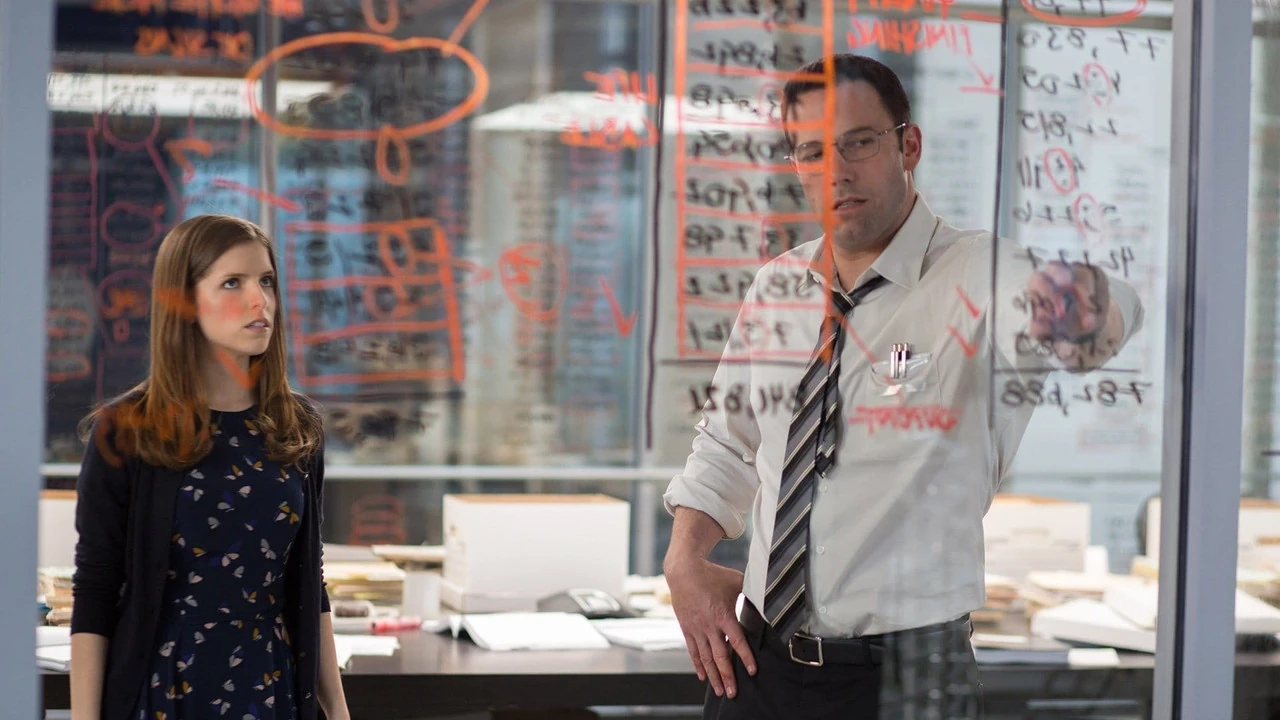 Anna Kendrick’s Dana Cummings looking intrigued, offering a rare glimpse of connection and understanding for Christian Wolff.
Justice, Retribution, and the Unseen Hand
Beyond the character study, The Accountant delves into deeper themes of justice and retribution in a corrupt world. The various financial crimes Wolff investigates – from corporate fraud to embezzlement – serve as microcosms of larger societal failings. He acts as an unseen hand, a silent arbiter who steps in when official systems fail. This resonates with a deeply ingrained desire for fairness, for someone to right wrongs when the powerful escape consequences.
The film’s intricate plot, despite its flaws, attempts to weave together disparate threads of corruption and vengeance into a complex tapestry. It suggests that there are hidden connections, unseen forces, and long-standing debts that eventually come due. This brings a subtle metaphysical layer to the narrative – a sense that there is an ultimate balance in the universe, even if it requires a morally ambiguous protagonist to enforce it. The final revelations, while sometimes feeling forced, aim to tie these threads into a grander scheme of karmic justice, implying that actions, good or ill, will inevitably have their reckonings. It forces us to ask: What constitutes true justice? Is it always legal, or can it manifest through more unconventional, even violent, means when the scales are tipped too far?
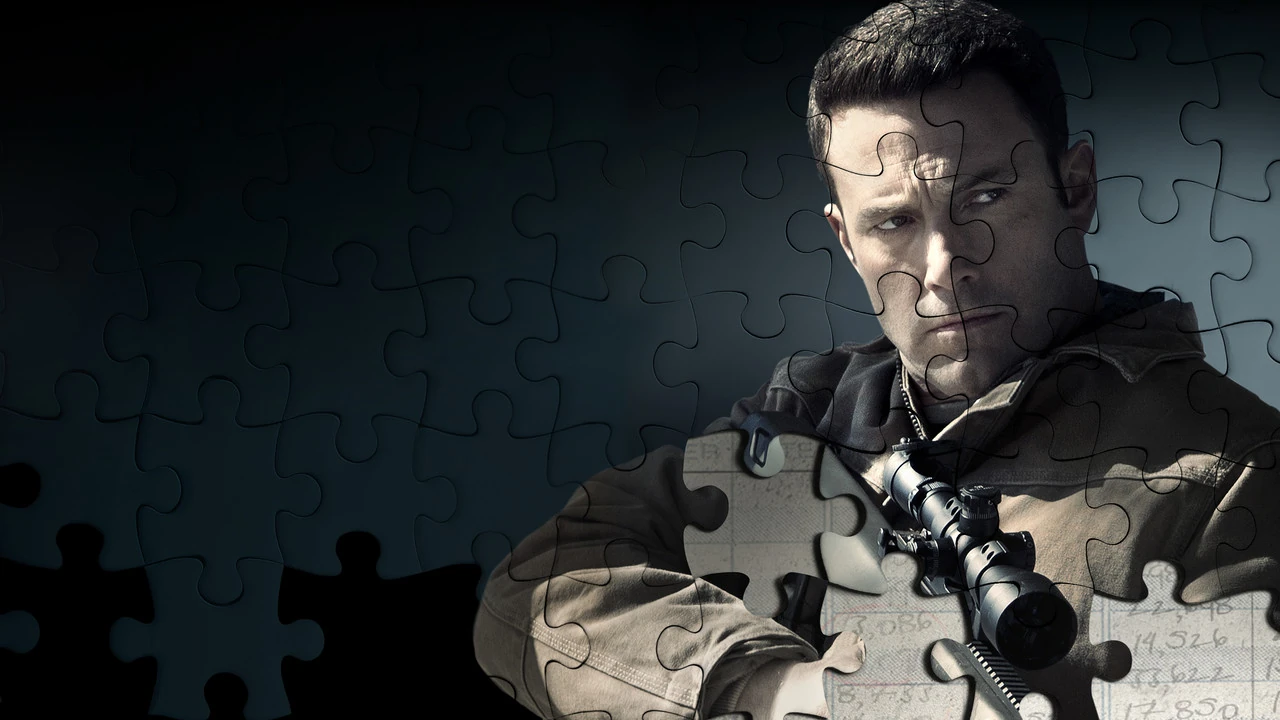
 Ben Affleck as Christian Wolff, aiming a high-powered rifle, symbolizing his role as an agent of brutal, unconventional justice.
“The true measure of a man is not how he behaves in moments of comfort and convenience, but how he stands at times of controversy and challenge.” — Martin Luther King Jr.
The Accountant is undeniably a flawed film. Its narrative complexity often borders on convolution, its tonal shifts can be jarring, and its handling of its central character’s condition isn’t without its critiques. Yet, despite these very real weaknesses, it’s hard to dismiss entirely. Ben Affleck delivers a compelling performance, grounding a character who could easily have become a caricature. More importantly, the film dares to explore themes that resonate: the human need for order, the burden of unique brilliance, and the relentless pursuit of justice in a world that often feels unbalanced. It’s a messy, ambitious film that, for all its imperfections, leaves us pondering the unseen forces that shape our lives and the unconventional paths some take to find their place within them. Perhaps its true value lies not in its perfect execution, but in the enduring questions it leaves in its wake.
Where to Watch
- Hulu
- YouTube TV
What’s Up? explores the philosophical depths of cinema.