The Attacks of 26/11: A Flawed Lens on Unspeakable Terror
Exploring Ram Gopal Varma's controversial film on the 26/11 Mumbai attacks, grappling with its flaws, sensationalism, and profound ethical questions.
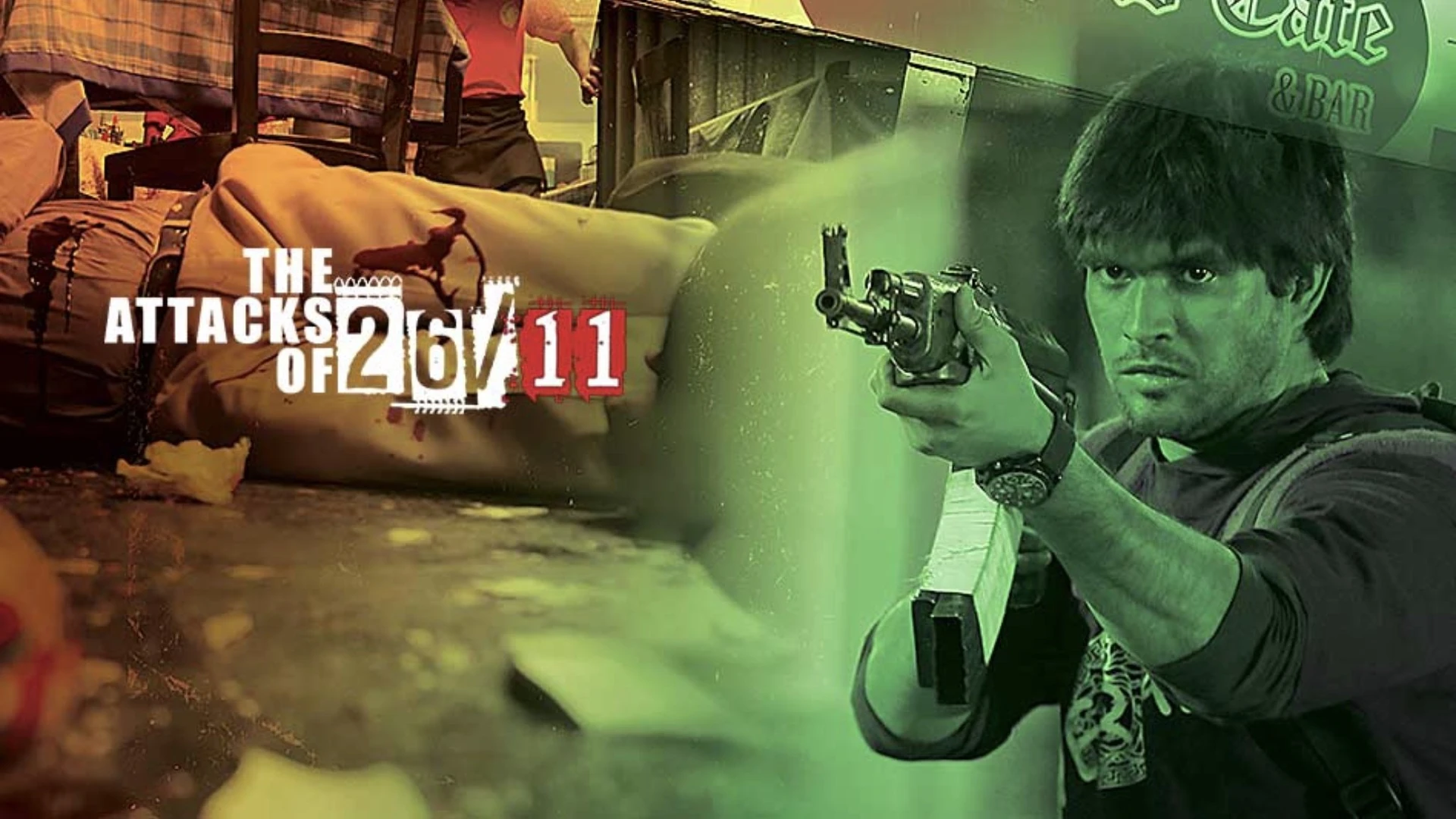
“To witness something truly horrific is to be forever altered; to recount it is to grapple with the impossible task of conveying the indelible mark it leaves.” — Unknown
Ram Gopal Varma’s The Attacks of 26/11 isn’t an easy film to approach, nor is it one that was particularly well-received. Released in 2013, it dives headfirst into one of India’s most traumatic modern events: the coordinated terrorist attacks that paralyzed Mumbai for four days in November 2008. The very premise of fictionalizing such raw, recent pain immediately raises a host of ethical and aesthetic questions. While the film’s intentions might have been to memorialize or inform, its execution often stumbled, leaving many critics and audiences feeling uneasy, if not outright critical. It’s a work that demands a philosophical lens, not just for what it depicts, but for how it attempts to depict it, and the profound discomfort it stirs in the process.
The Unflinching Gaze and its Ethical Minefield
Ram Gopal Varma is a director known for his gritty, often sensationalist, and sometimes uneven style. His foray into the 26/11 attacks was met with significant trepidation, and unfortunately, much of that concern was validated in the final product. The film’s critical reception was largely negative, with many reviewers lambasting its exploitative tone, uneven pacing, and a perceived lack of genuine emotional depth. It attempts to reconstruct the events with a raw, almost documentary-like intensity, focusing on the sheer brutality and chaos of the attacks. Yet, this unflinching gaze, while aiming for realism, often veers into the problematic.
One of the central philosophical questions The Attacks of 26/11 inadvertently forces us to confront is the ethics of representation in the face of immense human suffering. Is it possible to dramatize such a recent, collective trauma without crossing into sensationalism? Varma’s approach, with its focus on the terrorists’ actions and the graphic violence, was widely criticized for prioritizing spectacle over genuine empathy or a deeper exploration of the victims’ plight. The film, narrated by Nana Patekar’s character, Mumbai Joint Commissioner Rakesh Maria, attempts to ground the narrative in an official, reflective account, but this framing often feels at odds with the visceral, almost voyeuristic, depictions of violence.
Key themes that emerge from this problematic approach include:
- The burden of memory — how do societies choose to remember their darkest hours?
- The moral responsibility of the artist — when does chronicling become exploiting?
- The commodification of suffering — can tragedy ever be truly ‘entertaining’ or even purely ‘informative’ when presented as an action-thriller?
When Reality Becomes Spectacle: Performance and Pacing
The film’s weaknesses are undeniable, particularly its pacing and character development. Critics noted the often disjointed narrative, jumping between attack sites without fully immersing the viewer in the terror or the human cost. While Nana Patekar’s performance as Rakesh Maria was often cited as a saving grace, praised for its gravitas and intensity, even his presence couldn’t fully anchor a narrative that struggled to find its emotional core. Many found the portrayal of the terrorists to be one-dimensional, reducing them to caricatures of pure evil rather than exploring any complex, albeit twisted, motivations, thus missing an opportunity for a more nuanced (though still condemnatory) understanding of radicalization.
This is where the cinematic choices stumble: in trying to be both a raw recounting and a dramatic thriller, The Attacks of 26/11 often becomes neither, leaving a hollow space where profound reflection should reside.
The film’s action sequences, while intended to convey the horror, frequently drew criticism for their execution, with some finding the visual effects and staging less than convincing, further distancing the audience from the reality of the events. This disconnect is critical: for a film about such a monumental real-life tragedy, any element that breaks the spell of immersion can be fatal to its purpose. Instead of fostering empathy or understanding, the flaws in execution, coupled with the relentless focus on violence, led many viewers to feel detached, or worse, offended. It’s a prime example of how even the most important subject matter can be undermined by a failure in directorial vision and artistic sensitivity.
Beyond the Surface: The Ghosts of Memory and the Weight of Witnessing
Despite its considerable flaws and the mixed-to-negative reception, The Attacks of 26/11 undeniably grapples with questions that resonate deeply within the human condition. Even if its execution falls short, the film forces us to confront the existential fragility of peace and the sudden, brutal intrusion of chaos into everyday life. It’s a stark reminder of how quickly the mundane can turn into the monstrous, and how ordinary people are thrust into extraordinary circumstances of survival, loss, and heroism.
The narrative, however imperfectly, highlights:
- The randomness of violence and the arbitrary nature of who survives and who perishes. This touches upon themes of fate versus free will, and the horrifying realization that life can be extinguished in an instant, without reason or justice.
- The psychological scars of collective trauma. Even those who were not physically present carry the weight of such an event, shaping national identity and individual anxieties. The film, even through its sensationalism, attempts to re-ignite that memory, however clumsily.
- The nature of evil itself. While the film’s portrayal of the terrorists is simplistic, it still forces a confrontation with the sheer destructive capacity of human ideology gone awry, leaving us to ponder the origins of such hatred and the methods of its propagation. It becomes a mirror, reflecting our own fears and the dark potential lurking within the human psyche.
Ultimately, The Attacks of 26/11 acts as a crude but persistent trigger for remembrance. It asks us, perhaps crudely, to never forget, even as it struggles with how to remember ethically and effectively. It’s a testament to the idea that even a deeply flawed piece of art can, through its very existence and its subject matter, provoke necessary, albeit uncomfortable, philosophical reflection on our shared vulnerabilities and the enduring impact of terror.
“The true horror isn’t just in the act, but in the echoes it leaves, the questions it embeds in the soul, and the uncomfortable truth that some wounds may never fully heal.”
The Attacks of 26/11 remains a divisive film, a cinematic attempt to grapple with an unspeakable tragedy that largely failed to achieve its noble aims. Yet, its very existence, its missteps, and the criticisms leveled against it serve as a powerful case study in the philosophy of art and trauma. It reminds us that while art can illuminate, it can also misrepresent, and that the line between remembrance and exploitation is perilously thin. What does it truly mean to bear witness, both as a filmmaker and as an audience, to the darkest chapters of human history? The film, in its problematic portrayal, leaves us with that haunting question.
Where to Watch
- Eros Now Select Apple TV Channel
What’s Up? explores the philosophical depths of cinema.