The Silent Scream: Unearthing Meaning in The Autopsy of Jane Doe
A philosophical dive into The Autopsy of Jane Doe, exploring its mysteries, the limits of rationality, and the enduring power of unspoken trauma.
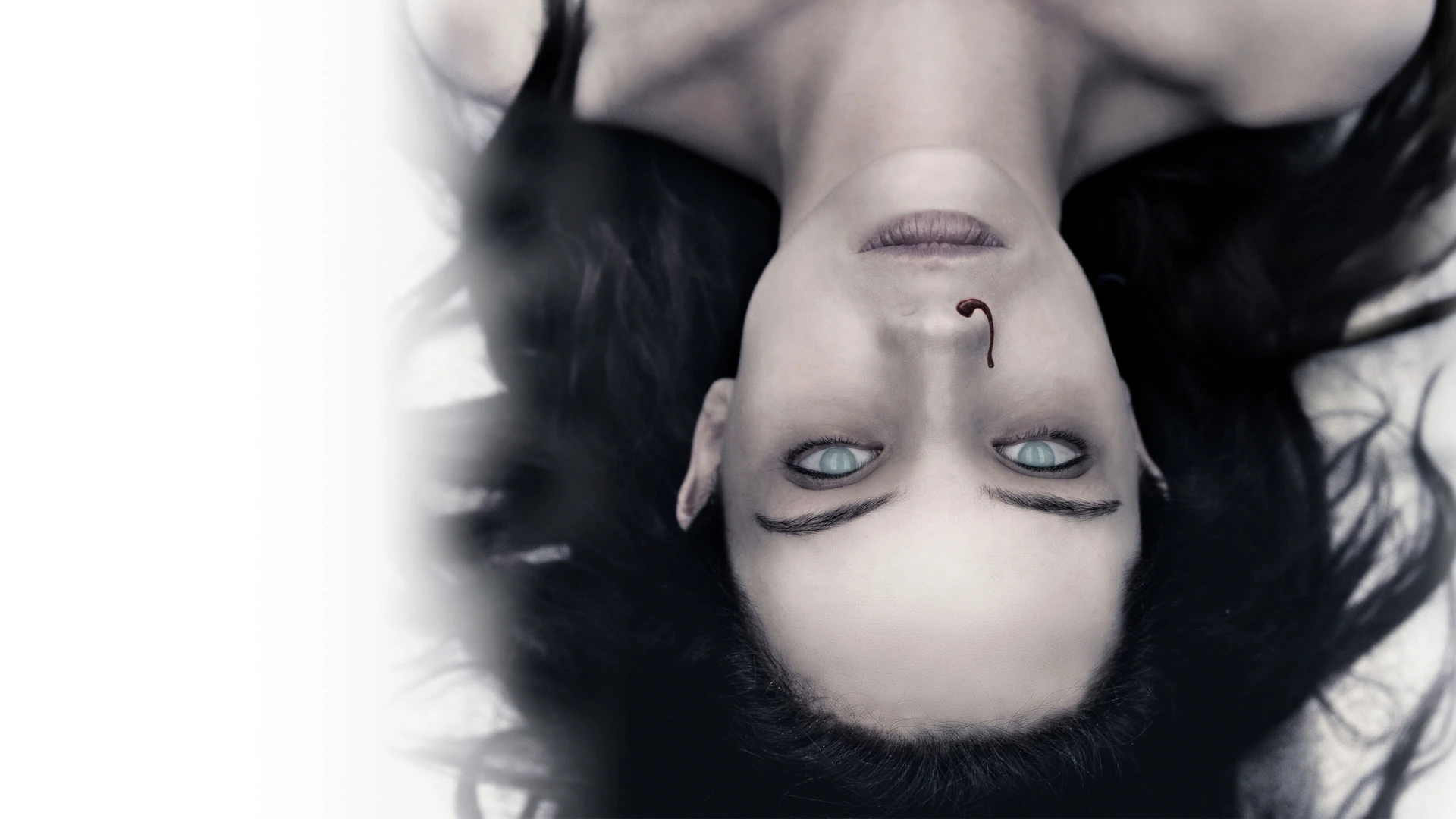
“The human body is the best picture of the human soul.” — Ludwig Wittgenstein
There’s a particular kind of horror that doesn’t rely on jump scares, at least not primarily, but on the slow, meticulous dismantling of reality itself. André Øvredal’s The Autopsy of Jane Doe, released in 2016, is a masterclass in this, a film that takes a seemingly mundane setting — a family-run morgue — and transforms it into an arena for existential dread. While it landed with generally favorable reviews, boasting an 87% on Rotten Tomatoes and a solid 65 on Metacritic, some critics and audience members found its deliberate pacing a touch too slow, or its supernatural explanations a bit too neat for the intricate build-up. Yet, for all its occasional stumbles, the film manages to excavate something profound from its chilling premise: the terrifying weight of the unspoken, and the limits of human understanding when confronted with a truly ancient evil.
The Unveiling of the Unknowable
At its core, The Autopsy of Jane Doe is a philosophical wrestling match between empirical science and the utterly inexplicable. Tommy (Brian Cox) and Austin (Emile Hirsch), father and son coroners, are presented with an unidentified female corpse — a “Jane Doe” (Olwen Catherine Kelly) — whose pristine exterior belies a horrifying internal landscape. Her body, paradoxically, shows no outward signs of trauma, yet every incision reveals fresh, impossible horrors within. This immediately plunges us into a realm where the tools of reason, observation, and deduction are rendered useless. How do you autopsy a phenomenon?
The film cleverly uses the forensic process as a metaphor for humanity’s persistent urge to categorize, explain, and control the unknown. Each cut, each X-ray, each new discovery isn’t just a plot beat; it’s a step further into a terrifying abyss where logic dissolves. Critics often praised the film’s claustrophobic atmosphere and the genuinely unnerving practical effects that bring Jane Doe to life, or rather, to a terrifying state of inert animation. However, some pointed out that the methodical, almost repetitive nature of the discoveries could test the patience of viewers accustomed to faster-paced horror. But perhaps that’s the point: The Autopsy of Jane Doe demands a slow, careful examination, mirroring the protagonists’ own futile efforts, forcing us to confront the frustrating inadequacy of our knowledge.
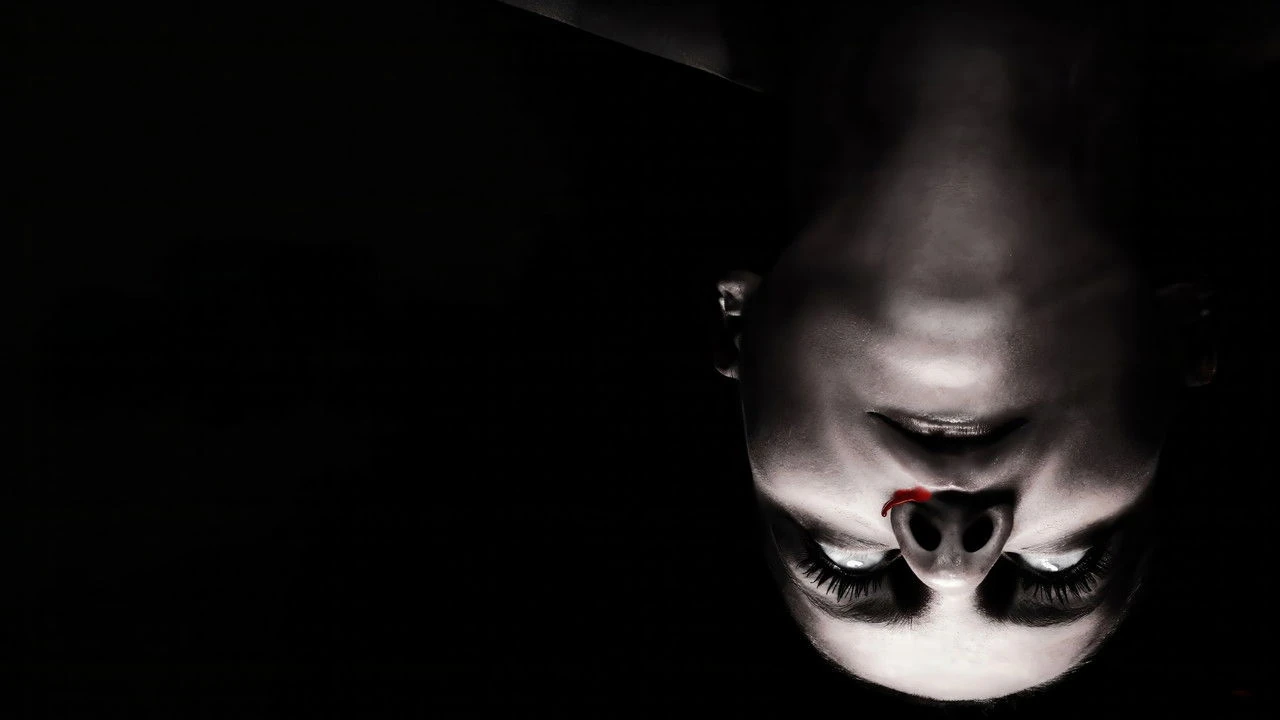 A chilling close-up of Jane Doe’s unnervingly serene face, a canvas of unanswered questions.
Flesh and Fear: A Dissection of Doubt
What The Autopsy of Jane Doe does exceptionally well is build tension through performance and setting. Brian Cox and Emile Hirsch deliver understated, believable performances as men of science suddenly thrust into a nightmare. Their dynamic, a blend of paternal mentorship and professional camaraderie, grounds the film. Cox, with his weathered pragmatism, slowly gives way to fear, while Hirsch embodies the younger, more vulnerable rationalist. The film’s single setting – the sterile, subterranean morgue – becomes a character itself, a tomb that gradually seals its occupants in with the very entity they are trying to dissect.
The most terrifying mysteries are not those that hide in the shadows, but those that lie exposed and inexplicable beneath the blinding light of our own scrutiny.
Yet, this strength also highlights where the film occasionally falters for some. While the slow-burn suspense is masterful, a common criticism from online forums and some professional reviews noted a certain narrative circularity in the middle act. The endless parade of impossible findings, while unsettling, sometimes felt like it was treading water before the full supernatural reveal. Some audience members yearned for more immediate answers, finding the deliberate pacing a barrier to engagement. The film doesn’t lean heavily on cheap jump scares, instead favoring a creeping dread, but when they do arrive, some found them a tad conventional for such an otherwise unique premise. Still, the film’s commitment to its premise, even with its pacing challenges, creates a unique sense of vulnerability. It’s not just a body; it’s a terrifying, beautiful vessel of unimaginable pain and power, and the film wants us to sit with that discomfort.
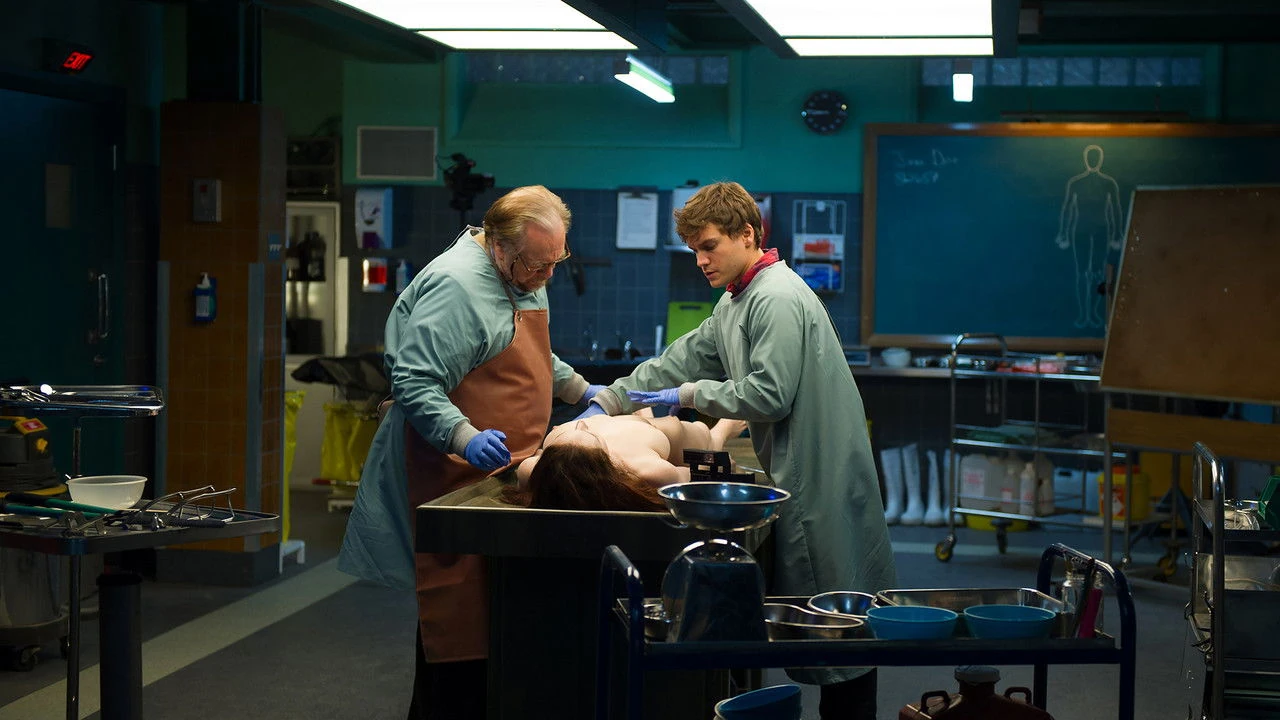 Tommy and Austin, bathed in the cool light of their morgue, grappling with an impossible discovery.
The Weight of the Unseen: Legacy and Retribution
Beyond the immediate horror, The Autopsy of Jane Doe delves into fascinating, if unsettling, metaphysical questions about the nature of evil and the persistence of trauma. The revelation of Jane Doe’s true identity and history, though debated by some critics as a potentially cliché turn, posits that her body is not merely a corpse, but a vessel — a living, breathing archive of suffering and injustice. She is a historical artifact, a conduit for a terrible, ancient retribution. This raises profound questions about agency, memory, and the idea of a spirit so wronged that it can defy death and exact its vengeance through its very remains.
The film hints at the idea that extreme pain, particularly that inflicted unjustly, leaves an indelible mark, not just on the soul, but physically. Jane Doe becomes an embodiment of collective trauma, a horrifying reminder that some wrongs refuse to be buried. The coroners, through their scientific intrusion, become unwitting participants in a cycle of suffering, forced to confront the moral weight of their profession when dealing with a body that refuses to be just a body. It’s a dark meditation on historical injustice, where the past isn’t just prologue, but an active, vengeful presence.
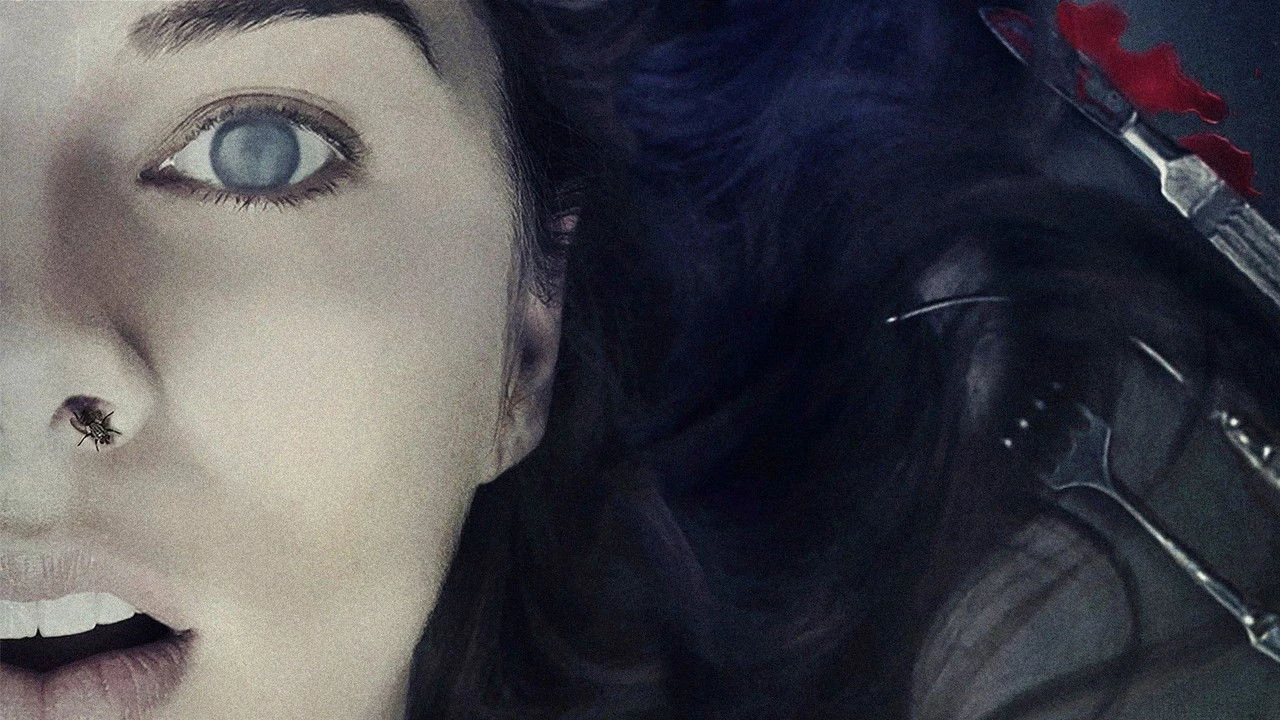 An X-ray of Jane Doe’s body reveals shocking and impossible internal damage, a silent scream frozen in bone.
Some horrors aren’t meant to be understood, only endured. Their true terror lies in their defiance of our deepest need for explanation and control.
The Autopsy of Jane Doe isn’t a flawless film; its slow-burn can frustrate, and its ultimate explanation, while compelling, might not satisfy every viewer looking for definitive answers or a completely original twist. Yet, it undeniably holds a potent philosophical mirror to our own mortality and our desperate need to understand what lies beyond. It asks us to confront the limits of our scientific rationalism, the enduring power of ancient evils, and the chilling possibility that some secrets are not meant to be uncovered. In its quiet, claustrophobic dread, it forces us to ponder: what if the dead don’t just tell tales, but enact them?
Where to Watch
- fuboTV
- AMC Plus Apple TV Channel
- Paramount+ Amazon Channel
- AMC+ Amazon Channel
- AMC+
What’s Up? explores the philosophical depths of cinema.