The Burden of the Myth: Boba Fett's Existential Reckoning on Tatooine
Examining The Book of Boba Fett's struggle between legacy and self-definition, and its flawed but compelling dive into power and identity.

“The hardest thing is to live when you are the stuff of legend.” — Umberto Eco
When The Book of Boba Fett landed on our screens in late 2021, the anticipation was palpable. Here was a chance to finally delve into the psyche of one of Star Wars’ most enigmatic and beloved figures, a character who loomed large in the galaxy’s consciousness despite minimal screen time. Yet, as the series unfolded across its seven episodes, a curious tension emerged. Critics and audiences alike found themselves in a rather divisive camp, with a 62% Rotten Tomatoes score and a 59/100 on Metacritic reflecting a collective shrug more than a resounding cheer. Many, myself included, felt the series struggled under the weight of its own promise, often hobbled by uneven pacing, questionable narrative choices, and a protagonist who seemed strangely passive in his own story. Despite these undeniable missteps, this exploration of the legendary bounty hunter’s attempt to shed his past and stake a claim on Tatooine offers a surprisingly fertile ground for existential reflection on identity, legacy, and the true nature of power.
The Weight of the Helmet: Identity and the Shadow of Expectation
The core philosophical tension of The Book of Boba Fett lies squarely on the shoulders of its titular character, embodied by the excellent Temuera Morrison. For decades, Boba Fett was an icon of menace, efficiency, and unwavering purpose – a man defined by his armor and his unflinching ruthlessness. The series, however, tries to peel back that armor, literally and figuratively, presenting a Boba who is more contemplative, more wounded, and arguably, more human. This is where much of the criticism stems from: many viewers, myself included, expected the brutal crime lord promised by the marketing, not a reformed gangster trying to rule with respect rather than fear.
The series grapples with a fundamental question: Can a legend truly change? Can a person escape the myth built around them, especially when that myth is a core part of their identity? Boba’s journey through the Tusken Raiders’ culture, despite its sometimes sluggish execution, serves as a poignant, if flawed, attempt at self-redefinition. Stripped of his armor, left for dead, he experiences a radical shift, learning community and purpose outside of the cutthroat bounty hunting world. This arc is a powerful meditation on how trauma can forge new paths, but it often clashes with the Boba we thought we knew, leaving a jarring disconnect that many found hard to reconcile. He’s trying to build something new, but he’s constantly haunted by the ghost of his former self—both the bounty hunter and the clone’s son.
- The Burden of Legacy: How does one forge an individual path when born into a pre-determined lineage and an iconic identity?
- Transformation vs. Expectation: Can an audience accept a hero’s evolution if it deviates too sharply from their established persona?
- Authority and Empathy: Is true power found in fear or in the capacity for connection and community?
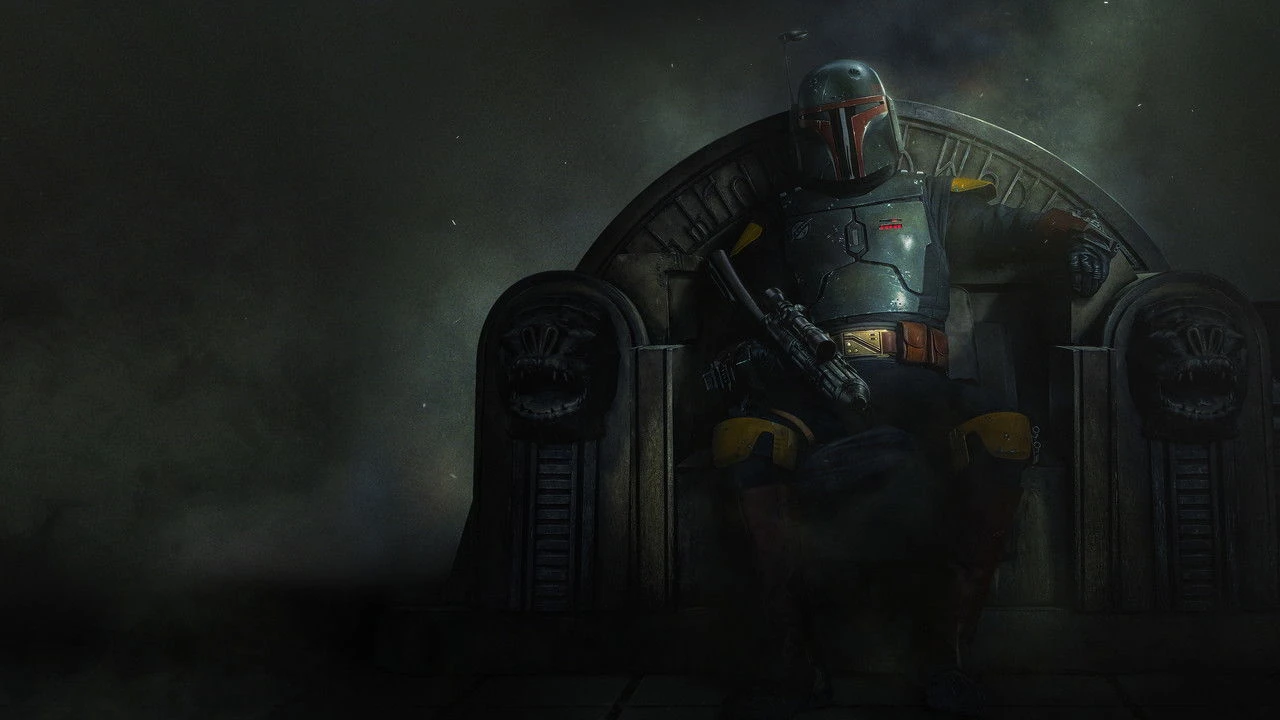
 Boba Fett, helmet off, contemplating his past and uncertain future, a solitary figure against the vastness of Tatooine.
Shifting Sands: The Struggle for Narrative Cohesion
The narrative struggles of The Book of Boba Fett are well-documented. Critics often pointed to the uneven pacing, particularly the extensive flashback sequences that, while offering vital context to Boba’s transformation, frequently interrupted the momentum of the present-day storyline. Moreover, a significant portion of the season felt less like Boba’s own journey and more like a detour into The Mandalorian Season 2.5, a move that pleased fans of Din Djarin but diluted the focus on the titular character. As one review put it, “It’s hard to tell if this is a Boba Fett story with a guest appearance from Din Djarin, or the other way around.”
The narrative’s wavering focus underscores a deeper philosophical inquiry: what happens when the protagonist loses agency within their own story? It’s a meta-commentary on the challenge of authoring one’s destiny when external forces, or indeed, popular demand, pull you in different directions.
The series often felt like it was trying to be too many things at once: a gritty crime drama, a character study, and a Star Wars fan service vehicle. The result was a sometimes disjointed experience. While Temuera Morrison and Ming-Na Wen (as Fennec Shand) delivered solid performances, anchoring the series with their palpable chemistry, even their presence couldn’t always smooth over the plot inconsistencies or the feeling that Boba was reacting to events rather than driving them. The “Mod Gang” and their brightly colored speeders, for instance, felt tonally out of place for many, pulling the show further away from the grimy underworld aesthetic it promised. This balancing act between fan expectations, character development, and genre tropes is a tricky one, and The Book of Boba Fett often stumbled in its execution.
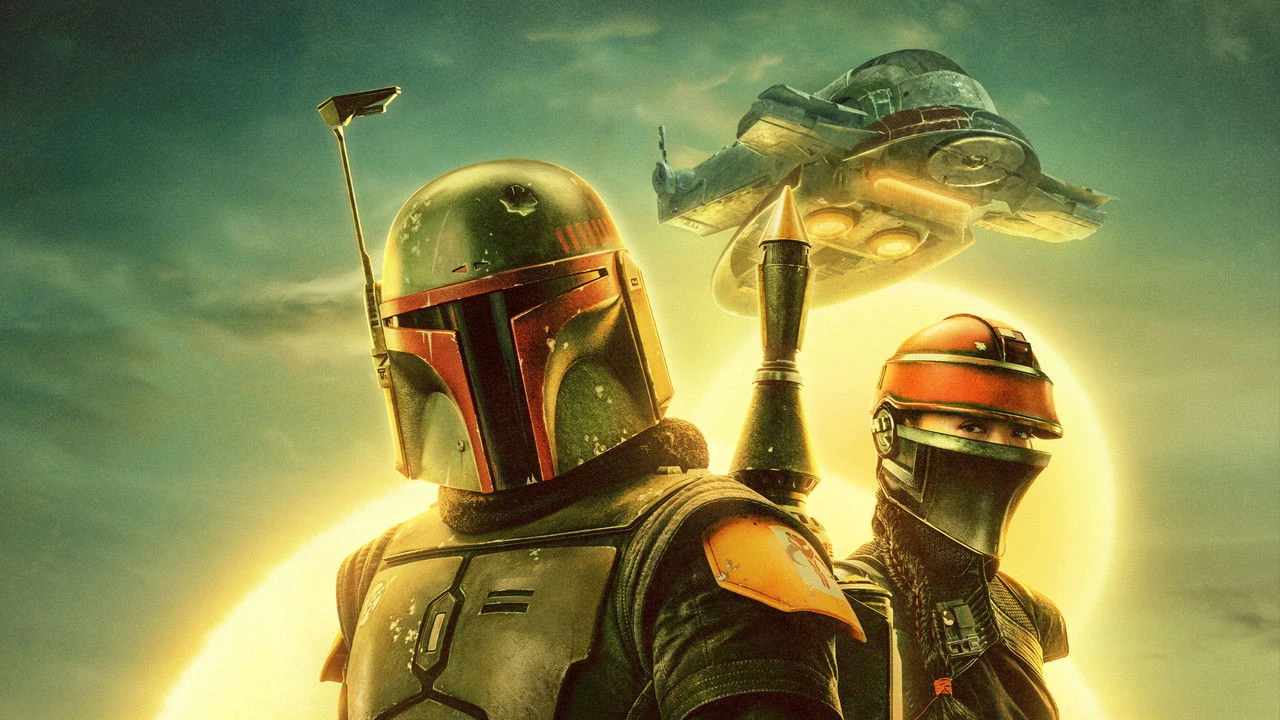
 Fennec Shand, the pragmatic enforcer, stands ready, representing the unyielding reality Boba Fett must confront.
Beyond the Sarlacc: Rebirth and the Nature of Governance
Despite its narrative stumbles, The Book of Boba Fett compels us to consider profound questions about power, governance, and the vacuum left by tyranny. After Jabba the Hutt’s demise and the Empire’s fall, Tatooine’s underworld is in flux. Boba Fett steps into this void, not as a ruthless dictator, but as a would-be benevolent overlord, albeit one with a violent past. His attempt to rule through respect and diplomacy, rather than sheer terror, is a fascinating ethical dilemma. Can a person who has built a career on violence truly lead with justice? What kind of justice can exist in a system built on old, corrupt foundations?
His interactions with the various crime families and the mayor’s office highlight the fragility of order and the inherent corruption within systems of power. Boba’s vision, however naive it sometimes appears, is an exploration of a different kind of leadership in a post-imperial galaxy. It forces us to ask if true change is possible, or if the cycle of power, control, and exploitation is simply inevitable. The series, even with its shortcomings, poses a philosophical query about whether a morally ambiguous figure can ever truly find redemption in leadership, or if their past actions are an indelible stain on their future aspirations.
 The bustling, gritty streets of Mos Espa, a canvas for Boba Fett’s struggle to establish a new order in the underworld.
The legacy of The Book of Boba Fett is undeniably mixed. It’s a show that dared to pull back the curtain on an icon, only to sometimes lose its footing in the process. Yet, in its ambitious, albeit flawed, attempt to explore the existential weight of a legend trying to redefine himself, it serves as a potent reminder that even the most beloved figures must grapple with who they are, who they were, and who they aspire to be.
What does it mean for a character, or indeed, for any of us, to step out of the shadows of expectation and forge a new path, even if that path is met with skepticism and misunderstanding? The Book of Boba Fett may not have been the flawless epic many hoped for, but it offers a poignant, if imperfect, reflection on the perilous journey of self-discovery and the enduring quest for meaning, even amidst the familiar sands of a galaxy far, far away.
Where to Watch
- Disney Plus
What’s Up? explores the philosophical depths of cinema.