Diabolical Depths: Unpacking The Boys' Animated Anarchy
Exploring The Boys Presents: Diabolical, an animated anthology that pushes boundaries, offering a fragmented yet profound look into power, morality, and the human condition, despite its divisive reception.
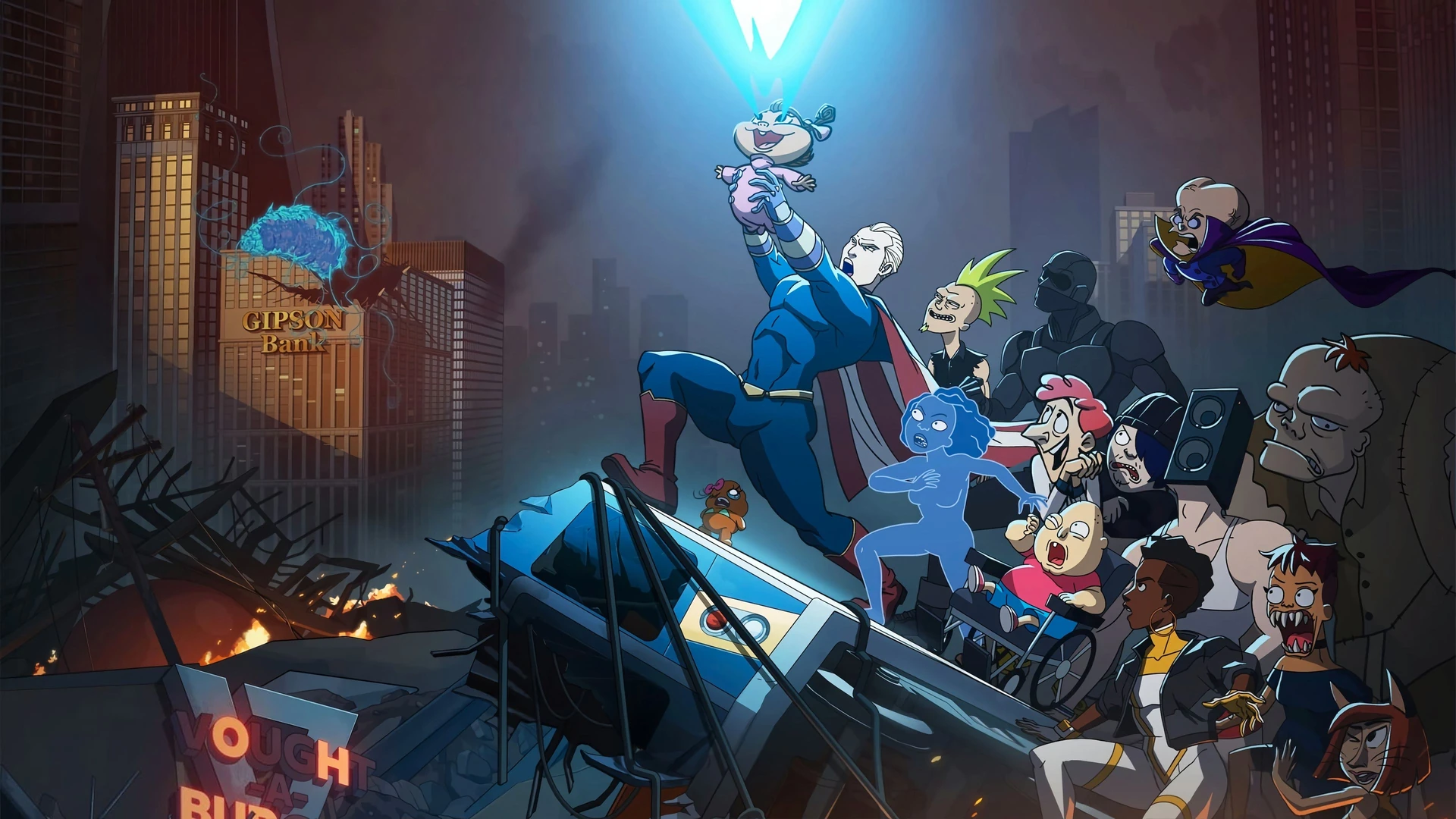
“Man is condemned to be free; because once thrown into the world, he is responsible for everything he does.” — Jean-Paul Sartre
The Boys Presents: Diabolical (2022) is not for the faint of heart, nor for those seeking easy answers. It’s a chaotic, often gratuitous, and frankly unhinged animated anthology that plunges headfirst into the grimy, morally compromised universe established by The Boys. With its short, sharp fourteen-minute episodes, it serves up a rapid-fire succession of ultraviolence, perverse humor, and surprising emotional beats, all wrapped in a smorgasbord of animation styles. Critics on Rotten Tomatoes largely lauded its audacity, appreciating its willingness to push boundaries and explore unseen crevices of the Boys lore. However, audience reactions, and even some critical voices, were more divided, citing its inherent unevenness and sometimes overwhelming shock value as both a feature and a bug. This isn’t just a spin-off; it’s a series of philosophical thought experiments disguised as cartoons, grappling with the very nature of power and corruption in a world where gods walk among us, often with devastating consequences.
The Anarchy of Anthology: Deconstructing the Fragmented Self
The anthology format of Diabolical is, by its very nature, a fractured mirror reflecting the splintered morality of its world. Each episode, distinct in its animation style and narrative approach, offers a micro-study in ethical decay and the absurdities of unchecked power. While this variety was praised by many as a creative triumph, allowing for diverse storytelling ranging from Pixar-esque sweetness to classic Looney Tunes violence and mature Japanese anime aesthetics, it also led to the common criticism of uneven pacing and quality. Some shorts hit hard, landing their emotional or comedic punches with precision, while others felt like a fleeting glimpse of gratuitousness, leaving viewers wondering about their deeper purpose.
Yet, this very unevenness can be seen as philosophically resonant. It mimics the fragmented human experience in a world devoid of consistent moral frameworks. There’s no single narrative arc to guide us, just a series of brutal, often hilarious, vignettes demonstrating how quickly power corrupts, how easily innocence is shattered, and how desperate ordinary people become in the shadow of supes. From the surprisingly poignant tale of a laser-eyed infant and its adoptive parents in “Laser Baby’s Day Out” to the visceral origin story of Homelander, the series explores different facets of the human (and superhuman) psyche, often showing us that the “diabolical” isn’t just an external force, but an internal possibility.
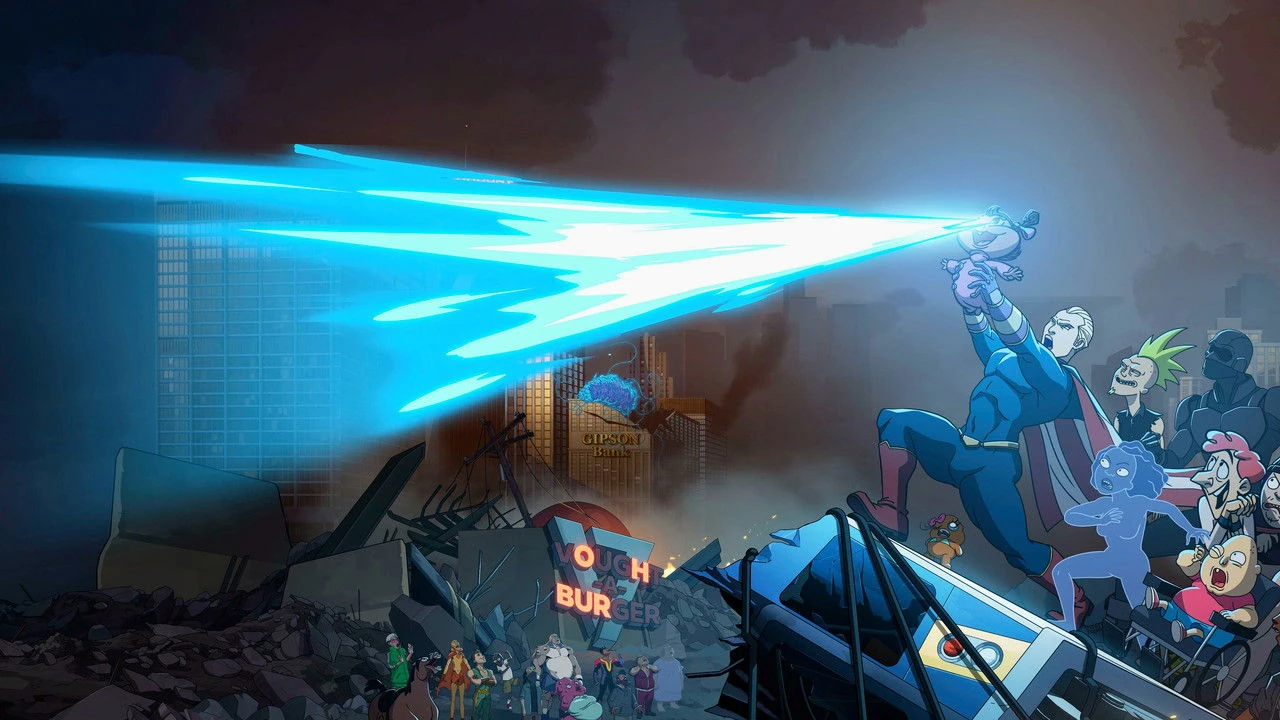 A visual cacophony of styles and characters, reflecting the diverse and often chaotic nature of the animated anthology.
The Grotesque & The Glimmer: The Problematic Pursuit of Meaning
Diabolical revels in the grotesque. Its violence is often over-the-top, its humor pitch-black, and its themes frequently push the boundaries of good taste. This extreme approach, a hallmark of The Boys franchise, was a point of contention among viewers. Some embraced it as part of the show’s identity, a necessary tool to critique the superhero genre’s sanitized morality, while others found it excessive, arguing that the shock value occasionally overshadowed any potential for deeper meaning. Critics noted that the short runtime of each episode, around 14 minutes, sometimes meant that the philosophical implications felt rushed or underdeveloped compared to the main series.
Even in the most depraved acts, or the most absurd scenarios, there often lies a distorted reflection of fundamental human desires: for love, for acceptance, for power, or simply for survival.
However, to dismiss Diabolical as mere shock-for-shock’s-sake would be to miss its nuanced critique. The series uses the grotesque not just for titillation, but as a lens through which to examine the ethics of power and the banality of evil. In “An Animated Short Where Pissed-Off Supes Kill Their Parents,” it exposes the ultimate childishness and entitlement of those with absolute power. In “BFFs,” it satirizes consumer culture and toxic relationships through the bizarre lens of anthropomorphic sentient feces. Even in its most absurd moments, the show forces us to confront uncomfortable truths about human nature and society. It asks: What happens when morality becomes a commodity, and heroism a performance? The “glimmer” amidst the grotesque often comes from unexpected places – a moment of genuine human connection, a fleeting act of defiance, or the raw, unadulterated pain that underlies the show’s dark humor.
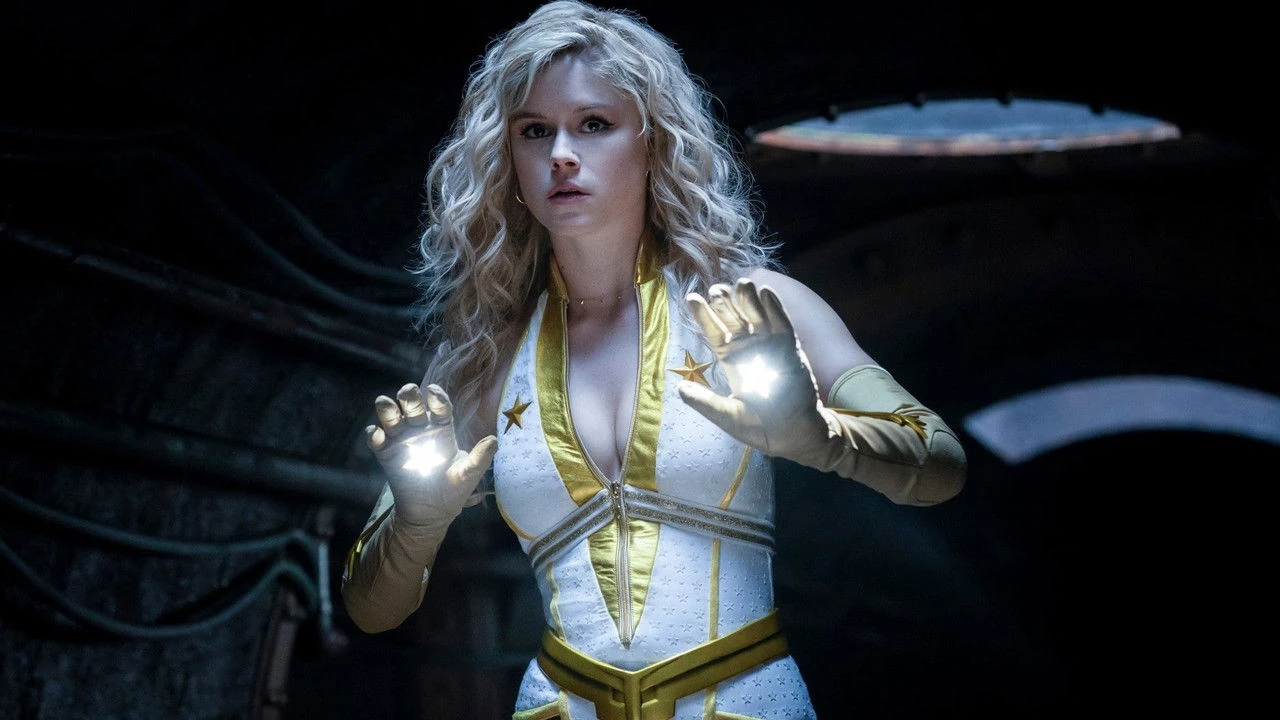 A moment of surprising tenderness amidst the chaos, hinting at the complex emotional undercurrents beneath the violent spectacle.
Beyond the Splatter: Existential Echoes in a Supes-Dominated World
Beneath the gore, the gags, and the varied animation, Diabolical dares to ask profound questions that resonate with existentialist philosophy. In a world where superpowered beings can crush cities and rewrite the rules of reality, individual agency often feels like a cruel joke. The series explores:
- The Problem of Evil: Not just the evil perpetrated by supes, but the complicity of corporations, the media, and ordinary citizens who enable it. The show suggests that evil isn’t an external, monstrous force, but an ever-present potential within all of us, amplified by power and opportunity.
- The Absurdity of Existence: Many episodes highlight the sheer absurdity of life in this universe, where grotesque events are commonplace, and genuine heroism is often punished or simply ineffective. This aligns with Albert Camus’ concept of the absurd – the fundamental conflict between humanity’s search for meaning and the universe’s inherent meaninglessness.
- The Weight of Choice: Despite the overwhelming power dynamics, characters, both supe and human, are constantly making choices, often with horrific consequences. The series underscores Sartre’s notion of radical freedom and the terrifying responsibility that comes with it, even in seemingly insignificant moments.
While Diabolical might not offer the sprawling character arcs of its parent series, its concise format allows for sharper, more focused explorations of these themes. Each short is a meditation, however brief, on the human condition in extremis. It’s a bold experiment in storytelling, challenging viewers to look beyond the surface-level shock and find the deeper, often uncomfortable, truths about power, morality, and our own shadowed reflections.
Ultimately, The Boys Presents: Diabolical is a raw, messy, and unapologetically brutal collection of cautionary tales. It doesn’t always succeed in its philosophical ambitions, and its unevenness is undeniable, but its willingness to confront the darkest aspects of humanity and the terrifying implications of unchecked power ensures its place as a thought-provoking, albeit controversial, entry in the ever-expanding canon of The Boys.
What does it truly mean to be “diabolical” in a world that has already normalized the monstrous? And what does our own fascination with such a world reveal about ourselves?
Where to Watch
- Amazon Prime Video
- Amazon Prime Video with Ads
What’s Up? explores the philosophical depths of cinema.