The Fractured Mirror: Identity and Empathy in The Crowded Room
Dive into The Crowded Room's profound exploration of fragmented identity, trauma, and the elusive nature of self, asking what it means to be whole.
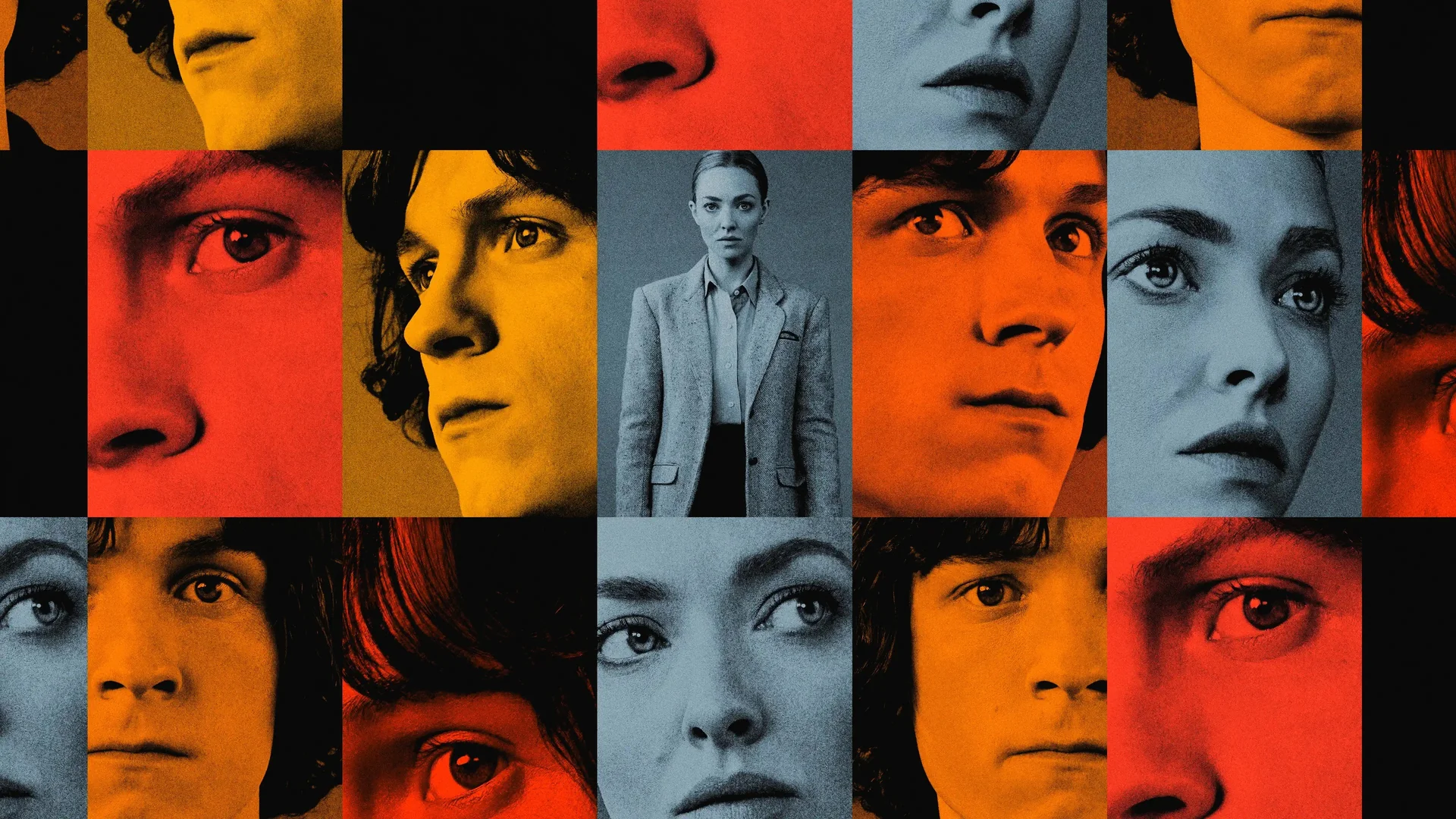
“The self is not something ready-made, but something in continuous formation through choice of action.” — John Dewey
In the labyrinthine corridors of the human mind, where memory and identity entwine, The Crowded Room emerges not merely as a crime drama, but as a profound philosophical inquiry into the very nature of self. Set against the gritty backdrop of 1979 Manhattan, the series plunges us into the disorienting arrest of Danny Sullivan, a young man whose shocking alleged crime belies a far more intricate and tragic internal landscape. This Apple TV+ production, a masterclass in psychological tension, compels us to look beyond the surface of culpability and into the fractured mirrors of consciousness, where the ‘I’ becomes a chorus, and the truth, a mosaic of disparate realities. It is a cinematic experience that dares to ask: what truly constitutes a person when the very foundation of self is shattered?
The Philosophical Core: Anatomy of a Fragmented Self
The Crowded Room meticulously dissects the concept of personal identity, challenging our preconceived notions of a singular, coherent self. At its heart lies Danny Sullivan, a character whose internal world is anything but unified. The series forces us to confront the unsettling reality of dissociative identity disorder (DID), portraying it not as a sensationalized plot device, but as a devastating consequence of profound trauma. Philosophers from John Locke, who posited identity as continuity of consciousness, to contemporary thinkers exploring the social construction of self, would find fertile ground in Danny’s plight.
Key themes resonate throughout:
- Identity as Narrative — The series illustrates how our selfhood is often a story we tell ourselves, or one that is told about us. For Danny, this narrative is constantly shifting, challenged by conflicting memories and the emergence of distinct personalities, each with its own history and motivations.
- The Burden of Memory — Memory is revealed as both the architect of identity and its potential destroyer. Traumatic memories, suppressed or distorted, become the architects of Danny’s fractured mind, each fragment clinging to a piece of a painful past.
- Authenticity vs. Performance — As different selves present themselves, the series blurs the lines between genuine expression and a coping mechanism, prompting us to question how much of anyone’s identity is an authentic core versus a performance tailored for survival.
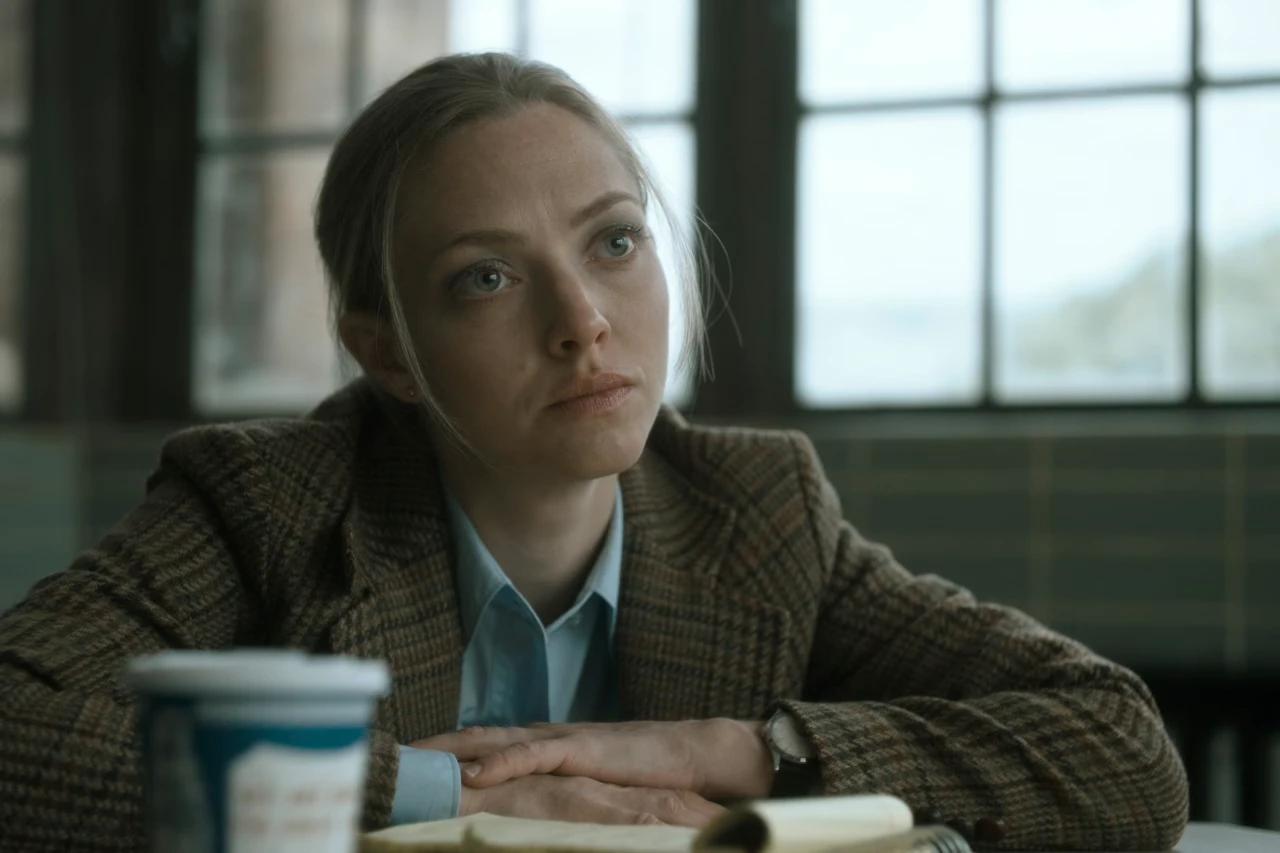 Danny Sullivan’s gaze, a window into a mind grappling with its own multiplicity.
The Human Condition: Empathy in the Face of Enigma
The series masterfully explores the ethical and empathetic challenges presented by a fractured identity. Amanda Seyfried’s character, Rya Goodwin, the unlikely investigator, serves as our guide through this psychological labyrinth. Her journey is one of profound empathy, as she attempts to understand, rather than merely judge, Danny’s complex reality. This exploration forces us to confront our own biases and the limitations of a justice system designed to process singular, accountable agents.
This is where we discover the true weight of choice — not in the outcome, but in the becoming.
Rya’s persistent questioning and her refusal to accept simplistic answers embody a crucial philosophical stance: that true understanding often requires suspending judgment and venturing into the unknown territories of another’s subjective experience. The narrative unpacks the moral dilemmas inherent in assessing culpability when the ‘self’ that committed an act might not be the ‘self’ currently facing the consequences. It asks us to consider:
- Moral Responsibility: Can a fragmented self be held wholly accountable in the same way a unified self is? Where does responsibility reside when identity is distributed?
- The Nature of Justice: Should justice prioritize punishment, or understanding and healing? The series suggests that without deep empathy, justice risks becoming a blunt instrument, incapable of truly addressing the complexities of human suffering.
- The Power of Connection: Rya’s unwavering attempt to connect with Danny’s various selves highlights the healing potential of human connection and validation, even in the darkest corners of the mind.
 Rya Goodwin, the investigator, patiently seeks to piece together the fragments of a shattered psyche.
Beyond the Surface: The Existential Weight of Being
The Crowded Room transcends its biographical and crime drama genres to delve into existential depths. It poses fundamental questions about what it means to be in the world when one’s internal landscape is a battleground. The sheer effort required for Danny to navigate daily life underscores the existential burden of consciousness itself, magnified by the constant negotiation between disparate internal voices. The series subtly hints at the metaphysical implications of DID: if multiple personalities can inhabit one body, what does that say about the soul, about individuality, about the boundaries of selfhood?
The “crowded room” itself becomes a potent metaphor for:
- The internal cacophony of multiple identities.
- The overwhelming external pressures of society, expectation, and judgment.
- The confined spaces of trauma and memory from which escape seems impossible.
The series is a haunting reminder that while we often seek comfort in the idea of a stable, immutable self, reality can be far more fluid and terrifyingly complex. It compels us to reflect on the fragility of our own identities and the unseen struggles that others may carry. What if our own ‘room’ is more crowded than we dare to admit? What if the integrity of our self is merely a fortunate illusion, upheld by circumstance rather than inherent truth? These are the uncomfortable truths that The Crowded Room places before us, challenging us to look deeper, to feel more profoundly, and to question the very foundations of who we believe ourselves to be.
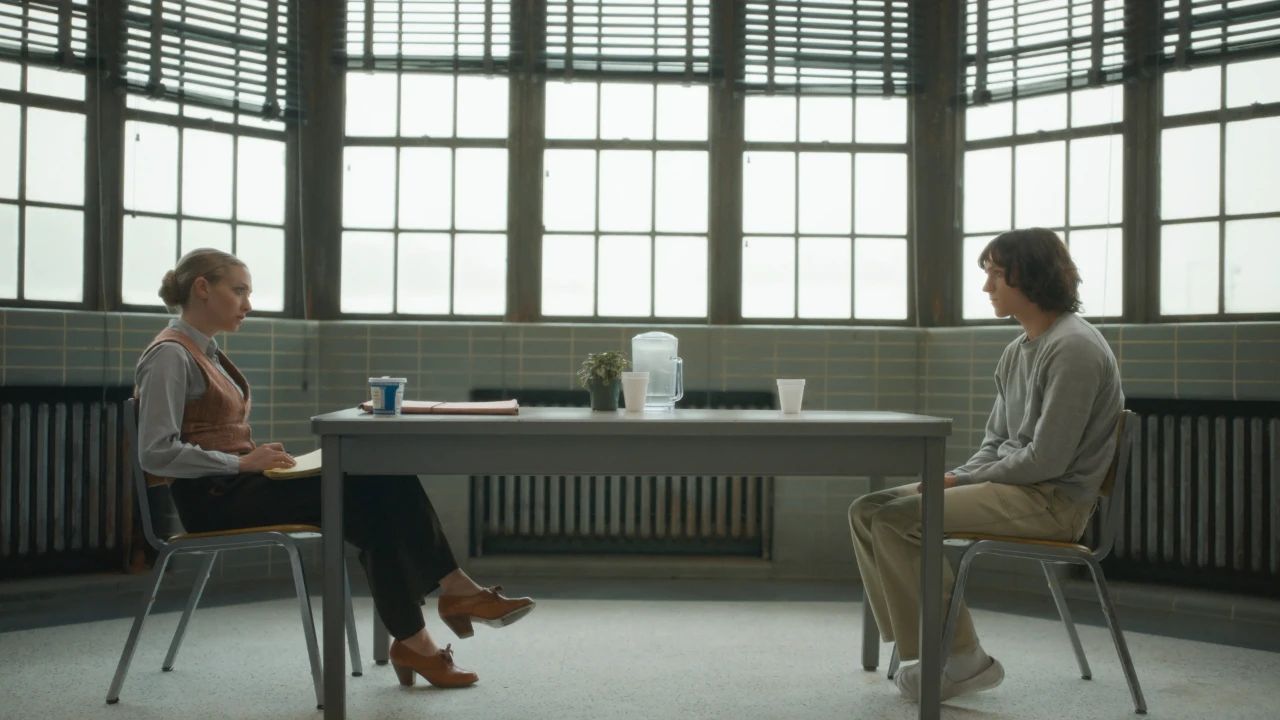 The profound agony of a mind wrestling with its own splintered existence.
“The greatest evil is not done in the dramatic act, but in the slow neglect, the subtle dehumanization that precedes it, and the societal structures that allow it to fester.”
The Crowded Room leaves us with a lingering sense of melancholy, yet also a profound appreciation for the resilience of the human spirit and the transformative power of empathy. It is a poignant exploration of how the self, when assaulted by unimaginable pain, can splinter into a multitude of protective shards. Ultimately, the series asks us to expand our definition of what it means to be human, to look with compassion at those whose inner worlds defy easy categorization, and to recognize that true understanding often begins with acknowledging the profound enigma within. What mirror does this series hold up to our existence, and what fractured reflections do we choose to acknowledge within ourselves and others?
Where to Watch
- Apple TV
- Apple TV Amazon Channel
What’s Up? explores the philosophical depths of cinema.