The Crown of Thorns: The Godfather Part II and the Burden of Inheritance
Exploring The Godfather Part II's profound meditation on power, family, and the corrosive nature of the American Dream through Michael and Vito Corleone.
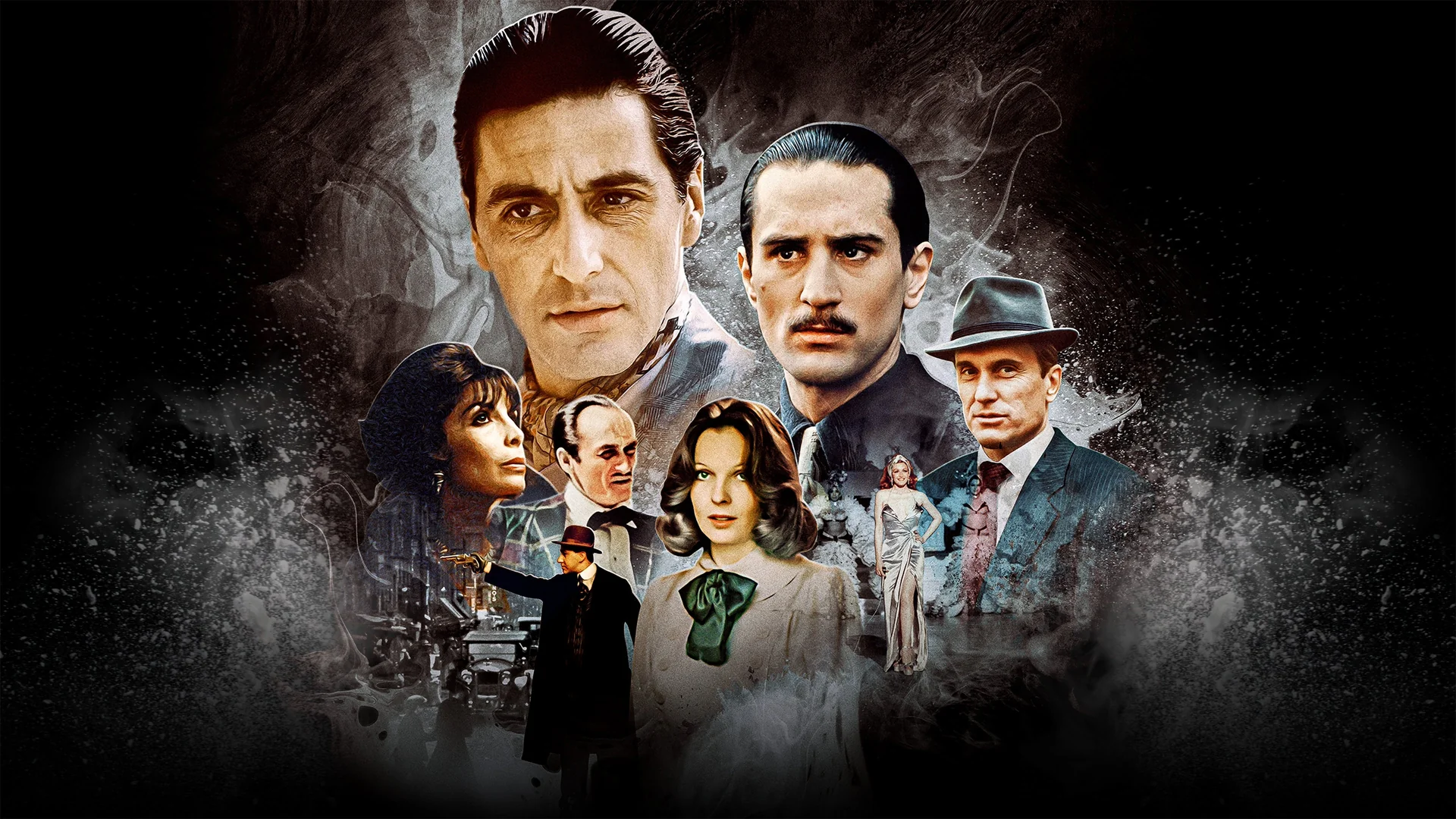
“The past is never dead. It’s not even past.” — William Faulkner
Francis Ford Coppola’s The Godfather Part II, released in 1974, isn’t just a sequel; it’s a profound, sprawling epic that delves into the very soul of the American immigrant experience, the corrosive nature of power, and the inescapable weight of legacy. While critics, almost universally, hail it as a masterpiece—often cited alongside, or even above, its predecessor—and its 96% Rotten Tomatoes score and 90 Metascore attest to its extraordinary artistic merit, its philosophical weight isn’t found in simple admiration. Rather, it lies in the unsettling questions it forces us to confront about ambition, family, and the cost of the so-called American Dream. This isn’t a film that offers comfort; it offers a mirror, reflecting the darkness inherent in absolute power and the tragic entropy of the human spirit.
The Inheritance of Emptiness
At its core, The Godfather Part II is a devastating study of legacy and moral erosion. We are presented with two parallel narratives: the ascent of Vito Corleone (Robert De Niro) from an orphaned Sicilian boy to the respected, ruthless patriarch of a crime family in early 20th-century New York, and the descent of his son, Michael (Al Pacino), from reluctant heir to an isolated, tyrannical emperor in the 1950s. What’s truly profound is how the film meticulously charts the trajectory of these two men, revealing not just their actions but the very essence of their being. Vito builds; Michael destroys, often in the name of preservation.
Many critics, while praising the film’s structural brilliance, initially grappled with its demanding length (202 minutes) and its complex, non-linear storytelling. Some found the constant shifting between timelines a challenge, though it ultimately proves to be its greatest strength. It’s this intricate dance between past and present that highlights the film’s central philosophical conceit: that the foundations laid by one generation, however well-intentioned or brutally earned, can become a cage for the next. Vito’s violence is born of necessity and protection; Michael’s, of paranoia and consolidation. The audience is left to ponder: is Michael simply a more ruthless version of his father, or has the very nature of power transformed him into something else entirely?
 A young Vito Corleone, newly arrived in America, gazing at the Statue of Liberty – a symbol of hope and a harbinger of a different kind of struggle.
The American Dream, Reimagined as a Nightmare
The film takes the familiar narrative of the “American Dream” and twists it into a chilling examination of corruption and assimilation. Vito arrives in America, escaping a cycle of violence in Sicily, only to build his own empire through similar, albeit more organized, means. He achieves success, wealth, and respect, but at what cost to his descendants? Michael inherits this empire and, in his relentless pursuit of legitimacy, paradoxically becomes more ruthless, more isolated, and more morally bankrupt than Vito ever was.
It’s in the sterile opulence of Michael’s Lake Tahoe compound, far removed from the bustling streets of Little Italy, that we witness the true tragedy: the very success they strove for has severed their connection to humanity.
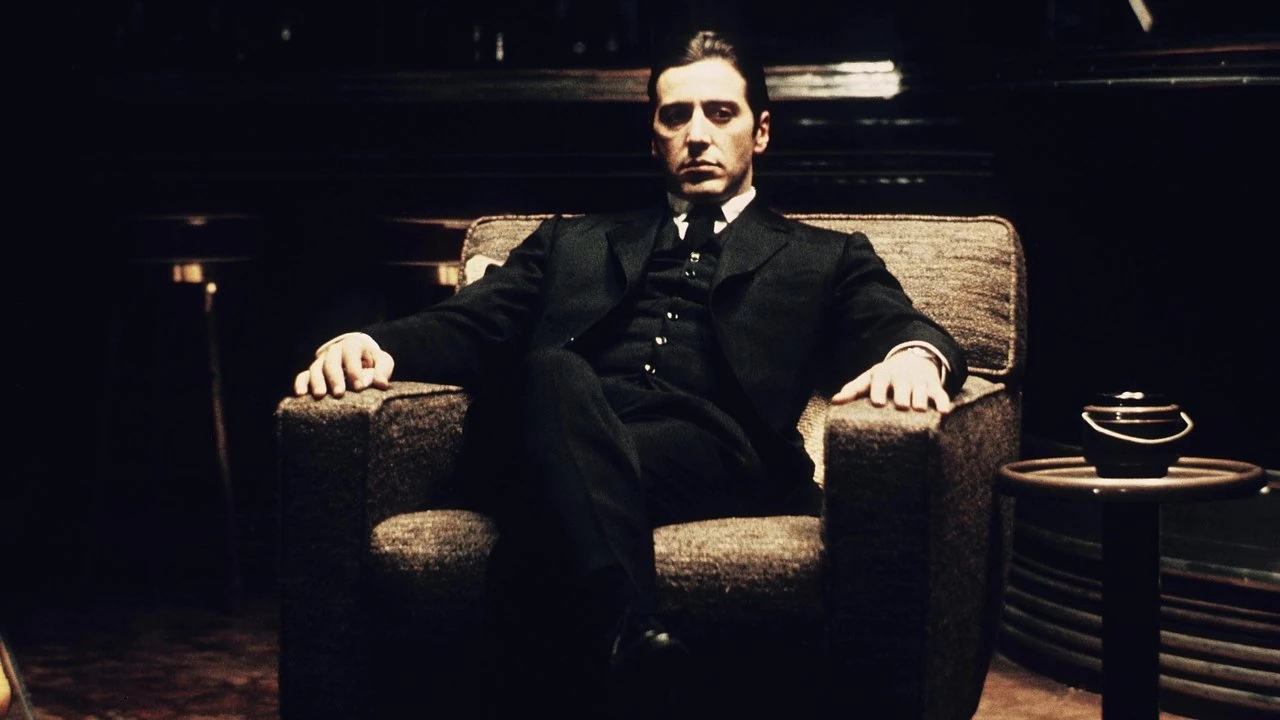
Audience reactions, even today, often center on the visceral pain of watching Michael’s transformation. While Pacino’s performance is universally lauded for its chilling intensity, many find Michael a deeply unlikable, even terrifying, protagonist. This isn’t a flaw in the film, but a testament to its brutal honesty. Coppola doesn’t ask us to empathize with Michael in the traditional sense; he asks us to observe his downfall as a parable of power’s corrupting influence. The film cleverly juxtaposes Vito’s warmth and familial loyalty, even amidst his violence, with Michael’s cold, calculating demeanor, which ultimately alienates everyone he professes to love. The “family business” becomes a literal and metaphorical prison, binding its members not through love, but through fear and obligation.
 Michael Corleone, alone in the vastness of his office, his face a mask of weary resolve and profound loneliness.
The Existential Weight of Choice and Consequence
Beyond its narrative brilliance and unforgettable performances, The Godfather Part II is an existential tour de force. It asks us to consider the nature of free will versus determinism. Was Michael ever truly free to escape his fate, or was he merely a product of his environment and the legacy he inherited? The choices he makes—particularly the infamous execution of his own brother, Fredo—are not impulsive acts of passion, but calculated decisions aimed at preserving the “family” (which, by this point, has become synonymous with “his power”). This act is perhaps the most devastating illustration of Michael’s spiritual demise, a profound moment that transcends mere crime drama and ventures into the realm of classical tragedy.
The film’s ending, with Michael sitting alone by the lake, lost in memory, is not just a powerful cinematic moment; it’s a profound statement on the isolation that accompanies absolute power. He has achieved everything his father dreamed of and more, but at the cost of his soul. He is a king on a throne of ice, ruling an empire of ghosts. The “American Dream” for Michael, ultimately, isn’t freedom or happiness, but a solitary, terrifying dominion. It’s a stark reminder that some victories are more devastating than any defeat.
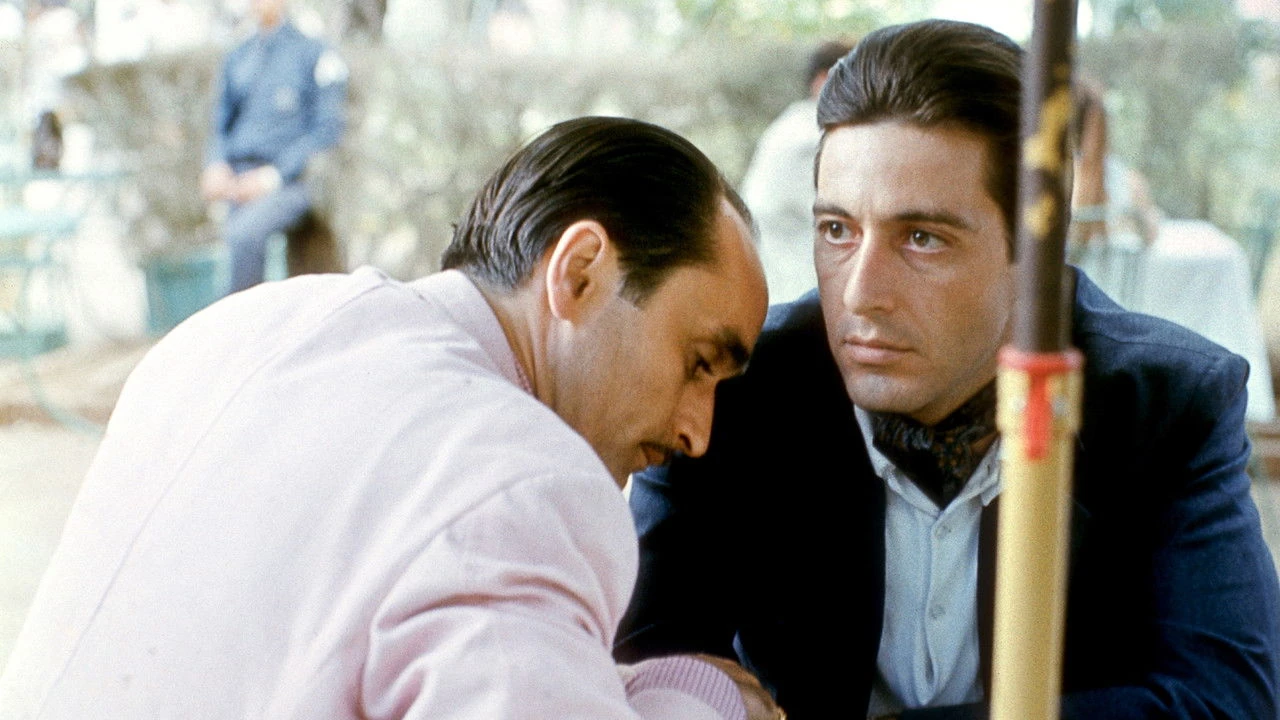
 A flashback scene, the Corleone family gathered for a birthday, before the war, before the weight of destiny settled upon Michael.
“Power tends to corrupt, and absolute power corrupts absolutely. Great men are almost always bad men…” — Lord Acton
The Godfather Part II is a film that, despite its universal acclaim for artistic achievement, leaves many viewers with a deep sense of melancholy and disquiet. It doesn’t offer easy answers or clear heroes. Instead, it meticulously deconstructs the seductive allure of power and lays bare its devastating consequences. It’s a story that resonates because it speaks to universal human experiences: the longing for belonging, the desire for security, and the tragic propensity for self-destruction in the pursuit of greater control. It asks us, chillingly, to consider what we would sacrifice for our own version of an empire, and whether the cost is ever truly worth it.
Where to Watch
- fuboTV
- Paramount+ Amazon Channel
- Paramount+ Roku Premium Channel
- YouTube TV
- Philo
What’s Up? explores the philosophical depths of cinema.