The Martian's Cosmic Optimism: A Philosophical Voyage of Human Ingenuity
Exploring the philosophical underpinnings of Ridley Scott's The Martian, examining resilience, collective effort, and the nature of hope against impossible odds.

“The universe is under no obligation to make sense to you.” — Neil deGrasse Tyson
Ridley Scott’s The Martian, released in 2015, isn’t just another sci-fi spectacle; it’s a vibrant, often funny, and undeniably hopeful ode to human ingenuity and resilience. While critics largely celebrated its scientific accuracy, engaging narrative, and Matt Damon’s charismatic performance—garnering a stellar 91% on Rotten Tomatoes and an 80 on Metacritic—some pointed to a perceived lack of sustained dramatic tension. The film, for all its grand scale, often feels like a procedural, a step-by-step guide to not dying on Mars, which, ironically, can make the stakes feel less existential for some viewers. Yet, beneath the meticulous problem-solving and the wry humor, The Martian offers a profound philosophical reflection on our place in the cosmos, the power of collective endeavor, and what it truly means to survive.
The Resilience of Reason: Cultivating Life in the Void
At its heart, The Martian is a testament to the enlightenment ideal: that reason, science, and empirical knowledge are our best tools against an indifferent universe. Mark Watney, stranded alone on Mars, faces an almost biblical array of challenges: isolation, resource scarcity, and the sheer hostility of his environment. What keeps him going isn’t just a stubborn will to live, but an unwavering faith in his scientific training. He “sciences the shit out of it,” as he famously quips, turning Martian soil into farmland, synthesizing water, and jury-rigging communication systems.
Critics often praised this aspect, noting how refreshing it was to see a sci-fi film foreground intelligence over brute force or mystical intervention. However, it’s also where some of the minor critiques arise. The rapid-fire solutions, while engaging, occasionally diminish the sense of genuine peril. We rarely see Watney truly falter or face an insurmountable obstacle for long. Every problem, no matter how dire, seems to yield to his brilliant, if somewhat convenient, application of physics and botany. This can make the film feel less like a nail-biting survival thriller and more like a puzzle-solving adventure.
But even with this minor quibble, the philosophical takeaway remains potent: our greatest strength lies in our capacity for rational thought and adaptation. Watney doesn’t lament his fate; he calculates his chances, identifies his resources, and systematically sets about changing his circumstances. It’s a powerful argument for proactive engagement with adversity rather than passive resignation.
- Pragmatic Optimism: Watney embodies a stoic yet cheerful determination. His internal monologues, often delivered directly to camera, are less expressions of despair and more practical updates and problem-solving sessions.
- Science as Faith: For Watney, science isn’t just a tool; it’s a philosophical framework, a source of meaning and purpose in a meaningless void. It’s what gives him control, even when he’s utterly alone.
- The Human Spirit as a Force Multiplier: The film argues that human ingenuity, when combined with a will to survive, can transform the impossible into merely improbable.
 Mark Watney, amidst his makeshift Martian farm, a testament to humanity’s drive to cultivate life even on alien soil.
Navigating Despair and Collective Hope
While Watney’s individual struggle is compelling, The Martian expands its philosophical scope by showcasing the global effort to bring him home. Earth’s response is an inspiring, if somewhat idealized, depiction of international cooperation. NASA, China’s CNSA, and countless scientists worldwide pool their resources and intellect, driven by a singular, collective purpose: to save one man.
This isn’t just a story of one man’s survival; it’s a testament to the profound human need for connection and the moral imperative to rescue even the seemingly lost.
This collective aspect adds another layer of philosophical inquiry: What is the value of a single human life? In a vast, indifferent universe, is one astronaut worth billions of dollars and countless hours of global effort? The Martian unequivocally answers yes. It suggests that our shared humanity, our capacity for empathy, and our unwillingness to abandon one another are defining features of our species. Some critics found the emotional arcs of the Earth-bound characters (played by a fantastic ensemble including Jessica Chastain, Jeff Daniels, and Kristen Wiig) a bit thin compared to Damon’s central performance. While perhaps not deeply exploring their inner turmoil, their actions effectively underscore the film’s message about unity. The film avoids grandstanding politics, instead focusing on the nuts and bolts of the rescue, which paradoxically makes the humanitarian message even stronger. It’s about doing, not just feeling.
- The Ethics of Rescue: The film implicitly argues that the moral cost of not trying to save Watney would be far greater than any financial or logistical hurdle.
- Transnationalism: The Martian presents a utopian vision where geopolitical differences are set aside in the face of a universal human challenge, suggesting a potential future for our species.
- The Burden of Leadership: Characters like Teddy Sanders (Jeff Daniels) grapple with the heavy responsibility of making life-or-death decisions, weighing risk against reward for the good of the many and the one.
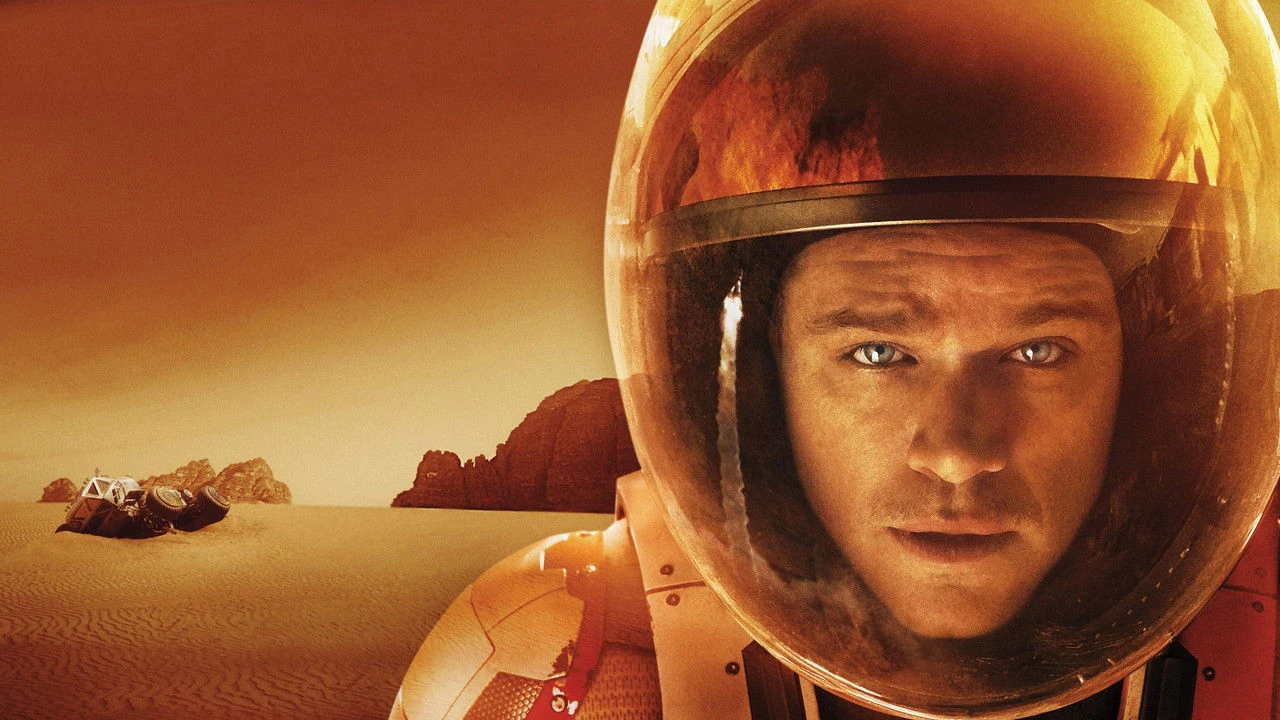 The crew of the Ares III, bound by duty and hope, racing against time to bring their lost comrade home, a symbol of humanity’s collective heart.
The Cosmos as Mirror: Our Place in the Vastness
Beyond the thrilling narrative, The Martian forces us to confront our own smallness and significance. Watney’s isolation on Mars is a potent metaphor for the existential solitude that often underpins the human condition. He is utterly alone, millions of miles from the nearest other human, yet he never truly succumbs to despair. Why? Because he finds meaning not in external validation, but in the act of surviving itself, in the pursuit of knowledge, and in the faint hope of reconnecting with his species.
The vast, silent landscapes of Mars serve as a stark backdrop, reminding us of the immense and often hostile universe we inhabit. Yet, against this backdrop, the tiny, tenacious figure of Watney, planting potatoes, repairing equipment, and calculating trajectories, becomes a symbol of humanity’s enduring spirit. The film doesn’t shy away from the danger but frames it as a challenge to be overcome, not a reason for surrender. It’s a deeply optimistic take on anthropocentric philosophy, positing that even in the grand cosmic scheme, human life and consciousness hold immense value.
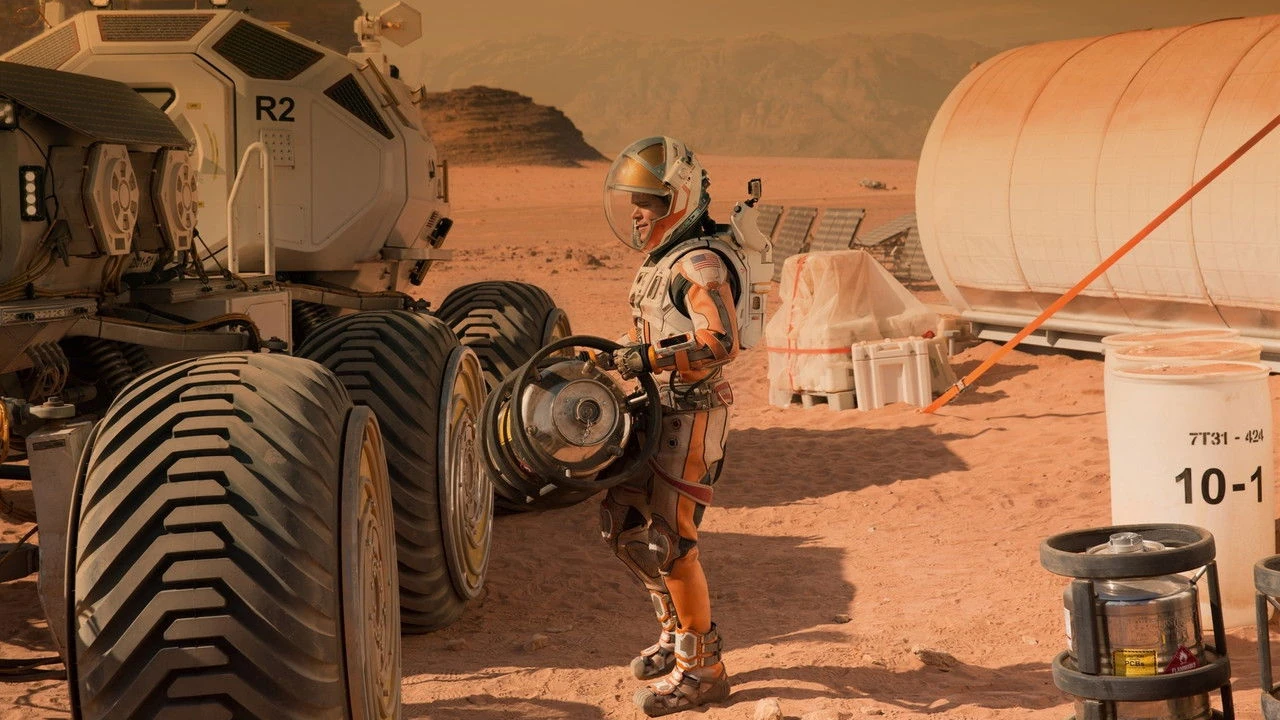 A lone astronaut stands against the majestic, desolate canvas of Mars, a stark reminder of our individual insignificance yet collective drive in the universe.
“The Martian offers a compelling, if occasionally frictionless, vision of humanity’s future, where ingenuity and cooperation aren’t just ideals, but the very keys to our survival. Its greatest philosophical triumph is its unyielding belief in us.”
The Martian may not delve into the deepest psychological traumas of prolonged isolation, and some might argue its relentless positivity verges on the saccharine. The challenges, while daunting, often feel like solvable puzzles rather than truly desperate struggles. But these are minor notes in a symphony of human achievement. What it does, brilliantly, is champion the power of intellect, the necessity of collaboration, and the stubborn, beautiful truth that even when faced with insurmountable odds on a desolate planet, the human spirit, armed with science and humor, will find a way to thrive. It asks us to look up at the stars not with fear, but with the boundless curiosity and determination that define our species.
Where to Watch
- YouTube TV
What’s Up? explores the philosophical depths of cinema.