The Absurdist Legacy: Navigating Expectation in The Naked Gun (2025)
A philosophical look at The Naked Gun (2025), exploring legacy, absurdity, and the challenges of rebooting a comedic icon, starring Liam Neeson.
“Comedy is simply a funny way of being serious.” — Peter Ustinov
The news of a new The Naked Gun film, slated for an August 1, 2025 release, starring Liam Neeson as Frank Drebin Jr., has undeniably stirred a potent cocktail of excitement and trepidation across the cinematic landscape. As philosophical critics, we’re less concerned with box office projections and more with the profound questions a project like this inherently raises. How does one inherit a legacy of such unique, almost anarchic humor? Can the spirit of the original, a masterclass in deadpan absurdity, be resurrected or even reimagined for a new era? While actual critical reviews and audience reactions are, of course, still far off, the very concept of The Naked Gun (2025) offers a rich canvas for pre-release philosophical contemplation. It’s a tightrope walk for director Akiva Schaffer, balancing reverence for the past with the imperative to forge something fresh. The film, clocking in at a brisk 85 minutes, promises the familiar blend of action, comedy, and crime, but the shadow of the original’s comedic genius looms large.
The Weight of the Absurdist Crown: Legacy and Identity
The core premise – Lt. Frank Drebin Jr. following in his father’s footsteps to save Police Squad – immediately plunges us into a deep well of existential questioning around legacy and identity. The original Naked Gun films, built around Leslie Nielsen’s incomparable Frank Drebin, weren’t just comedies; they were philosophical treatises on the fundamental absurdity of the universe, delivered with a straight face. Drebin’s unwavering, often oblivious, confidence in the face of utter chaos was his superpower, transforming mundane situations into surrealistic tableaux.
Now, with Liam Neeson stepping into a similar role, the question isn’t just “Can he be funny?” but “Can he embody a philosophy of humor that defined the original?” The challenge isn’t merely comedic timing; it’s about inheriting a specific worldview. What does it mean for Frank Drebin Jr. to “follow in his father’s footsteps”?
- Is it a replication of the father’s modus operandi, or a reinterpretation?
- Does he struggle with the shadow of expectation, trying to live up to an iconic, almost mythical figure?
- Can one truly forge their own identity while burdened by such a potent lineage, especially when that lineage is defined by a particular brand of magnificent incompetence?
The film, by its very nature, forces us to consider the burden of inheritance – not just for the character, but for the creative team. How do you honor the spirit of a comedic masterpiece without becoming a mere photocopy, devoid of the original’s spontaneous magic? This is the central philosophical hurdle The Naked Gun (2025) must clear, and it’s where the inevitable comparisons will be most pronounced.
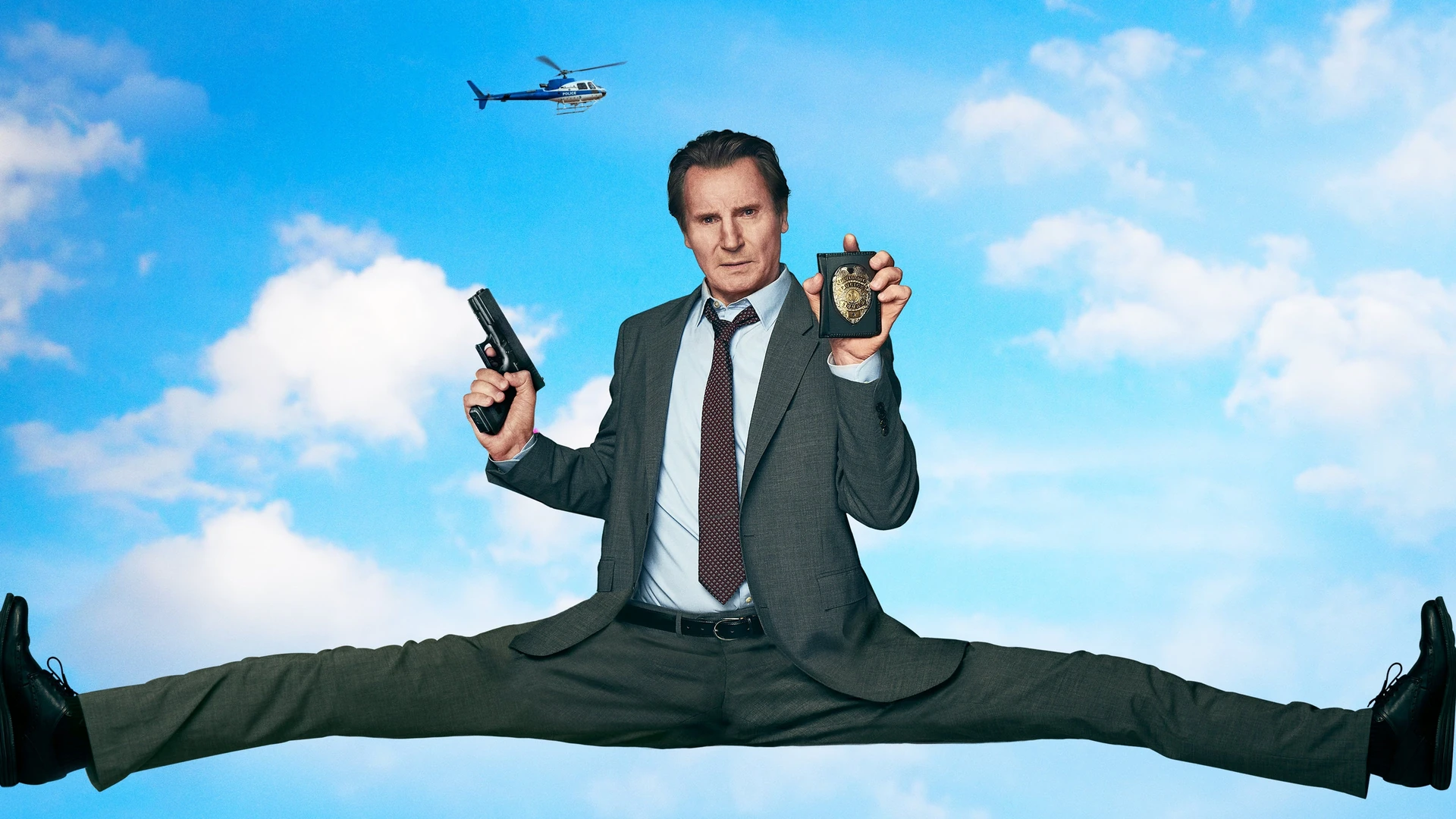
 Liam Neeson as Frank Drebin Jr., caught in a moment of classic physical comedy, hinting at the absurd situations to come.
The Paradox of Parody: Expectation vs. Innovation
The original The Naked Gun films were brilliant parodies, satirizing police procedurals, action tropes, and the very fabric of cinematic storytelling. They thrived on subverting expectations and pushing the boundaries of what audiences thought they knew about film logic. The question for Akiva Schaffer and his team is whether this new iteration can achieve a similar effect in a world already saturated with meta-commentary and self-aware humor.
The risk, as with many reboots, is that it either tries too hard to replicate the past, becoming a nostalgic retread, or deviates too much, alienating the very audience it hopes to attract. Liam Neeson’s casting is particularly intriguing here. Known primarily for his gruff, serious action roles, his pivot to this specific brand of deadpan comedy is a bold move. It offers the potential for subversive humor – seeing a traditionally stoic figure placed in utterly ridiculous scenarios. However, it also carries the potential for misfire, if his portrayal doesn’t land with the same effortless, almost accidental hilarity that Leslie Nielsen perfected.
The tightrope Akiva Schaffer walks is between reverent homage and genuine innovation. To truly succeed, The Naked Gun (2025) can’t just mimic the absurdity; it needs to find new absurdities for our contemporary moment.
We anticipate that potential criticisms might revolve around this very balance: will it feel like a fresh take, or a tired retread? Will the humor resonate with modern audiences, or feel dated? The legacy of the original rests on its timeless, almost universal appeal to the absurd. Can this new chapter find its own unique angle on the paradox of parody, using familiar structures to expose new comedic truths about our world? The film’s success, philosophically, will lie in its ability to not just make us laugh, but to make us think about why we’re laughing.
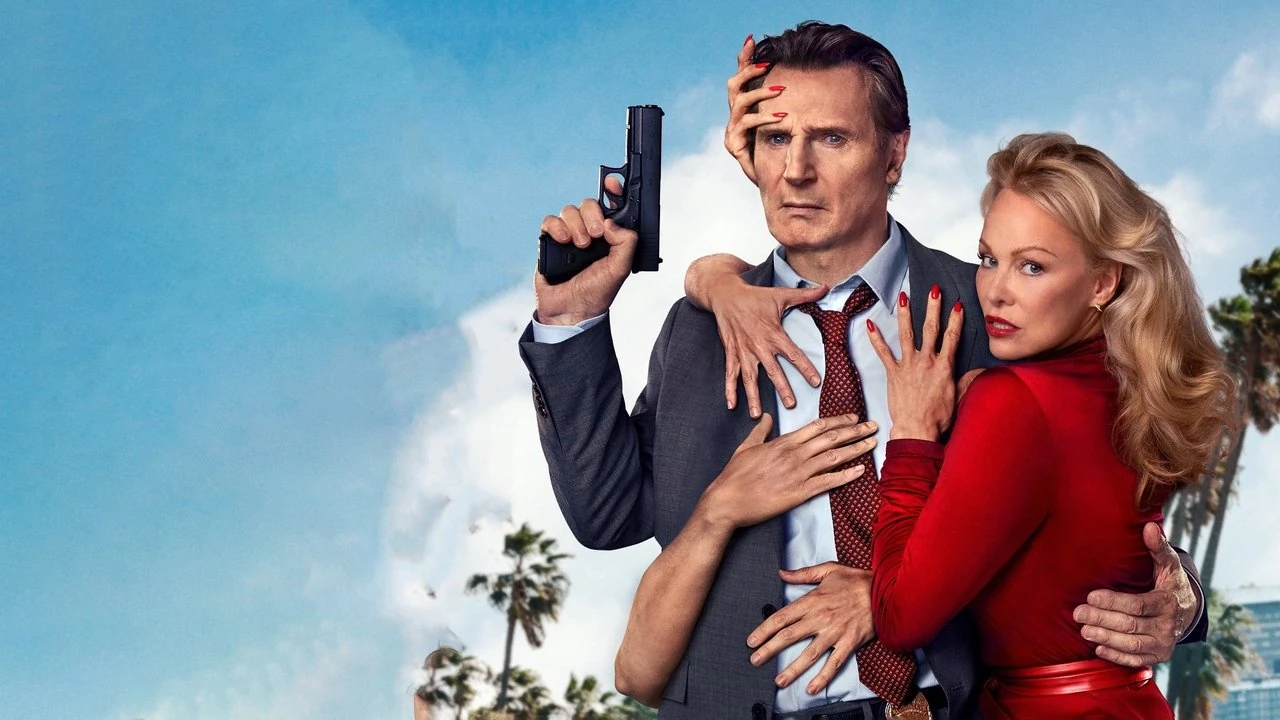
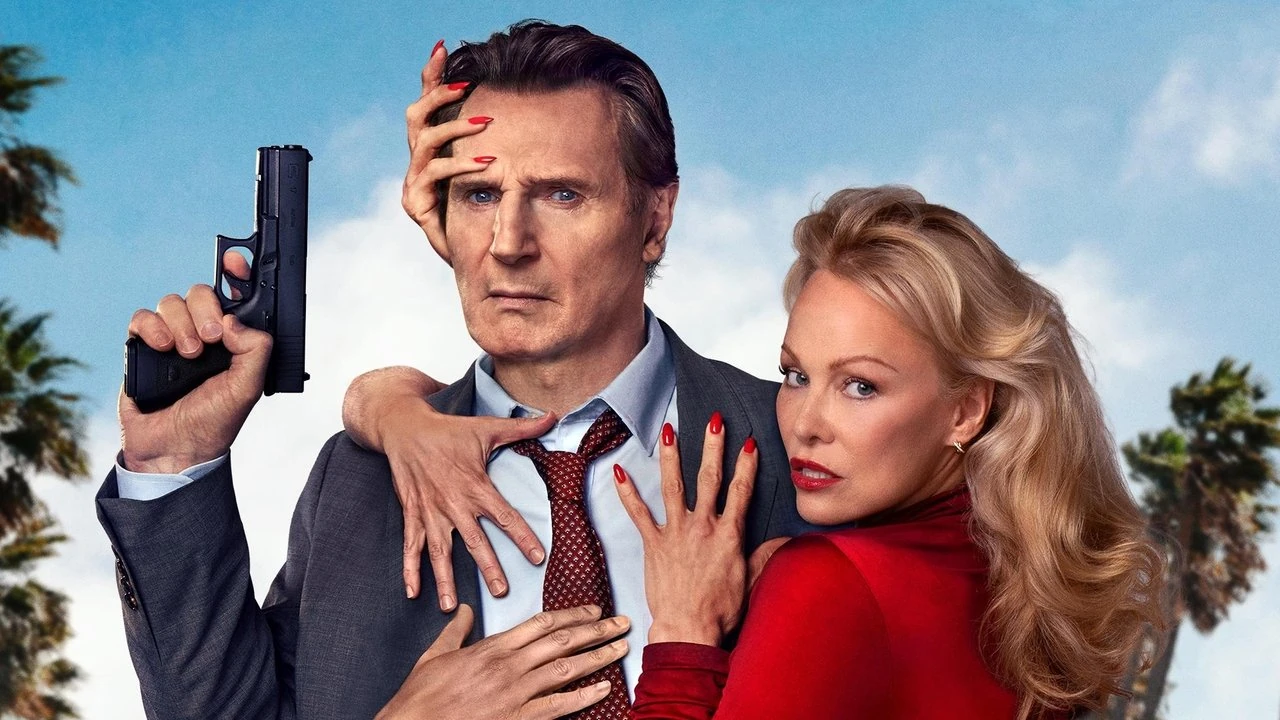 Pamela Anderson and Paul Walter Hauser sharing a bewildered look, emblematic of the film’s ensemble grappling with inexplicable events.
Beyond the Slapstick: Deeper Questions of Order and Chaos
Beneath the relentless barrage of slapstick and sight gags, the original Naked Gun films quietly posed profound questions about order, chaos, and the illusion of control. Frank Drebin was a force of nature, inadvertently dismantling intricate plots while causing spectacular collateral damage. His world was one where competence was an arbitrary concept, and success often came despite, rather than because of, rational action.
The Naked Gun (2025) has the opportunity to delve into these themes once more, perhaps with a contemporary twist. In an age where information overload, misinformation, and the blurring lines between reality and simulation are daily occurrences, the concept of a “Police Squad” struggling to maintain order in an inherently chaotic universe feels more relevant than ever.
- What does it mean to be a hero when the very foundations of truth and logic are constantly shifting?
- Does the film suggest that our attempts to impose order are ultimately futile, or that perhaps, a touch of well-meaning incompetence is precisely what’s needed to navigate an increasingly irrational world?
The plot – solving a murder to prevent Police Squad from closure – introduces an existential threat to the institution itself. It’s not just about a case; it’s about the very existence of the guardians of (comedic) justice. This raises a crucial, albeit humorous, question: what happens when the last bastion of bumbling authority faces extinction? Is it a call for true competence, or an acknowledgement that the world is too absurd for anything but a Drebin-esque approach?
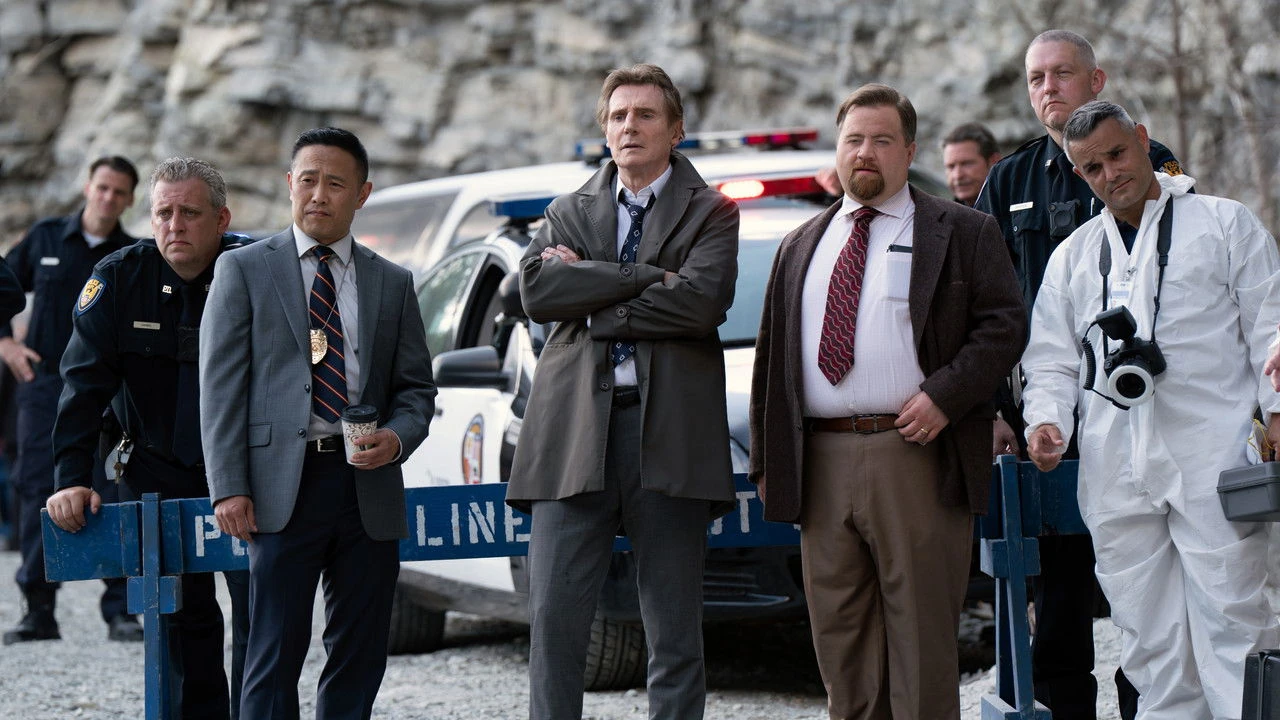 A dynamic, yet comically exaggerated, action sequence featuring Liam Neeson, highlighting the film’s blend of genre elements.
“The only way to deal with an unfree world is to become so absolutely free that your very existence is an act of rebellion.” — Albert Camus
Ultimately, The Naked Gun (2025) arrives carrying the immense weight of expectation. It’s a film that, even before its release, compels us to consider the nature of comedic genius, the imperative of legacy, and the perennial human need for laughter in the face of an often-incomprehensible world. While the ultimate critical reception is yet to be determined, and audiences will undoubtedly be divided on whether it successfully captures the magic of its predecessors, the very idea of it forces us to confront questions about cultural memory, the evolution of humor, and what it truly means to follow in legendary footsteps. Can Frank Drebin Jr. not just solve a murder, but also solve the conundrum of his own existence in the shadow of a comedic titan? That, perhaps, is the film’s most intriguing philosophical puzzle.
Where to Watch
- Amazon Prime Video
- fuboTV
- MGM+ Amazon Channel
- Paramount Plus Premium
- Paramount Plus Essential
What’s Up? explores the philosophical depths of cinema.