The Unbearable Weight of Becoming: Anticipating The Penguin's Existential Descent
A pre-release philosophical exploration of The Penguin (2024), delving into ambition, identity, and the moral murk of Gotham's underworld, anticipating its thematic depth.

“A man’s name is not like a mantle, which merely hangs about him, but a perfectly fitting skin which always clings to him, and which can be torn away only along with the flesh itself.” — Arthur Schopenhauer
The anticipation for The Penguin (2024) is, shall we say, palpable. Spin-offs, especially those from critically acclaimed cinematic universes like Matt Reeves’ The Batman, carry a heavy burden of expectation. But here we are, on the cusp of its September 19th premiere, and it’s a unique position for a cultural critic. We don’t have the luxury of dissecting actual reviews or audience reactions yet. Instead, we’re left to philosophize in the void, to ponder the potential and pitfalls of a series that promises to plunge us deeper into the grimy underbelly of Gotham, through the eyes of one of its most compelling, if grotesque, figures: Oswald “Oz” Cobb. This isn’t just about a villain’s origin story; it’s an opportunity to examine the existential weight of ambition, identity, and the relentless pursuit of power in a city already drowning in its own despair.
The Weight of a Name and the Will to Power
At its core, The Penguin seems poised to explore the tyranny of reputation and the brutality of aspiration. Oswald Cobb, famously known as “the Penguin,” begins his journey not as the undisputed kingpin, but as someone battling a “demoralizing reputation.” This immediately brings Schopenhauer’s quote to mind. Oz isn’t just trying to become a mob boss; he’s fighting against the perception of who he is, or isn’t, in the cutthroat hierarchy of Gotham. His drive to fill the power vacuum left by Carmine Falcone’s death isn’t merely about greed; it’s about legitimacy, about carving out a space for himself, perhaps even defining himself against the very name that both brands and limits him.
This is fertile ground for philosophical inquiry. How much of our identity is truly self-authored, and how much is imposed by circumstance, by society, by the expectations (or dismissals) of others? For Oz, the moniker “the Penguin” isn’t a crown; it’s a curse he must either shed or weaponize. His quest to give his mother, Francis, the life he’s always promised adds another layer of moral complexity. Is this filial piety a genuine, redeeming motivation, or merely a convenient justification for increasingly ruthless actions? The series, if it’s truly thoughtful, will force us to confront the uncomfortable truth that noble intentions can pave the road to villainy.
Key themes we anticipate:
- Identity vs. Persona — The struggle between Oz Cobb and “the Penguin.”
- Nihilistic Ambition — The pursuit of power in a morally bankrupt world.
- The Paradox of Legacy — How Falcone’s death creates both opportunity and peril.
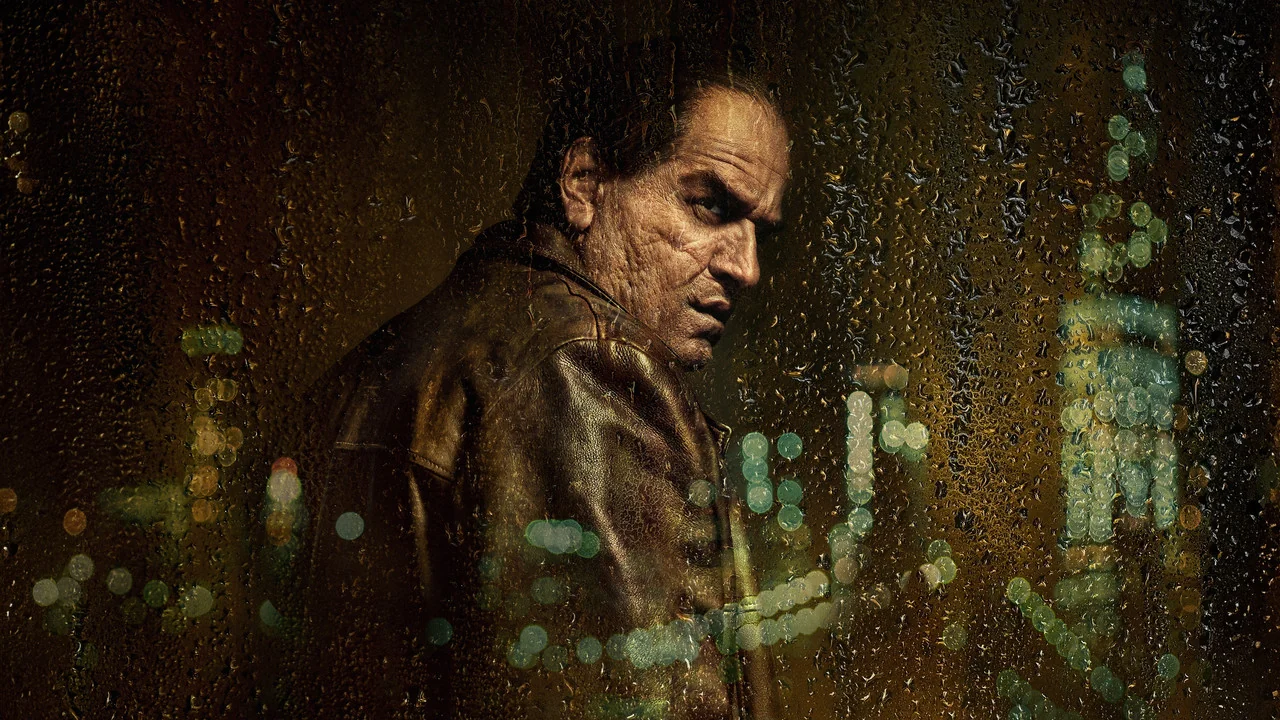 Colin Farrell’s transformative portrayal of Oz Cobb hints at the deep psychological layers the series aims to uncover.
Gotham’s Rot and the Anti-Hero’s Ascent
The backdrop of The Penguin is a Gotham reeling from the seawall’s collapse, a city literally and metaphorically in peril. This isn’t just set dressing; it’s a crucial element in the show’s potential philosophical statement. A city on the brink provides the perfect crucible for a character like Oz to rise. When societal structures crumble, when law and order are tenuous, what fills the void? Often, it’s not altruism, but raw, unbridled ambition. This environment can be seen as a mirror reflecting the human capacity for chaos and the desperation that breeds both heroism and villainy.
In a landscape of fractured order, the lines between predator and protector blur, revealing the raw, unvarnished truth of human struggle for dominance.
One might anticipate criticisms, especially for a crime drama set in a bleak universe, regarding its potential for uneven pacing or gratuitous violence. Critics and audiences often lament when such series lean too heavily into shock value without sufficient thematic payoff. The challenge for The Penguin will be to justify its darker impulses, to ensure that every brutal act serves to deepen our understanding of Oz, Gotham, and the philosophical questions it poses, rather than merely indulging in genre clichés. Will it succumb to the trap of making its anti-hero too sympathetic, or will it unflinchingly portray the ugliness of his ascent? Colin Farrell’s previous performance was lauded for its depth, and the hope is that the series allows him to continue this nuanced exploration, avoiding the pitfall of a one-dimensional villain. The series holds the potential to explore the ethics of survival in a world that offers little quarter, forcing us to ask: what would we do to not just survive, but to thrive, when everything is collapsing around us?
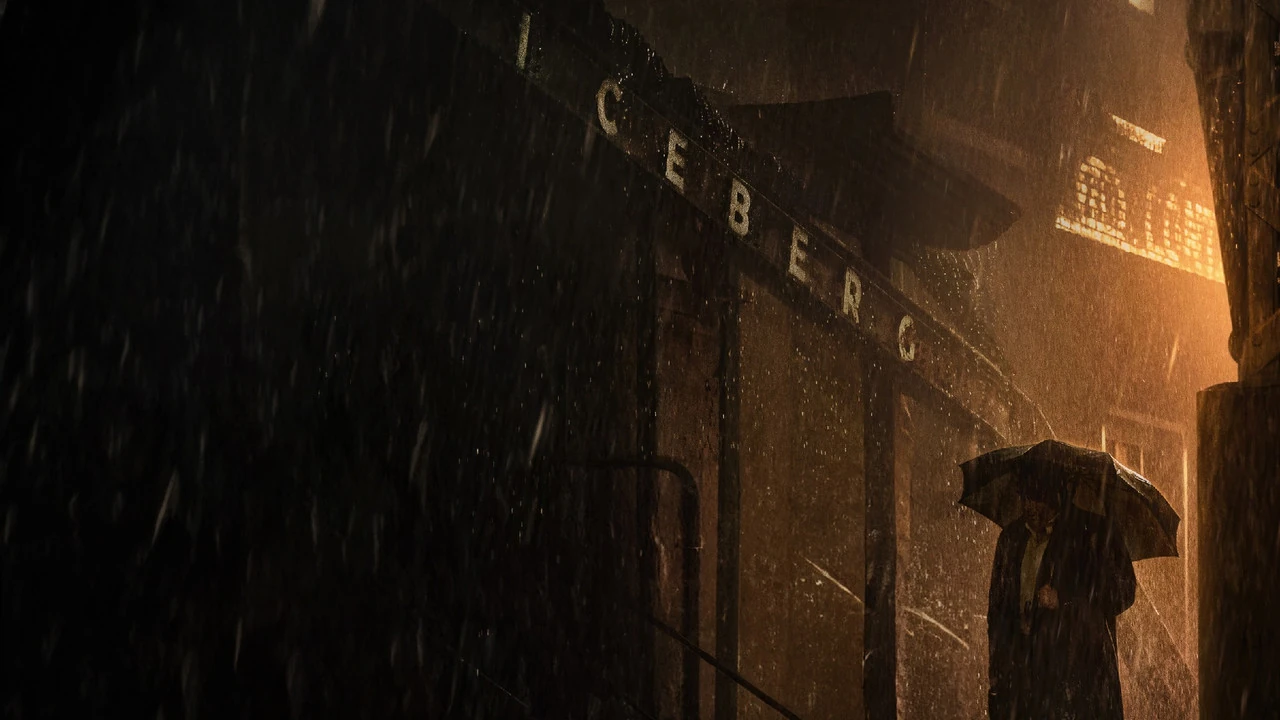 The desolate, waterlogged streets of Gotham reflect the moral decay and existential despair that define the city’s inhabitants.
The Mother, The Monster, and The Mirror
The plot synopsis mentions Oz’s promise to his mother, Francis. This is a recurring motif in stories of ambitious figures – the desire to uplift one’s origins, to prove oneself worthy to a foundational figure. Philosophically, this touches on themes of debt, legacy, and the foundational narratives we construct for ourselves. Does Oz’s pursuit of power stem from a genuine, if twisted, love for his mother, or is it a psychological crutch, a justification for his ruthless ambition? This maternal bond could be the series’ most potent emotional anchor, providing a glimpse into the humanity (or lack thereof) beneath the grotesque exterior.
However, this dynamic also carries its own risks. It could devolve into a simplistic “villain with a soft spot” trope, undermining the darkness the character embodies. Or, more compellingly, it could illustrate how even the most profound human attachments can be corrupted or used as fuel for monstrous acts. The series could explore the nature of good and evil not as absolutes, but as points on a spectrum, influenced by circumstance, personal history, and the desperate yearning for validation.
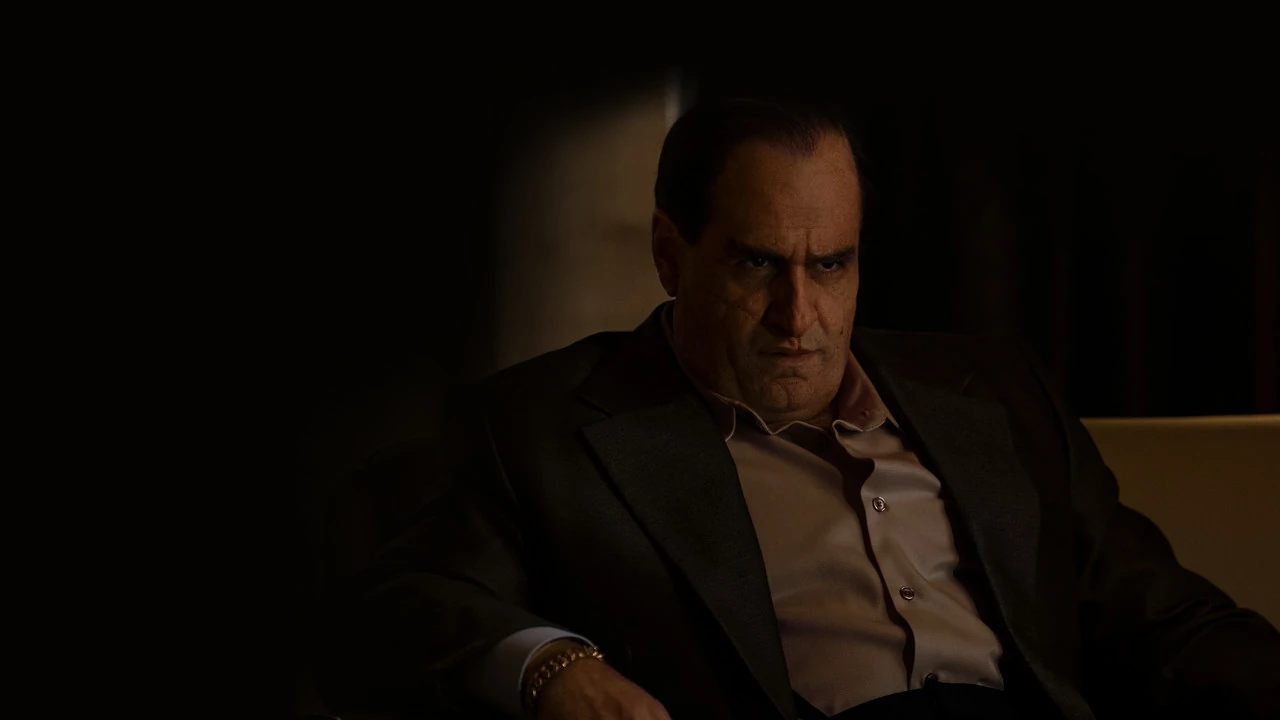 Oz Cobb’s intense gaze suggests a man grappling with his past, his promises, and the monstrous future he is forging.
“We are condemned to be free; every choice we make, every power we seize, builds the prison of our own making.”
Ultimately, The Penguin arrives with the weight of expectation and the challenge of carving its own identity within a beloved universe. While we can only speculate on its execution and reception – whether it will be lauded for its gritty realism or criticized for its perceived lack of originality or excessive violence – its philosophical potential is undeniable. It asks us to confront the fragility of identity, the insidious nature of ambition, and the moral compromises we make when faced with societal collapse. It holds up a mirror not just to Gotham’s villains, but to the darker impulses that lurk within the human heart, challenging us to understand what drives a man to become a monster, and whether the life he promises is worth the soul he sacrifices to get it. We watch, we wait, and we ponder the depths of Oz’s descent.
Where to Watch
- HBO Max
- HBO Max Amazon Channel
- Spectrum On Demand
What’s Up? explores the philosophical depths of cinema.