The Inevitable Knock: Bob Rafelson's Searing *The Postman Always Rings Twice* and the Weight of Desire
Exploring the raw, divisive power of Rafelson's 1981 The Postman Always Rings Twice, a film that delves into desire, fate, and the corrosive nature of illicit passion.
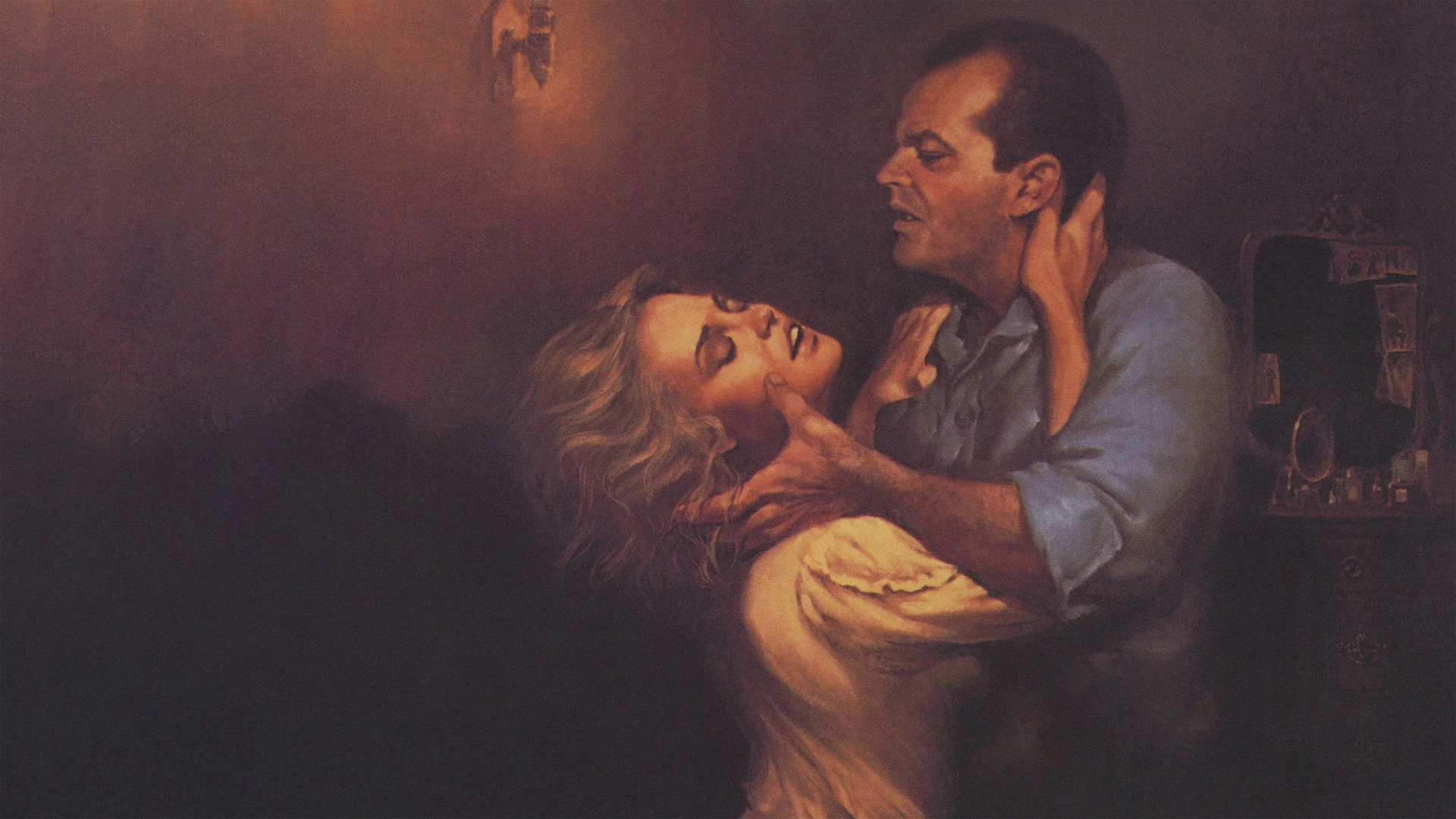
“There are some things you can’t escape. The postman always rings twice.” — James M. Cain, The Postman Always Rings Twice
Bob Rafelson’s 1981 adaptation of James M. Cain’s The Postman Always Rings Twice isn’t a film that tiptoes around its subject matter. It’s a raw, visceral plunge into the darkest corners of human desire, a story where passion and violence are inextricably linked. While critics were notably divided upon its release – with some praising its uncompromising intensity and others finding it gratuitous or plodding, and many inevitably comparing it unfavorably to the iconic 1946 version – there’s an undeniable, almost primal power to Rafelson’s vision. It’s a film that, despite its acknowledged flaws, dares to ask profound questions about fate, free will, and the corrosive nature of a love born from transgression. It’s not an easy watch, nor is it meant to be, but its philosophical resonance lingers long after the credits roll.
The Inevitable Knock: Desire and Destiny
From the moment Frank Chambers, played with captivating vagrancy by Jack Nicholson, drifts into the roadside diner run by Nick Papadakis and his alluring wife, Cora (a startlingly magnetic Jessica Lange), the air crackles with an almost predestined tension. The Postman Always Rings Twice isn’t just a crime story; it’s a grim fable about the relentless pull of primal urges and the tragic consequences of giving into them. Many critics, myself included, found the pacing a little languid in spots, particularly in its earlier exposition, which some felt detracted from the building suspense. And yes, the shadow of the 1946 version often loomed large, making some reviewers question the necessity of a remake. But to dismiss Rafelson’s film entirely is to miss its unique, almost suffocating atmosphere of doom.
The central philosophical question here revolves around the concept of determinism. Is the “postman” a metaphor for an external, unyielding fate, or for the inescapable internal consequences of our own choices? Frank and Cora are drawn to each other with a brutal, animalistic force that seems to transcend mere affection. It’s a connection rooted in mutual discontent, lust, and a desperate desire for escape, which quickly morphs into a conspiracy to murder Cora’s older, unwanted husband. The film suggests that once they embark on this path, their destiny is sealed, not necessarily by some grand cosmic plan, but by the very nature of their actions and the inherent impossibility of building a life on such a treacherous foundation. Their attempts to “get away with it” are less about achieving freedom and more about digging a deeper, psychological grave.
The real terror isn’t in the act of transgression itself, but in the insidious way it redefines the very landscape of one’s existence, making genuine escape an illusion.
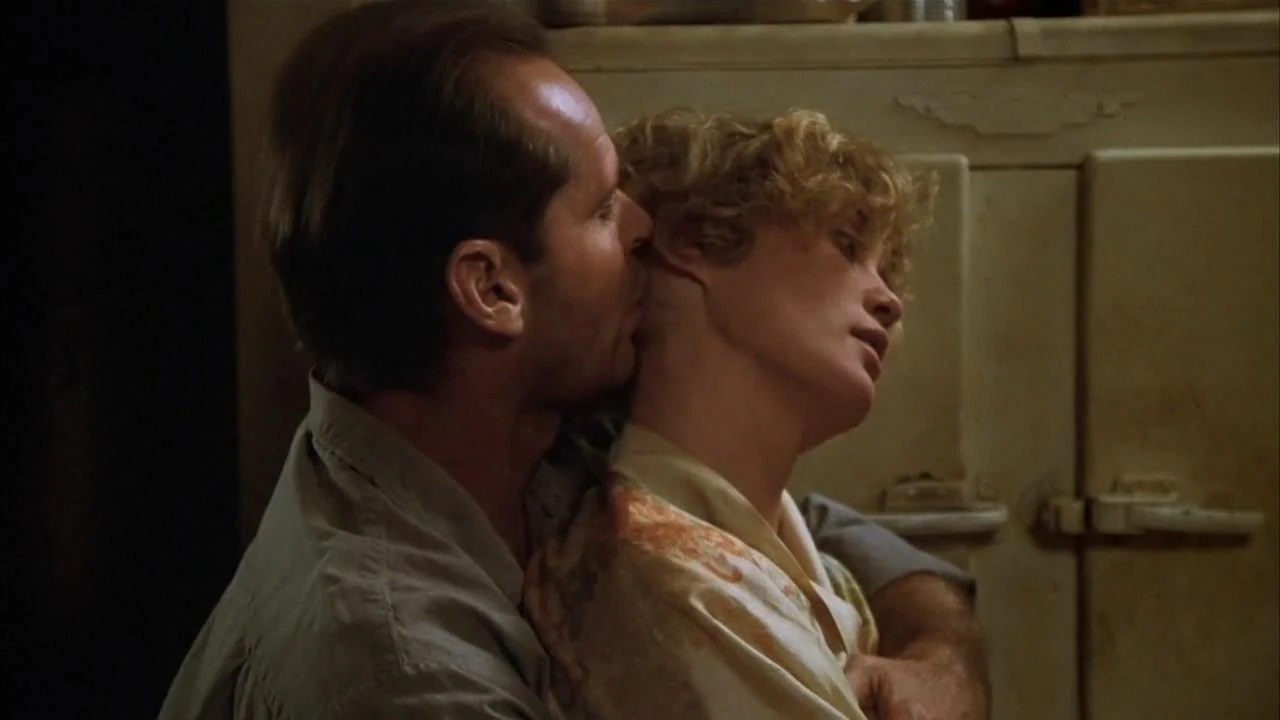 A powerful still capturing the raw, animalistic connection between Frank and Cora, the spark that ignites their mutual destruction.
A Sordid Chemistry: Performance and Perception
The film’s reception was heavily influenced by the performances of its leads, and the explicit nature of their “sordidly steamy affair.” Jessica Lange, in particular, delivers a performance of raw, uncompromising vulnerability and ferocity that, for many, was the film’s undeniable highlight. Her Cora is not just a femme fatale; she’s a woman trapped by circumstances, desperate for a life she can’t quite articulate, willing to burn down the world to get it. Nicholson’s Frank is the drifter personified – charming, dangerous, and utterly amoral. Their chemistry, while described as “electrifying” by some, was also deemed “cold” or “lacking warmth” by others who found the passion to be more about aggression than genuine connection.
This divide in perception is crucial to understanding The Postman Always Rings Twice. Rafelson chose to depict the sexual and violent aspects of the story with unflinching realism, often shocking for its time. This wasn’t a romance with a dark edge; it was a dark, primal dance where romance was merely a disguise for mutual self-destruction. Critics who found it gratuitous missed the point that the film wants you to feel the sordidness, the desperation, the ugliness beneath the surface gloss of passion. It’s a philosophical statement about the seductive power of transgression and how it can warp and corrupt even the most basic human desires. The infamous kitchen table scene, for instance, isn’t meant to be titillating; it’s an act of primal dominance and submission, a terrifying consummation of their shared depravity.
The line between desire and destruction is often so thin as to be invisible, and sometimes, the most profound acts of ‘love’ are merely elaborate expressions of mutual self-annihilation.
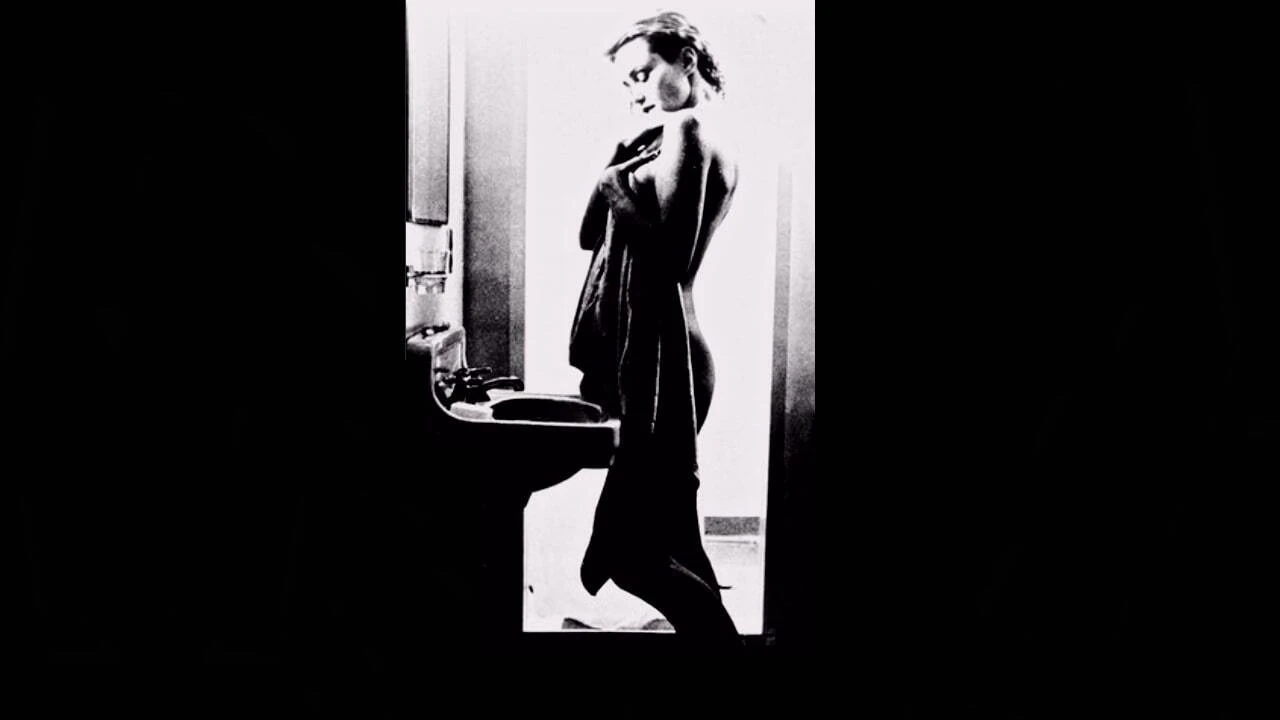 The diner, a seemingly mundane setting, becomes a crucible for illicit desire and murderous intent, a visual metaphor for the American dream gone sour.
Beyond the Surface: Justice and Damnation
Beyond the immediate thrill of their criminal acts, The Postman Always Rings Twice delves into a deeper exploration of justice—both legal and existential. Frank and Cora manage to evade the law, or so it seems, through cunning and circumstance. But their “freedom” is a cage of their own making. The philosophical weight of the film comes from observing how their actions slowly but surely devour them from the inside out. They are haunted by their crime, by suspicion, and by the very bond that united them. Their initial victory feels hollow, tinged with paranoia and a creeping sense of inevitable retribution.
The ending, often seen as a final, cruel twist of fate, reinforces the idea that some debts cannot be escaped. It’s a powerful, if bleak, commentary on the human condition: that while we might escape societal judgment, we can rarely outrun the consequences of our moral transgressions, or the karmic balance of the universe. The film doesn’t offer easy answers or redemption; instead, it presents a stark, brutal reflection on the idea that true freedom is not merely the absence of chains, but the purity of one’s conscience. Their “love” becomes a shared damnation, a testament to the fact that some passions are so powerful, so destructive, that they consume everything in their path, including the lovers themselves.
To stare into the abyss of our own darkest desires is to risk finding that the abyss stares back, and sometimes, it brings a message you can’t refuse.
Bob Rafelson’s The Postman Always Rings Twice is a divisive film, and rightfully so. Its slow burn, its graphic content, and its uncompromisingly bleak outlook aren’t for everyone. But within its raw exterior lies a profound philosophical core. It challenges us to confront the nature of desire, the illusion of escape, and the relentless, often brutal, consequences of our actions. It’s a dark mirror held up to the human psyche, reminding us that sometimes, the most dangerous forces are not external, but lie simmering within ourselves, waiting for the inevitable knock.
Where to Watch
- YouTube TV
What’s Up? explores the philosophical depths of cinema.