The Genesis of Despair: Unpacking The Witcher Blood Origin's Flawed Foundations
Exploring the philosophical weight of origins and consequences in The Witcher Blood Origin, despite its widely criticized execution and narrative flaws.
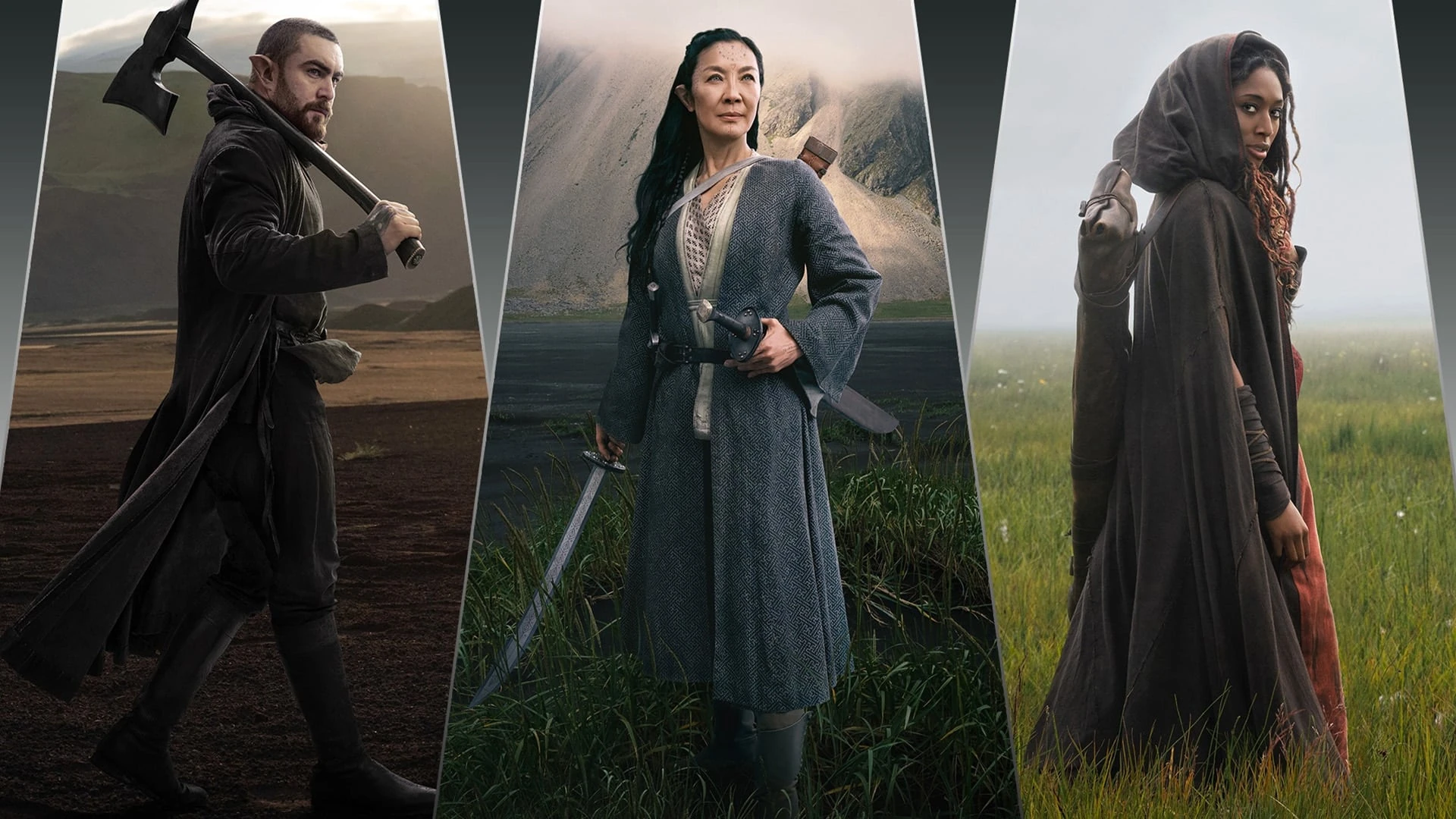
“Every beginning is a consequence. Every ending, a new origin.” — Unknown
It’s a curious thing, isn’t it? To watch a story unfold, knowing full well its ultimate destination, yet still hoping to find profound insights in its genesis. Such was my experience with The Witcher: Blood Origin (2022), Netflix’s prequel series to its popular The Witcher saga. Billed as the tale of the first Witcher and the pivotal Conjunction of Spheres, it arrived on Christmas Day 2022, burdened by immense expectations. And, let’s be blunt, it largely buckled under that weight. With a paltry 32% on Rotten Tomatoes and an even lower audience score, critics and viewers alike largely dismissed it as a muddled, rushed, and ultimately unsatisfying addition to the beloved franchise. Yet, as a philosopher of cinema, I find myself drawn to even the most maligned works, searching for the accidental truths they might stumble upon, or the questions they intended to ask, however poorly articulated.
The Weight of Genesis and the Burden of Choice
The Witcher: Blood Origin thrusts us over a thousand years before Geralt of Rivia’s time, into a vibrant elven civilization on the brink of collapse. The premise itself is fertile ground for philosophical exploration: what does it mean to witness the origin of something so monumental? The creation of the first Witcher, the cataclysmic Conjunction that merged worlds, the very foundations of the Witcher universe – these are concepts rich with metaphysical weight. The series attempts to show us how a power vacuum, political intrigue, and personal vendettas culminated in a world-altering event.
Critics often cited the series’ uneven pacing and thin character development, which undeniably hampered its ability to fully explore these themes. Characters like Éile (Sophia Brown), a former warrior turned bard, and Fjall (Laurence O’Fuarain), a disgraced guard, are meant to be the heart of this revolution. Their individual quests for justice and redemption are meant to coalesce into a larger fight against tyranny. But the narrative, compressed into just four episodes, often feels like a checklist of plot points rather than an organic unfolding of destiny. We see the seeds of chaos sown, but we rarely feel the profound human cost or the moral dilemmas that should accompany such monumental choices. The show tells us these characters are important, but it struggles to show us why they matter on a deep, philosophical level, beyond their functional roles in the plot.
- The Price of Progress: The very act of creating the first Witcher, a being designed to fight monstrous threats, comes at an immense cost. What does it say about a society that willingly sacrifices the humanity of individuals for collective safety?
- The Inevitability of Chaos: The Conjunction of Spheres is presented as both an accident and a consequence of magical experimentation. This raises questions about determinism versus free will – were these events fated, or were they the tragic outcome of specific, poor choices?
- Legacy and Responsibility: The series grapples, albeit imperfectly, with the idea that every action has ripples across centuries. The characters’ choices directly lead to the world Geralt inhabits, imbuing their struggle with a sense of historical responsibility.
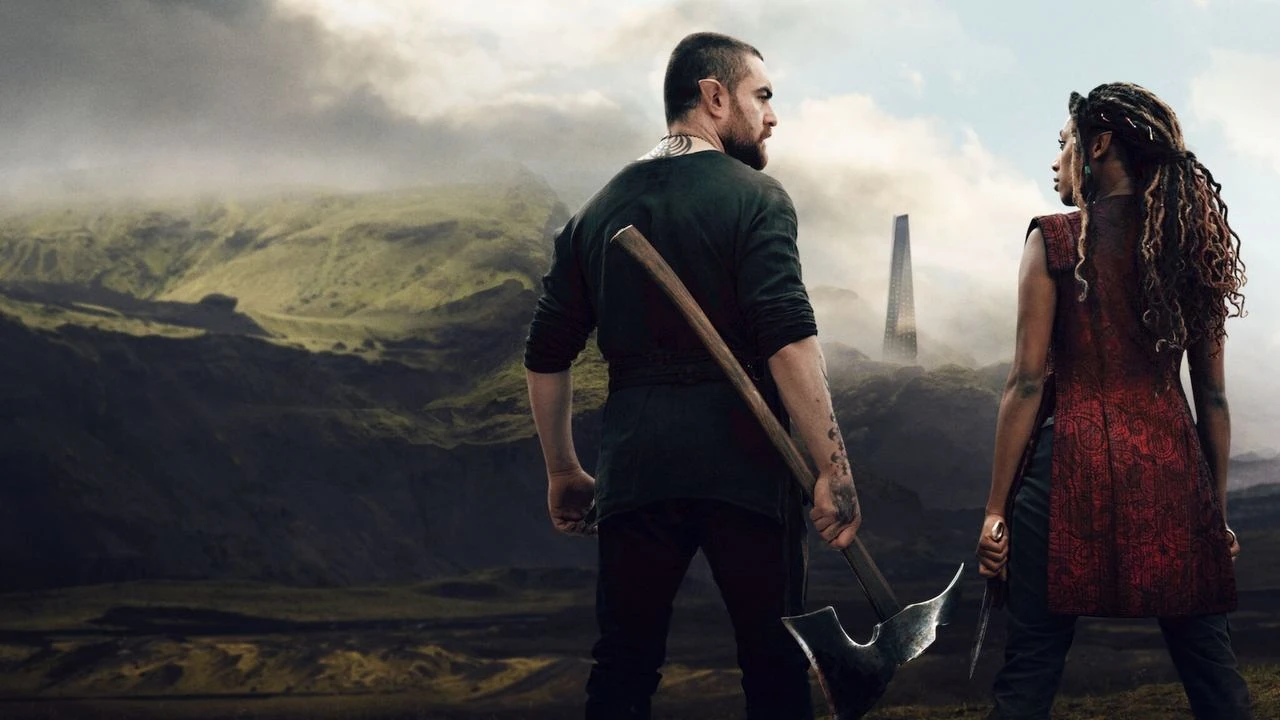 A lone figure, perhaps Éile, stands resolute against a stark landscape, symbolizing the individual’s fight against overwhelming forces.
Fractured Heroes and Missed Opportunities for Meaning
The ensemble cast of seven outcasts uniting against a common enemy is a classic narrative trope, often rich with potential for exploring communal identity and the ethics of rebellion. Here, we have diverse talents: a warrior-bard, a disgraced guard, a master assassin, and various mages and mercenaries. On paper, it’s a compelling lineup, each bringing a unique skill and backstory. Yet, as many reviewers pointed out, the series struggles to give each character their due, often reducing them to archetypes without much depth.
The greatest tragedies often stem not from outright evil, but from the cumulative weight of good intentions poorly executed, or noble ideals corrupted by haste.
This is where Blood Origin truly falters in its philosophical ambition. While the idea of these disparate individuals finding common cause against an oppressive empire is powerful, the show’s execution often feels superficial. Performances, while earnest, couldn’t always elevate the material. Lenny Henry as Chief Druid Balor, for instance, grapples with a character whose motivations oscillate between ambition and genuine belief, but the script doesn’t allow for a nuanced descent into villainy; it’s a rapid slide. Mirren Mack’s Princess Merwyn, a young ruler corrupted by power, similarly lacks the slow burn of tragic transformation, instead becoming a caricature of tyranny too quickly.
What could have been a deep dive into the nature of heroism—are heroes born of innate goodness or forged in the crucible of desperation?—becomes a more simplistic tale of good versus evil. The philosophical void here is not in the absence of good intentions, but in the show’s inability to craft compelling arguments or explore the grey areas that define truly impactful narratives about power and resistance. It’s a missed opportunity to truly interrogate the moral ambiguities inherent in revolution and the creation of monstrous solutions to monstrous problems.
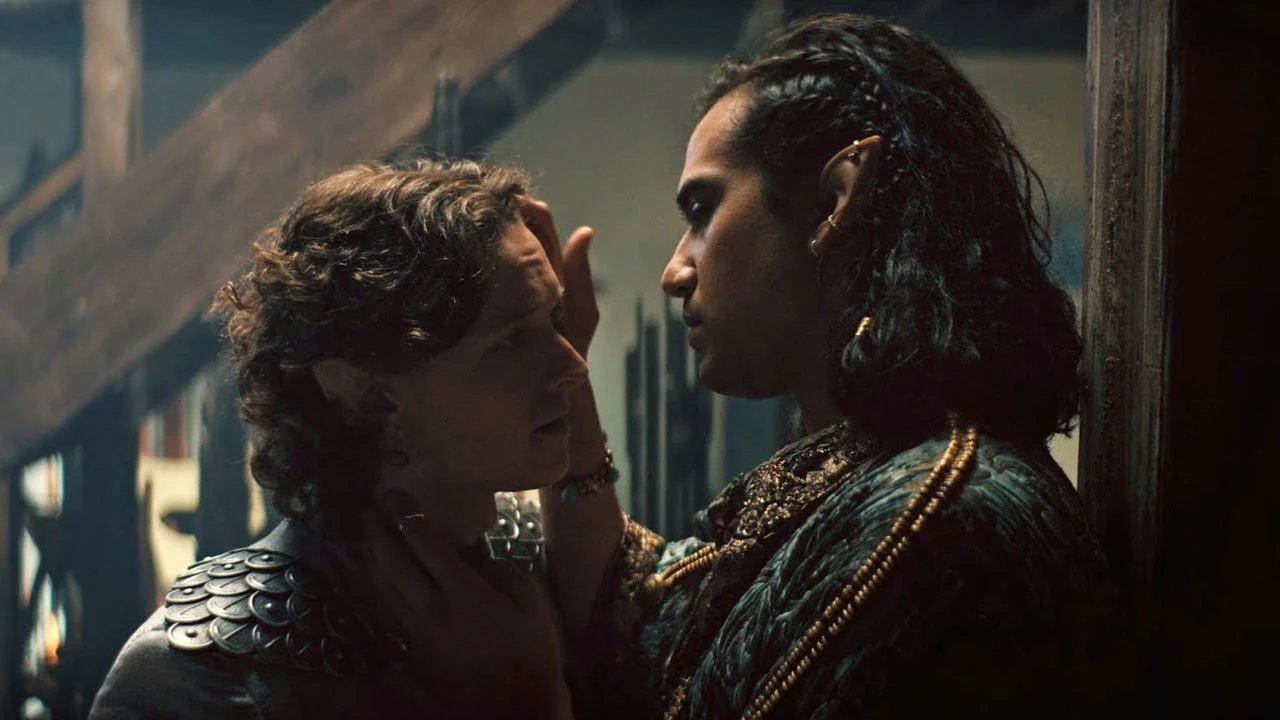
 A close-up of a character’s face, etched with conflict and determination, reflecting the inner turmoil that the narrative often glossed over.
The Echoes of a Myth: Purpose and Creation
Despite its myriad flaws, The Witcher: Blood Origin does compel us to ponder the nature of creation itself. The Conjunction of Spheres isn’t just a plot device; it’s a cosmological event, a rupture in reality that fundamentally reshapes the world. This raises profound questions about:
- The Origin of Purpose: What drives the impulse to create, whether it’s a new magical system, a super-soldier, or an empire? Is it ambition, fear, necessity, or a thirst for knowledge? The show hints at all of these but never settles on a satisfying answer, leaving the viewer to ponder the existential motivations behind such drastic actions.
- The Ethics of Intervention: The creation of the first Witcher is an attempt to control an uncontrollable threat. But at what point does intervention become transgression? When does the pursuit of order lead to greater chaos, or the creation of one monster to fight another? This resonates with real-world debates about technology, genetic manipulation, and the unforeseen consequences of human hubris.
- Myth-Making and Narrative: Prequels are, by their nature, acts of myth-making. They attempt to explain the unexplained, to fill in the blanks of a beloved legend. Blood Origin’s reception highlights the precariousness of this endeavor. When a foundational myth is poorly rendered, it doesn’t just fail as entertainment; it risks undermining the very narrative it sought to enrich. This forces us to consider the power of storytelling itself and its fragile relationship with audience expectations and existing lore.
 A dramatic shot of a magical explosion or a significant magical event, symbolizing the Conjunction of Spheres and its destructive yet formative power.
“Sometimes, the most vital lessons are found not in the flawless masterpiece, but in the flawed attempt that nonetheless dares to touch upon the colossal questions of existence.”
The Witcher: Blood Origin is, by most critical metrics, a significant stumble for the franchise. Its narrative rushed, its characters underdeveloped, and its ambition often exceeding its grasp. Yet, even in its imperfections, it serves as a stark reminder of the philosophical weight inherent in tales of origin. It forces us to consider the burden of historical choices, the ethics of creation, and the fragile nature of heroism when confronted with overwhelming power. While it may not have delivered the epic tale we hoped for, it inadvertently prompts us to ask: What true cost does the forging of a new world demand, and are we ever truly prepared to pay it?
Where to Watch
- Netflix
- Netflix Standard with Ads
What’s Up? explores the philosophical depths of cinema.