The Golden Cage: Scorsese's The Wolf of Wall Street and the Seduction of Excess
Exploring the controversial brilliance and unsettling philosophy behind Martin Scorsese's The Wolf of Wall Street, a film that dissects the American Dream's darker side.
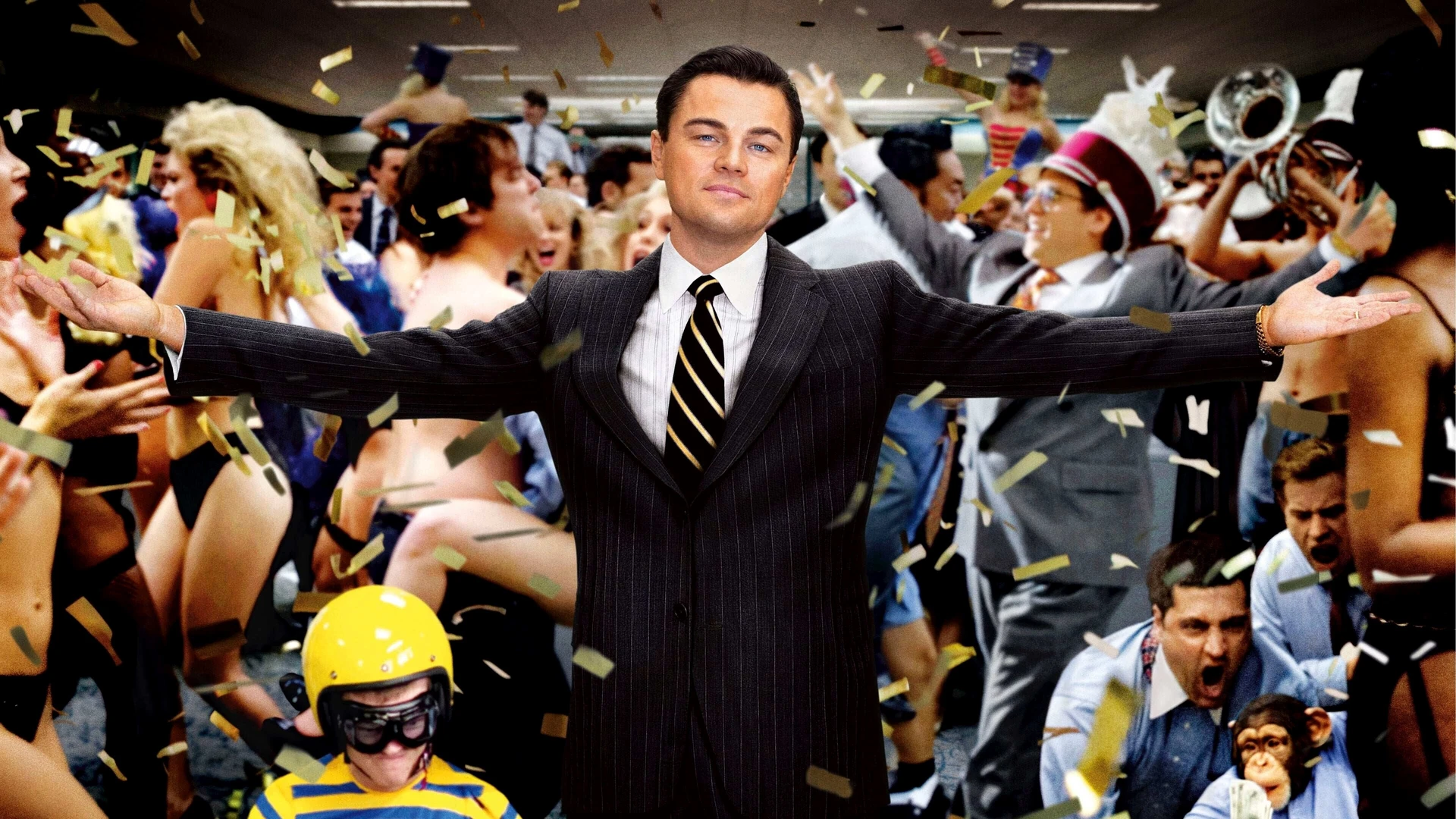
“The criminal is the capitalist, and the capitalist is the criminal.” — Slavoj Žižek
Martin Scorsese’s The Wolf of Wall Street, a blistering three-hour odyssey into the heart of unbridled greed, hit screens in 2013 with all the subtlety of a champagne-fueled yacht party crashing into a federal investigation. It’s a film that demands a reaction, and it certainly got one. While critically well-received, earning an 80% on Rotten Tomatoes and a “generally favorable” 75 on Metacritic, it wasn’t without significant controversy. Audiences and critics alike grappled with its relentless depiction of excess, its moral ambiguity, and the uncomfortable question of whether it glorified the very hedonism it purported to critique. My own feelings are often a whirlwind with this one: it’s a monumental achievement in filmmaking, an electrifying performance from Leonardo DiCaprio, yet it leaves a sticky, unsettling residue, like a sugar rush followed by a moral hangover.
The Allure and Emptiness of the American Dream
At its core, The Wolf of Wall Street is a distorted mirror held up to the American Dream. It traces the meteoric rise and inevitable, if somewhat soft, fall of Jordan Belfort, a man who epitomized the “get rich or die trying” mentality, but twisted it into “get rich by trying to screw everyone else.” The film presents a world where the only currency that matters isn’t just money, but the performance of having money. Belfort’s entire empire, Stratton Oakmont, is built on an intoxicating blend of charisma, deception, and pure, unadulterated hubris.
Critics, myself included, often point to the film’s almost celebratory tone in its early acts, which can make it feel like a glamour shot of depravity. The pacing, as some noted, is relentless, almost exhausting in its parade of sex, drugs, and illicit deals. This isn’t a flaw, however, but a deliberate, visceral choice by Scorsese. He doesn’t just show us the excess; he immerses us in it, forcing us to experience the intoxicating, almost hypnotic rhythm of the Wall Street bacchanal. It’s designed to overwhelm, to make the viewer complicit in the fever dream, understanding the seductive power of such a life, even as our rational minds recoil. It forces us to confront the question: how many of us, given the chance, could resist such a powerful, primal lure? The philosophical question here isn’t just about greed, but about the nihilistic pursuit of pleasure as a substitute for meaning, a void that no amount of money or illicit thrill can ever truly fill.
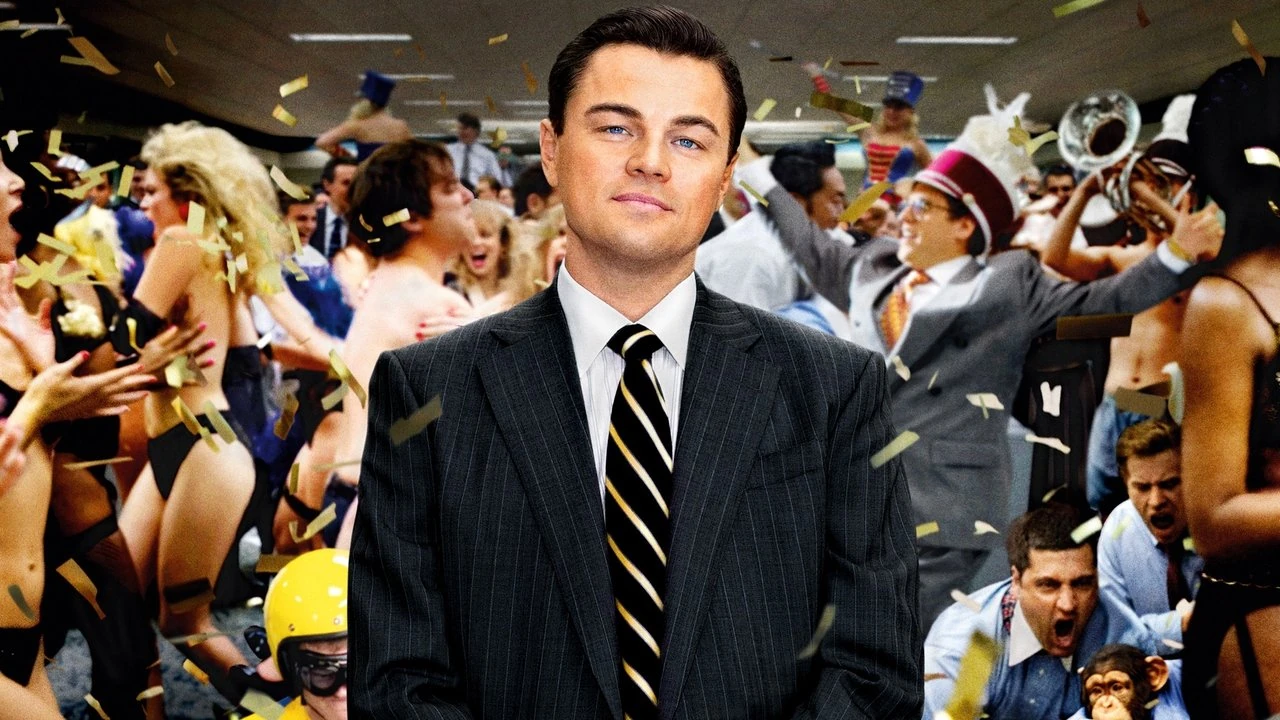 Jordan Belfort (DiCaprio) holding court, his charisma a potent weapon in the cult of capitalism.
The Performance of Power: What Works and What Doesn’t
What Scorsese masterfully achieves, despite the legitimate criticisms of the film’s length and repetitive nature of the debauchery, is a profound study in narcissism and self-delusion. DiCaprio’s performance as Belfort isn’t just energetic; it’s a tour de force of charismatic evil. He embodies the sheer will-to-power, the unshakeable belief in his own exceptionalism that allows him to not only commit fraud but convince others to join him in it. Jonah Hill’s Donnie Azoff, a character critics found both hilarious and grotesque, serves as the perfect grotesque echo, a sycophantic shadow reflecting Belfort’s worst impulses.
However, the film drew significant flak for its perceived lack of moral condemnation, particularly regarding Belfort’s seemingly soft landing. Many viewers felt it glorified his lifestyle, with a few even walking out of screenings in disgust. This is where the film’s divisive nature truly shines. Some argue the lack of overt judgment is the point – that the film lets the depravity speak for itself, relying on the audience’s moral compass to discern the horror beneath the spectacle. Others, like myself, find this approach a tightrope walk. While I believe Scorsese’s intent was to expose the systemic rot, the sheer entertaining nature of the chaos can, for some, overshadow the cautionary message. It’s a film that doesn’t preach, and in doing so, it risks being misunderstood.
The Wolf of Wall Street isn’t just about money; it’s a visceral exploration of the human capacity for self-deception, the dangerous allure of cult-like leadership, and the fragile line between ambition and delusion.
The criticisms regarding the film’s portrayal of women, often reduced to sexual objects or props in Belfort’s world, are also valid. While this reflects the autobiographical source material and the misogynistic culture of Stratton Oakmont, the film’s commitment to portraying that reality sometimes skirts the edge of condoning it. Margot Robbie, as Naomi Lapaglia, is a standout, but her character’s agency is often defined by her reaction to Belfort’s monstrosity, rather than her own independent trajectory. It’s a thorny aspect that highlights the film’s commitment to an unflinching, if uncomfortable, realism.
 Naomi (Margot Robbie) confronts Jordan, a rare moment of vulnerability in a world of manufactured bravado.
Beyond the Surface: The Existential Grind
Despite its flaws, The Wolf of Wall Street forces us into a profound existential reckoning. What happens when the pursuit of material wealth becomes the sole driving force of existence? When the “rules” of society are simply obstacles to be circumvented in the relentless march towards more, more, more? Belfort’s journey isn’t a rags-to-riches story; it’s a descent into a specific kind of spiritual poverty, where every triumph is fleeting, every high requires a higher dose, and genuine human connection is sacrificed at the altar of acquisition.
The film’s ending is particularly haunting, for it doesn’t offer the tidy moral comeuppance many might expect. Jordan Belfort, after a relatively short prison sentence, emerges to teach others how to sell. This controversial conclusion isn’t a plot hole; it’s the film’s most chilling philosophical statement. It suggests that the system that enabled Belfort’s rise remains intact, that the appetite for illusion and easy money is insatiable, and that the “wolf” merely changes his skin, not his nature. It’s a commentary on the cyclical nature of greed, and perhaps, a damning indictment of a society that continues to reward the masterful con artist. The film asks us to consider the seductive power of performance, not just in selling stock, but in selling ourselves an image of success that often masks a profound spiritual void.
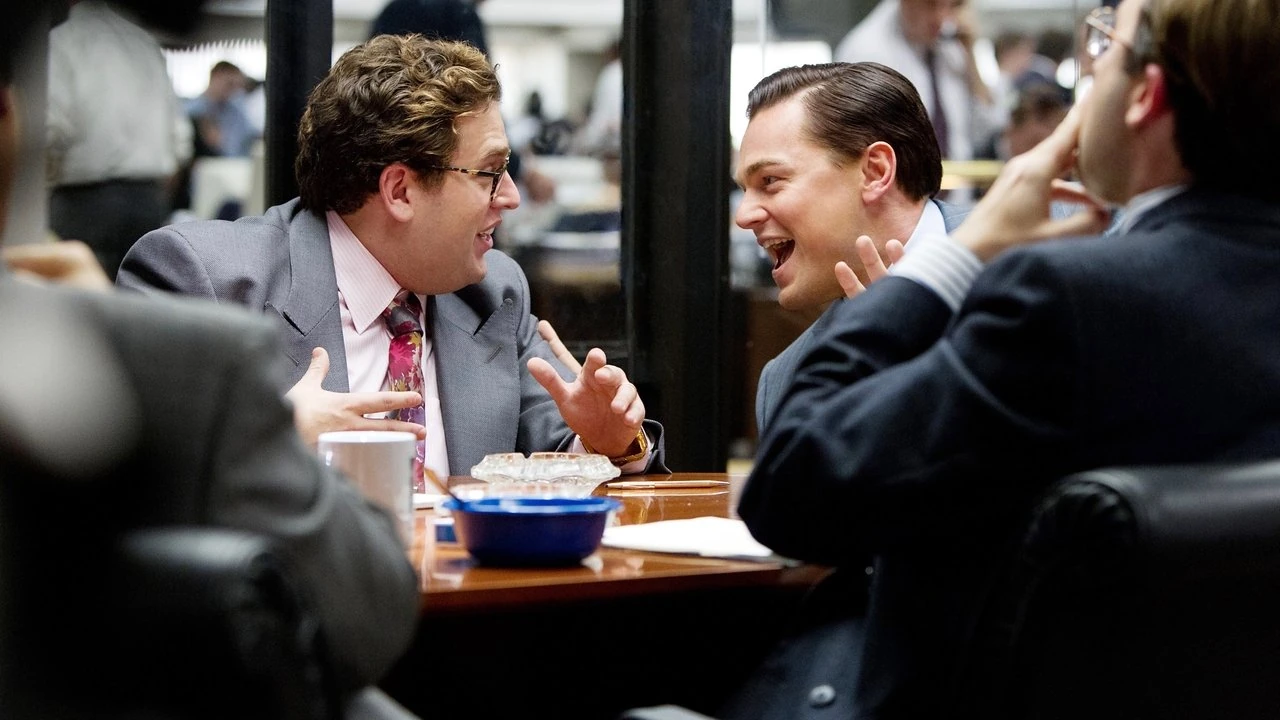 Belfort (DiCaprio) in a quiet, reflective moment, perhaps pondering the vast emptiness beneath the surface of his lavish life.
Scorsese has given us not just a crime epic, but a mirror to our own complicity, our fascination, and perhaps, our own latent desires for a life unburdened by consequence. The true horror isn’t Jordan Belfort’s actions, but the system that allowed him to thrive, and our continued fascination with it.
The Wolf of Wall Street isn’t an easy film to digest, nor should it be. It’s loud, it’s obnoxious, and it’s intentionally designed to make you squirm. While it faces valid criticisms about its portrayal of women and its perceived lack of moral clarity, its power lies in its unflinching portrayal of a specific kind of American excess. It asks us to look closely at the cost of unchecked ambition, the emptiness of pure hedonism, and the uncomfortable truth that sometimes, the most successful wolves aren’t those who howl the loudest, but those who best understand how to sell us the illusion of the golden cage. What does it say about us that we’re so captivated by the spectacle of our own potential downfall?
Where to Watch
- Netflix
- Paramount+ Amazon Channel
- Netflix Standard with Ads
- Paramount Plus Essential
- Paramount Plus Premium
What’s Up? explores the philosophical depths of cinema.