The Devil's Milkshake: Unearthing the Soul of There Will Be Blood
An unflinching look at Paul Thomas Anderson's There Will Be Blood, exploring its philosophical depths on greed, human nature, and the American dream's dark underbelly.
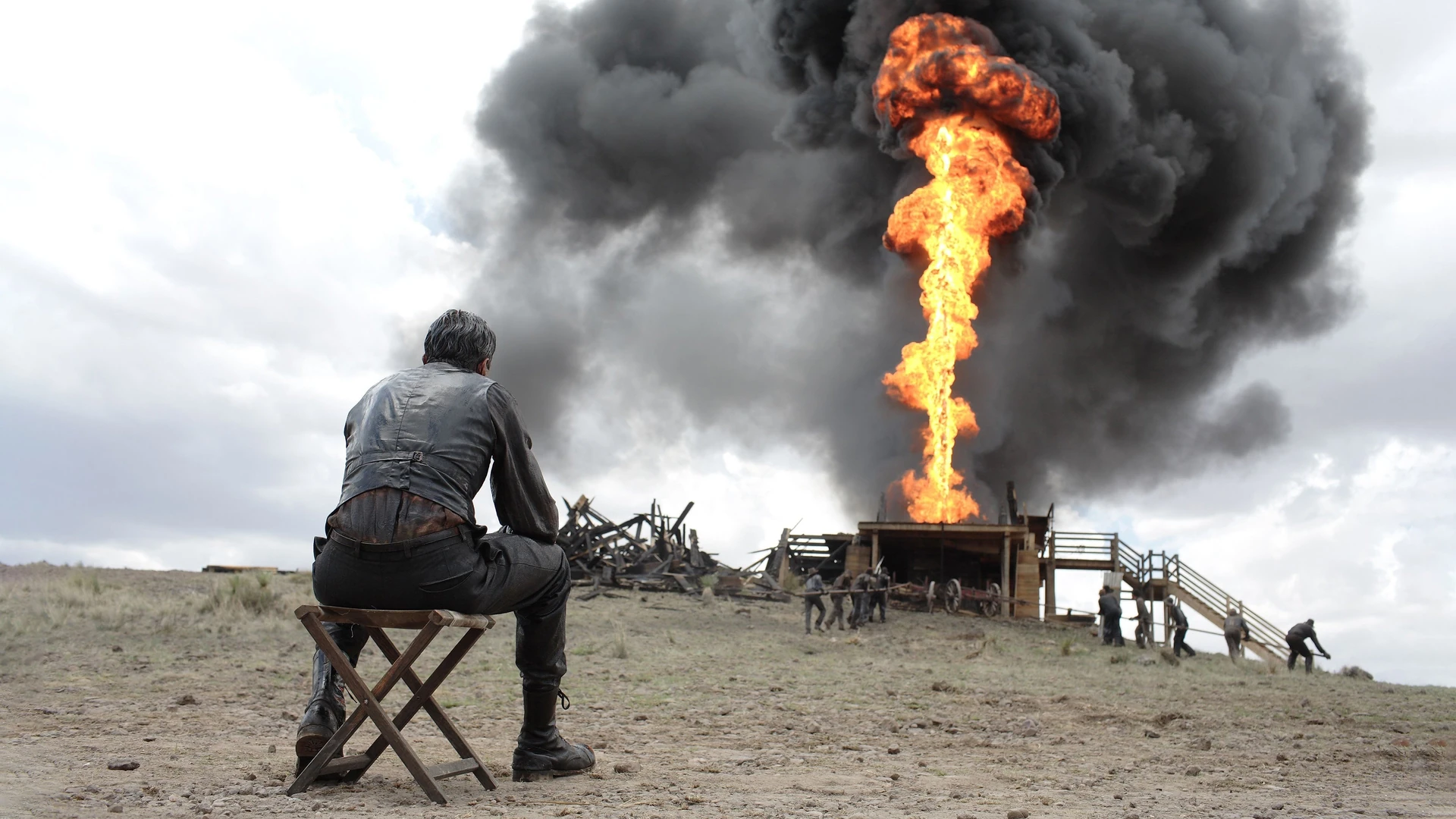
“I have a competition in me. I want no one else to succeed.” — Daniel Plainview
Paul Thomas Anderson’s There Will Be Blood, released in 2008, isn’t just a film; it’s a seismic event. A sprawling, often brutal epic that cemented its place almost immediately as one of the defining cinematic works of the 21st century. Critics, by and large, adored it—Rotten Tomatoes hovers around a staggering 91% fresh, Metacritic boasts a 93/100, and Daniel Day-Lewis’s portrayal of Daniel Plainview is rightly considered one of the greatest performances ever committed to celluloid. But let’s be honest, “adoration” doesn’t quite capture the experience of watching it. It’s a film that commands respect and awe more than affection. It’s not likable, and that’s precisely its power. It’s an unflinching, almost merciless descent into the heart of American ambition and the corrosive nature of greed, a journey many viewers find profoundly unsettling, even if they acknowledge its brilliance.
The Crude Core of Human Nature
At its philosophical heart, There Will Be Blood is a stark, almost Old Testament-level examination of human depravity and the existential vacuum left by unchecked ambition. Daniel Plainview, a silver miner turned oil prospector, isn’t merely greedy; he embodies a singular, almost pathological drive for acquisition, power, and ultimately, isolation. His journey from a struggling prospector to an oil baron is less a rags-to-riches tale and more a slow, terrifying metamorphosis into a monstrous force of nature. He represents the stark, unvarnished truth that some men are not just driven by material gain, but by a visceral need to dominate, to consume, and to see others fail.
The film’s deliberate pacing, particularly in its sparse, dialogue-light opening, was noted by some as potentially challenging. Indeed, many audience members found its two-and-a-half-hour runtime dense, a slow-burn narrative that demands patience. Yet, this very slowness allows the philosophical themes to seep in, to build an oppressive atmosphere that mirrors Plainview’s own suffocating world. The landscape itself, barren and unforgiving, becomes a character, a reflection of the emotional desolation that grows within Plainview as he drills deeper into the earth and into himself.
- Capitalism as a Spiritual Disease: Plainview’s “enterprise” isn’t just business; it’s an extension of his will, a means to control. The oil isn’t just wealth; it’s a black, viscous symbol of his soul’s corruption.
- The Illusion of Connection: His “son,” H.W., is a prop, a tool to project an image of a trustworthy family man, rather than a genuine bond.
- The Myth of Progress: The relentless pursuit of oil, presented as progress, ultimately leads to destruction, both environmental and personal.
 A lone oil derrick pumps relentlessly in the desolate landscape, a stark monument to Plainview’s ambition and the extraction of wealth from the earth.
The Unflinching Mirror: What Works and What Haunts
What makes There Will Be Blood so compelling, despite its often difficult subject matter, is its uncompromising vision and masterful execution. Day-Lewis’s performance is legendary for a reason; he doesn’t just play Plainview, he becomes him, embodying the character’s seething rage, his cunning, and his ultimate, terrifying emptiness. The voice, the gait, the stare—it’s all meticulously crafted to create a figure of primal force.
However, the film’s sheer bleakness and the almost singular focus on Plainview’s descent can be polarizing. Some critics, while praising the craft, found its lack of moral ambiguity or redemptive arcs to be almost too much, arguing it leaned into a kind of nihilistic determinism. Audience reviews sometimes echo this, noting that while powerful, it’s not a film one “enjoys” in the traditional sense, but rather one that leaves you feeling drained and disturbed. The relationship between Plainview and Eli Sunday, played with unsettling fervor by Paul Dano, is central to this. Eli, a self-proclaimed man of God, is just as consumed by ambition, albeit cloaked in religious piety. Their feud isn’t a clash of good versus evil, but rather two different manifestations of the same corrosive ego.
The film doesn’t offer comfort; it offers a stark, chilling reflection of ambition stripped bare of all pretense, revealing the monstrous self beneath.
The film’s relentless focus on its two central, deeply flawed figures means that other characters often feel underdeveloped, existing primarily as foils or victims in Plainview’s orbit. This isn’t necessarily a flaw, but a deliberate choice that reinforces Plainview’s isolation and his inability to truly connect. It’s a claustrophobic portrait of a man, allowing no escape from his internal torment or his external destructiveness. The score by Jonny Greenwood, a jarring, experimental soundscape, perfectly complements this unsettling atmosphere, pulling the viewer deeper into Plainview’s increasingly fractured psyche.
 Daniel Plainview, mud-streaked and determined, gazes intensely into the distance, embodying the relentless drive of the oil prospector in a brutal landscape.
Beyond the Surface: A Warning from the Well
Beneath the grit and the oil, There Will Be Blood raises profound metaphysical questions about the nature of evil, the corrupting influence of power, and the ultimate futility of a life built solely on material acquisition. Plainview’s final declaration, “I’m finished!”, delivered after a lifetime of accumulation, is perhaps the most chilling moment of all. It’s not a cry of satisfaction, nor of regret, but of utter, profound emptiness. His empire is built, his rivals are vanquished, but he is utterly alone, devoid of genuine human connection or purpose beyond the endless pursuit of “more.”
This film isn’t just about early 20th-century California oil booms; it’s a timeless parable about the darker currents of the American Dream. It asks us to consider what happens when ambition devours the soul, when progress is equated with exploitation, and when faith itself becomes another commodity to be bought and sold. It forces us to confront the uncomfortable truth that sometimes, the greatest monsters are not mythical beasts, but men driven by forces that reside deep within themselves.
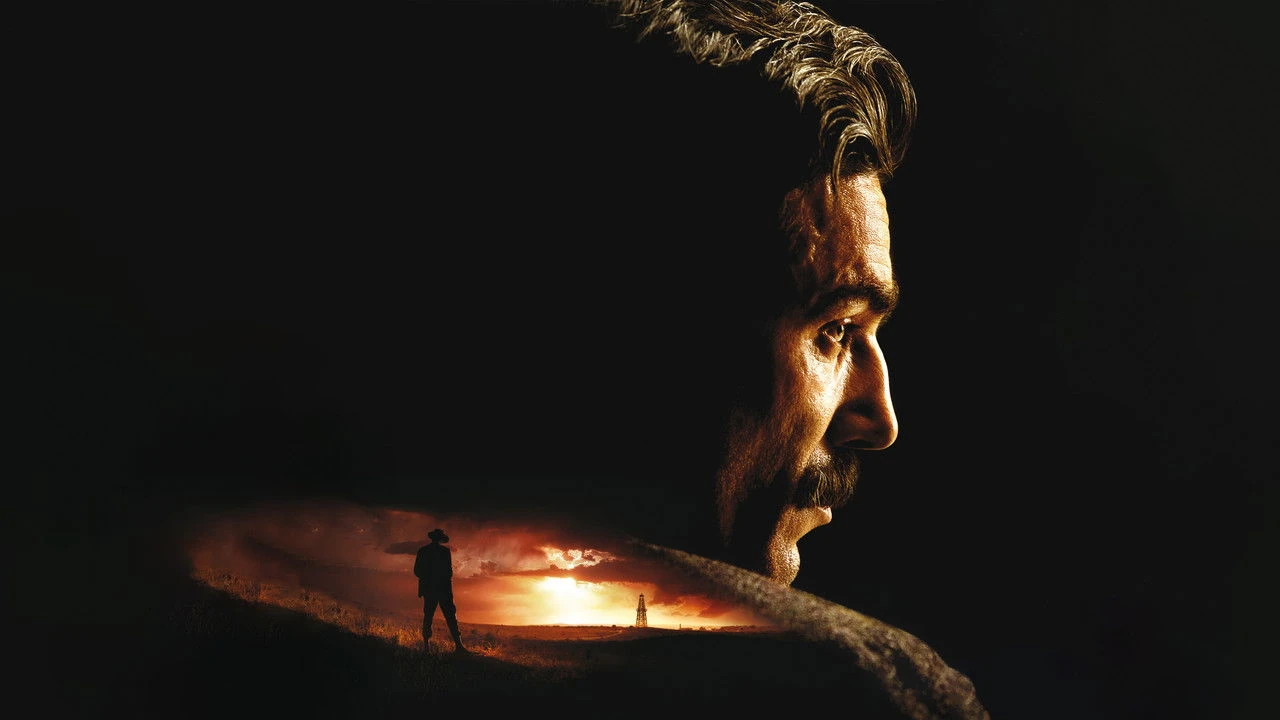
 Daniel Plainview’s intense gaze, framed in a close-up, reveals the simmering rage and isolation that define his character, hinting at the depths of his internal conflict.
“There will be blood. The film warns us not just of physical violence, but of the spiritual hemorrhage that accompanies unchecked avarice, a wound that never truly heals.”
There Will Be Blood stands as a monumental achievement, a film that doesn’t just tell a story, but rather excavates the very foundations of human nature and society. While its uncompromising darkness and relentless focus on its bleak themes might deter some, its philosophical weight is undeniable. It’s a challenging watch, certainly, but one that rewards the patient viewer with a deeply unsettling yet utterly captivating examination of what it truly means to be “finished” when you have seemingly gained everything. What price, it asks, are we willing to pay for our ambition, and what remains of us once the well runs dry?
Where to Watch
- fuboTV
- MGM+ Amazon Channel
- Paramount Plus Premium
- Paramount Plus Essential
- Peacock Premium
What’s Up? explores the philosophical depths of cinema.