Titanic's Enduring Depths: Beyond the Iceberg, Into the Human Heart
James Cameron's Titanic remains a cultural behemoth. This post dives into its philosophical undercurrents, exploring class, fate, and the power of love amidst catastrophe.
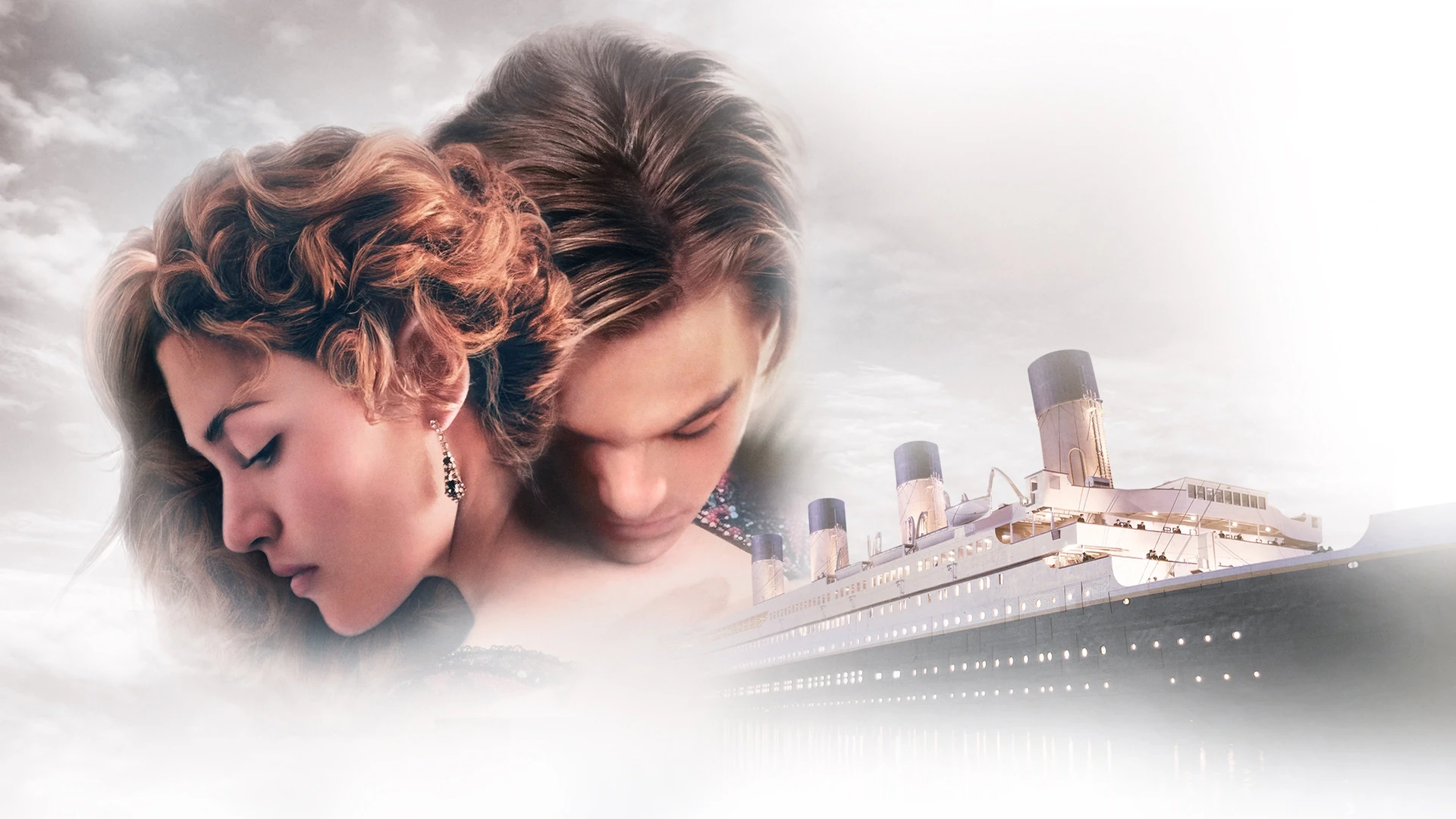
“Every man has his own destiny: the only imperative is to follow it, to accept it, no matter what it is.” — Henry Miller
It’s been over a quarter-century since James Cameron’s Titanic first plunged into cinemas, and frankly, its cultural footprint feels as vast and enigmatic as the ocean itself. A bona fide cinematic behemoth, this 1997 epic redefined blockbusters, captured hearts, and became a global phenomenon. Yet, for all its undeniable success—raking in billions and earning 11 Academy Awards—it’s always been a film that divides opinion, drawing both fervent adoration and a fair share of critical eye-rolls. While some lauded its breathtaking spectacle and sweeping romance, others, particularly critics at the time, often pointed to its sometimes clunky dialogue, archetypal characters, and a perceived reliance on melodrama. And yes, Titanic certainly has its flaws; no one’s denying the occasional expository clunk or the almost comically villainous Cal. But to dismiss it as mere “popcorn fluff” is to miss the profound, often existential questions it dares to pose about class, fate, and the very nature of human connection in the face of absolute catastrophe.
The Unsinkable Myth and the Class Divide
From its opening moments, Titanic presents us with a world obsessed with permanence and division. The ship itself, an engineering marvel, is presented as “unsinkable”—a testament to human hubris and technological overconfidence. This myth of invincibility serves as a potent philosophical backdrop, a grand stage upon which the fragility of human life and societal constructs will be brutally exposed. Critics, while often impressed by the film’s sheer scale, sometimes found the depiction of class struggles a bit heavy-handed. Billy Zane’s Cal, for instance, is a caricature of aristocratic entitlement, while the third-class passengers embody a romanticized freedom.
However, beneath these broad strokes lies a deeper critique of social stratification and its arbitrary nature. The film forces us to confront:
- The illusion of security: Money and status offered no real protection against the indifferent forces of nature.
- The arbitrary nature of survival: Life and death were often decided not by merit or courage, but by the class of one’s ticket.
- The dehumanizing effects of hierarchy: The rigid rules of class stifled genuine connection and human dignity, particularly for Rose.
Jack, a third-class passenger, represents an untamed spirit, a challenge to the suffocating confines of Rose’s upper-class existence. His very presence on the ship is an anomaly, a breach in the carefully constructed walls between “them” and “us.” Their love story, for all its melodrama, is fundamentally a rebellion against a predetermined fate dictated by birthright, a desperate grasp at existential freedom before all freedom is lost.
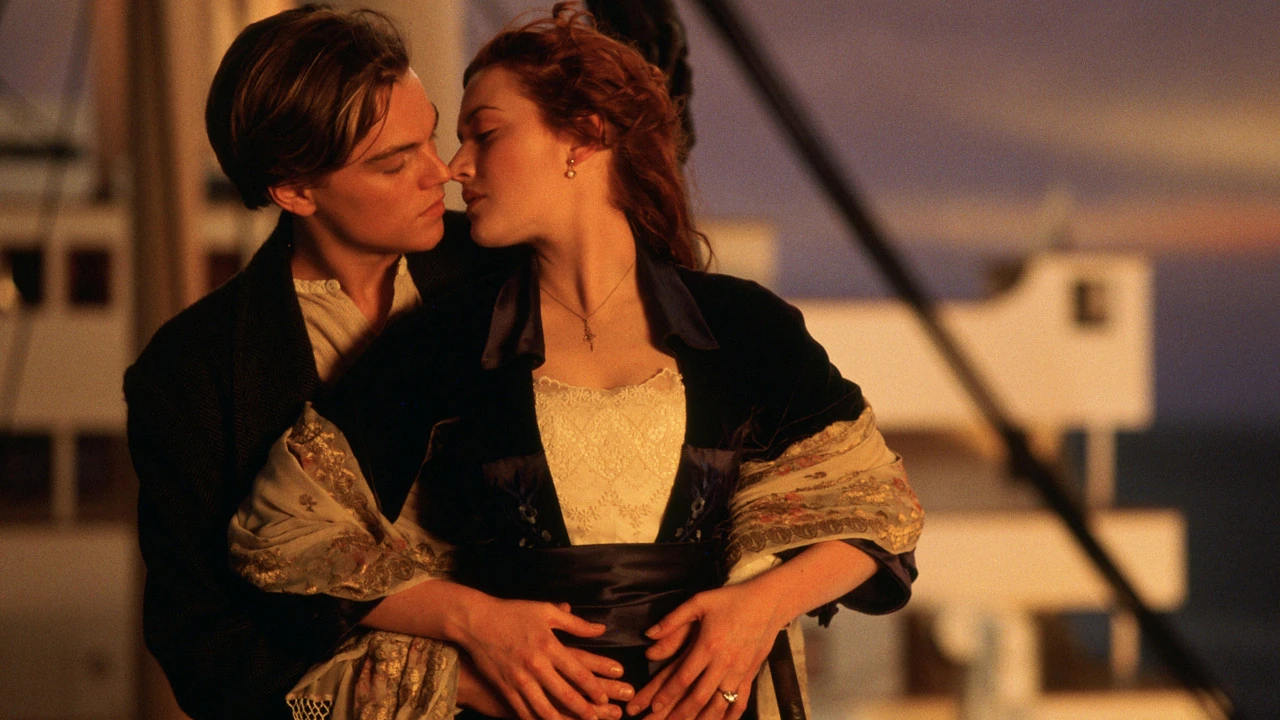 The grand staircase, a symbol of opulent class divisions soon to be submerged.
Love, Loss, and the Weight of Choice
The beating heart of Titanic is, of course, the romance between Rose DeWitt Bukater (Kate Winslet) and Jack Dawson (Leonardo DiCaprio). This aspect of the film, while undeniably effective for millions, was also a common target for criticism. Some reviewers found the love story conventional, even saccharine, arguing it overshadowed the historical tragedy. The dialogue, particularly in some of their more passionate exchanges, often felt less like genuine conversation and more like lines from a romance novel. Yet, the undeniable chemistry between Winslet and DiCaprio, coupled with Cameron’s masterful orchestration of emotional stakes, transcended these perceived weaknesses for many.
The true weight of choice isn’t just about what we pick, but the person we become in making that choice.
What Titanic truly explores through Jack and Rose isn’t just a simple love story, but the profound human need for authenticity and self-actualization. Rose, trapped in a gilded cage, sees in Jack not just a lover, but a path to liberation. Her decision to defy her family and fiancé isn’t merely about choosing a man; it’s about choosing her own life, her own identity. This is a powerful, if familiar, philosophical arc. The ship, initially a symbol of her entrapment, becomes the crucible where she finds the courage to break free. Their brief, intense connection highlights the fragility of time and the immense value of living fully in the present, a carpe diem philosophy played out against the backdrop of impending doom. Their love, however brief, becomes an act of defiant creation in the face of inevitable destruction, an assertion of individual will against the vast, impersonal forces of fate.
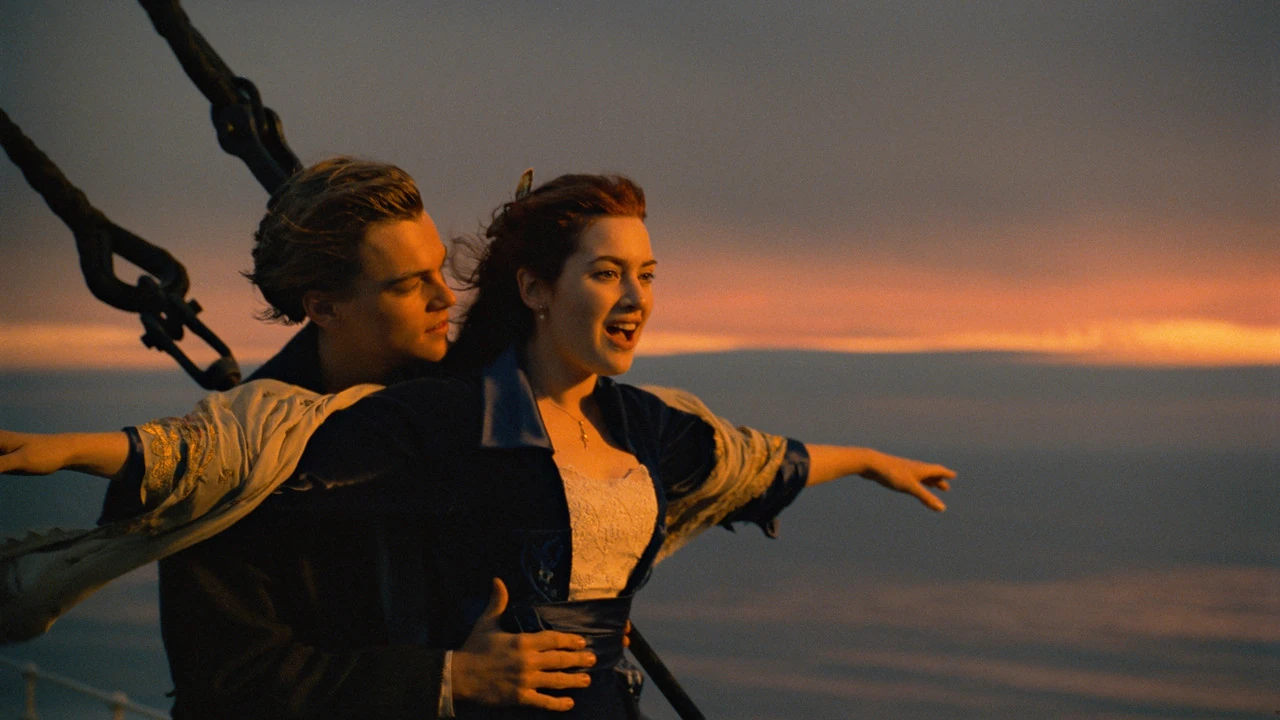 Jack and Rose embracing at the ship’s bow, symbolizing freedom and ephemeral joy.
The Legacy of Catastrophe: Memory and Meaning
The film’s framing device, with an elderly Rose recounting her story, often drew mixed opinions. Some found it slowed the pacing; others felt it added a vital layer of gravitas. Philosophically, this narrative structure is crucial. It underscores the film’s profound engagement with memory, trauma, and the act of witnessing. Rose isn’t just telling a story; she’s keeping a promise, honoring a life, and ensuring that the meaning of her survival—and Jack’s sacrifice—isn’t lost to the cold depths of history.
Titanic grapples with the metaphysical question of what endures. Is it the grand ship, the material wealth, the social structures? No, all those are swallowed. What remains are stories, memories, and the echoes of profound human connections. Rose’s enduring heart, her refusal to let go of Jack’s memory, becomes a testament to the power of love as a force that transcends death. Her necklace, “The Heart of the Ocean,” is not merely a valuable gem, but a symbol of her past, her love, and the secrets she carried. Its ultimate return to the sea is a poignant act of letting go, a release that simultaneously honors and completes her journey. The film, for all its spectacle, ultimately asks us to ponder the value of a single life, the weight of a single promise, and the incredible, almost spiritual, resilience of the human spirit to find meaning even in the most devastating of losses.
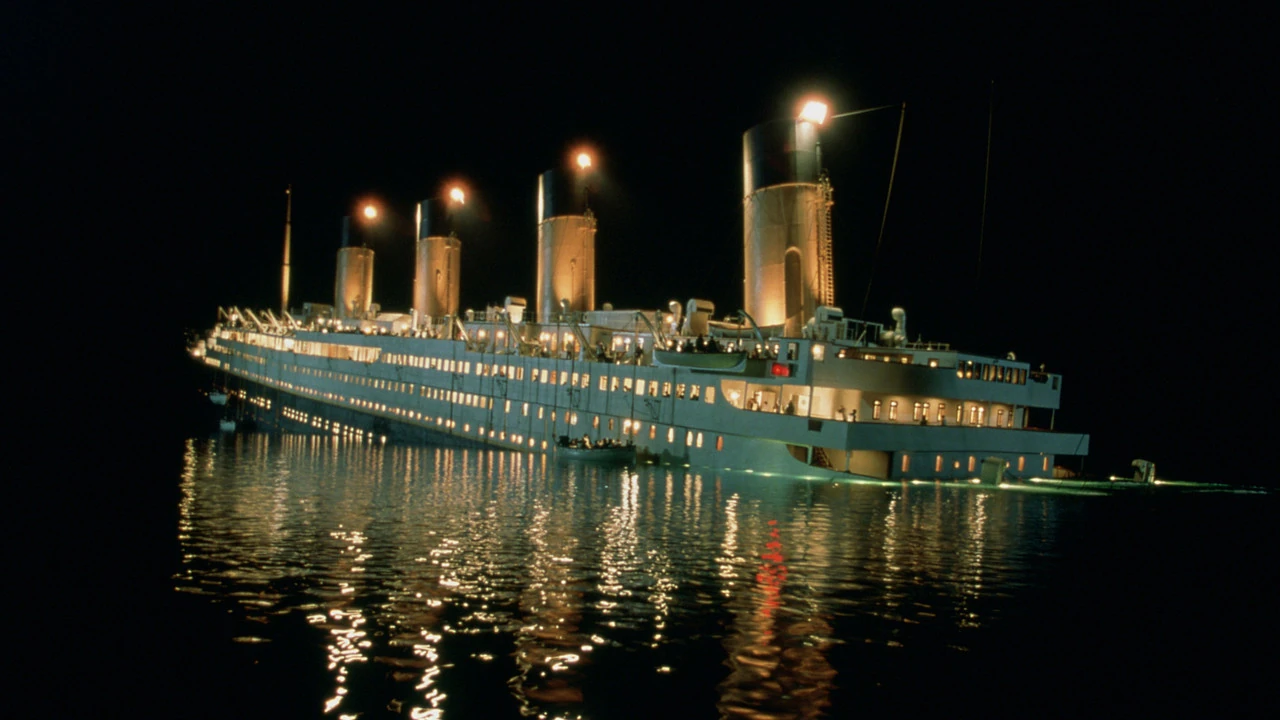 The ill-fated collision, a stark reminder of human hubris versus nature’s indifference.
“The only way to make sense out of change is to plunge into it, move with it, and join the dance.” — Alan Watts
Titanic’s legacy is undeniably complex. It’s a film that’s been both celebrated as a masterpiece and derided as an overblown melodrama. Critics might debate its script or pacing, but few can deny its immense emotional impact and its powerful exploration of universal themes. Despite its flaws, Titanic forces us to confront our own mortality, the fragility of our carefully constructed worlds, and the profound, transformative power of connection. It reminds us that even in the face of the unspeakable, the human heart finds ways to defy, to love, and to remember. What more could we ask of a story, fictional or historical, than to make us feel so deeply, and question so much?
Where to Watch
- Paramount Plus Premium
- Paramount Plus Essential
- Starz Apple TV Channel
- Paramount+ Amazon Channel
- Starz
What’s Up? explores the philosophical depths of cinema.