The Unbearable Weight of Being: True Detective's Nihilistic Odyssey
Exploring the philosophical depths of True Detective (2014), its nihilistic themes, the nature of evil, and the complex human search for meaning amidst darkness.

“The world needs bad men. We keep the other bad men from the door.” — Rust Cohle
Few television series have burrowed into the collective consciousness with the unsettling intensity of True Detective’s inaugural season from 2014. It wasn’t just a crime procedural; it was a philosophical treatise cloaked in swampy dread, a Southern Gothic fever dream that dared to stare into the abyss and question what stares back. While the anthology series has seen varying degrees of critical success across its subsequent iterations—the most recent season, Night Country, sparking its own fierce debates—it’s the first season, starring Matthew McConaughey as Rust Cohle and Woody Harrelson as Marty Hart, that remains a towering, often terrifying, benchmark for its singular vision and profound, albeit bleak, philosophical underpinnings. Critics, almost universally, lauded its atmospheric direction, its intricate, if sometimes dense, writing, and the career-defining performances of its leads. Yet, even in its lauded status, True Detective wasn’t without its detractors, particularly concerning its often bleak worldview and the ultimate resolution of its grander cosmic mysteries.
The Time is a Flat Circle: Nihilism and the Nature of Reality
At the very core of True Detective’s first season lies a relentless, almost suffocating, nihilism, articulated most famously by Rust Cohle. His monologues, steeped in Schopenhauer and Ligotti, posit a universe utterly devoid of inherent meaning, where human consciousness is a tragic evolutionary mistake, and existence itself is a futile, endlessly repeating cycle. “Time is a flat circle,” he famously intones, suggesting that all our struggles, our loves, our cruelties, are destined to play out again and again. This isn’t just a character quirk; it’s the metaphysical bedrock upon which the entire narrative is built, influencing the show’s cyclical structure, its pervasive sense of dread, and its unflinching gaze at generational evil.
Key themes woven into this philosophical tapestry:
- Existential dread — the uncomfortable awareness of our own finite existence in an indifferent cosmos.
- The burden of consciousness — how awareness of suffering and meaninglessness can be a curse.
- Inherited evil — the way darkness and depravity can be passed down through families and institutions, creating an inescapable cycle of violence.
 Rust Cohle’s piercing gaze, reflecting the weight of his nihilistic worldview amidst the decaying beauty of Louisiana.
What Works, What Doesn’t: A Balanced Reckoning
True Detective (2014) was, by most accounts, a critical darling, earning a staggering 91% on Rotten Tomatoes and an 87 on Metacritic. Its initial run was nothing short of a cultural phenomenon. Audiences and critics alike were captivated by its bold narrative ambition, the mesmerizing chemistry between McConaughey and Harrelson, and Cary Fukunaga’s masterful direction, particularly the breathtaking single-take tracking shot in episode four. The series dared to be slow, atmospheric, and dense, favoring character study and philosophical discourse over typical procedural pacing.
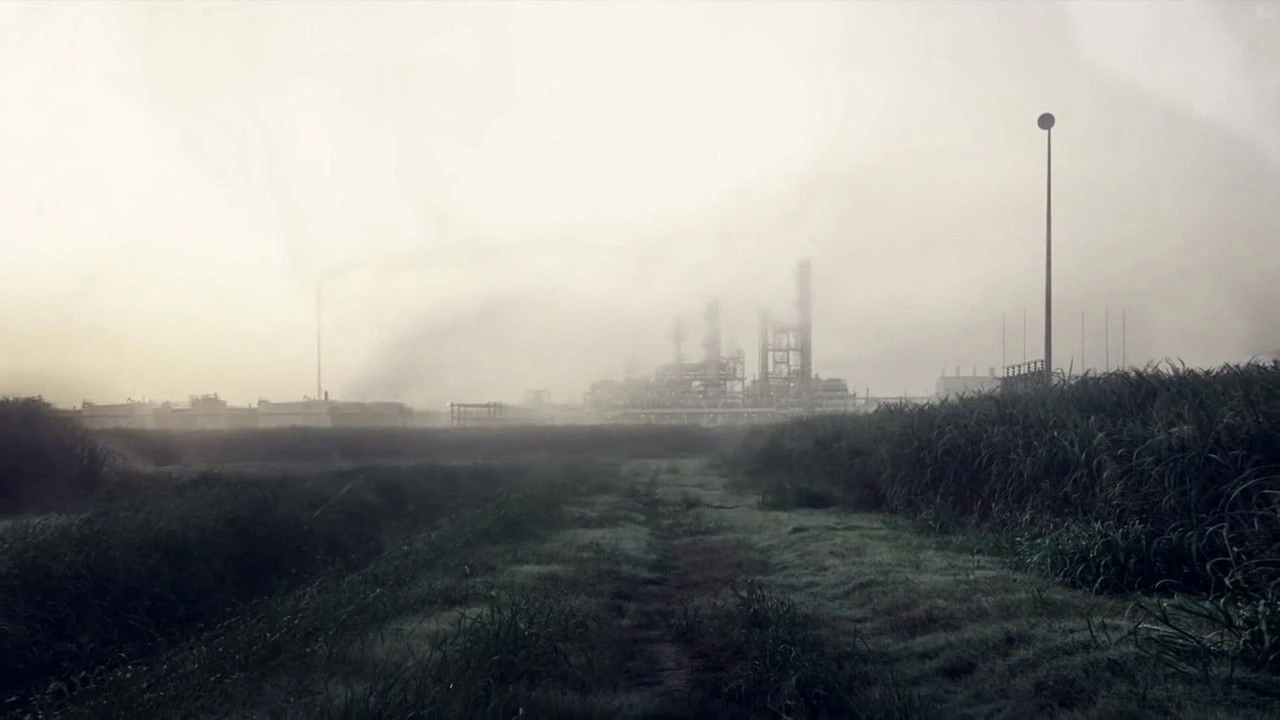
The show masterfully used its Louisiana setting not just as a backdrop, but as a living, breathing character, its oppressive humidity and decaying landscapes mirroring the moral rot at the story’s heart.
However, even its ardent admirers couldn’t ignore some of its inherent flaws, which became more pronounced upon rewatch or in the wake of the initial hype. Some viewers found Cohle’s relentless monologues occasionally veered into pretentiousness, feeling more like a college philosophy lecture than organic dialogue. The much-vaunted “Yellow King” mythology, while building an incredible sense of cosmic horror and mystery, ultimately resolved into something more grounded, leading to some audience disappointment. Critics, while generally effusive, occasionally pointed out the series’ treatment of its female characters; often relegated to victims, wives, or mistresses, they rarely felt as fully realized as their male counterparts, a criticism that has justly followed the series. The show’s portrayal of pervasive misogyny and violence, while central to its themes of human depravity, sometimes felt gratuitous to some viewers. Despite these valid critiques, the sheer force of its acting and its narrative ambition often eclipsed these perceived weaknesses, leaving an indelible mark.
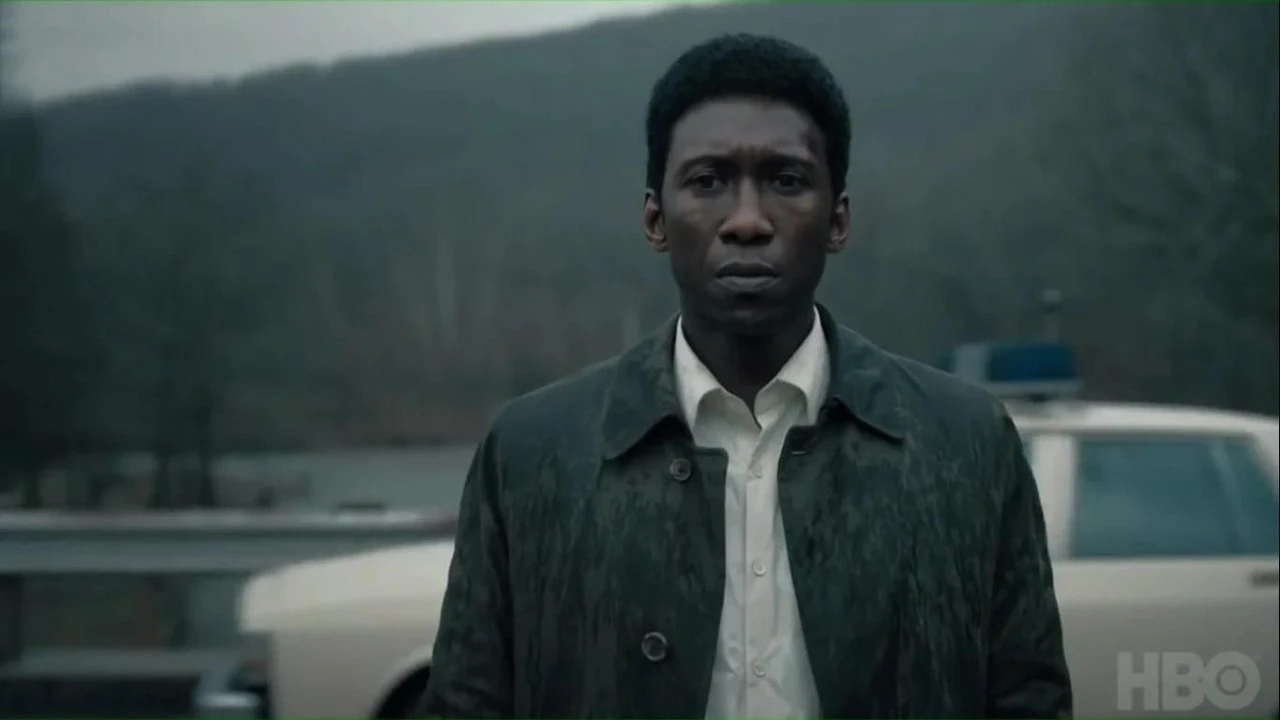
 Marty Hart, grappling with his own demons and the moral complexities of his partnership with Cohle.
Beyond the Surface: The Persistent Echo of Unanswered Questions
Even with its occasional stumbles and the criticisms leveled at its more controversial aspects, True Detective season one remains a profoundly thought-provoking piece of television. It transcends its genre constraints to ask uncomfortable, universal questions. It forces us to confront the potential for evil within humanity, not as some abstract force, but as something deeply ingrained, passed down, and often ignored by institutions. The series delves into the nature of faith versus nihilism, the desperate human need for narrative and meaning even in a chaotic world, and the wearying, often thankless, pursuit of truth.
The ultimate resolution might have felt a touch conventional after the cosmic build-up, but the final scene, with Cohle’s unexpected shift towards a glimmer of hope after seeing light beyond the darkness, offers a powerful, if ambiguous, counterpoint to his earlier despair. It suggests that perhaps, even in a flat circle, there’s room for a crack of dawn, a brief respite from the repetition.
 The desolate, haunting beauty of the Louisiana bayou, a silent witness to the darkness lurking beneath.
The legacy of True Detective’s first season is a mixed one only in hindsight, after subsequent seasons struggled to reach its heights. In its moment, it was a phenomenon, a dark mirror held up to the human condition, revealing both our profound capacity for evil and our enduring, almost defiant, search for a light in the crushing void.
What does it truly mean to find meaning, or even just peace, when you believe your entire existence is a meaningless blip in an indifferent, repeating universe? True Detective doesn’t give easy answers, but it forces us to wrestle with the questions long after the credits roll.
Where to Watch
- HBO Max
- HBO Max Amazon Channel
- TNT
What’s Up? explores the philosophical depths of cinema.