The Chaotic Embrace: Venom, Carnage, and the Philosophy of the Inner Monster
Exploring Venom: Let There Be Carnage as a chaotic mirror to our inner monsters and the uncomfortable truths of symbiotic existence, despite its critical reception.
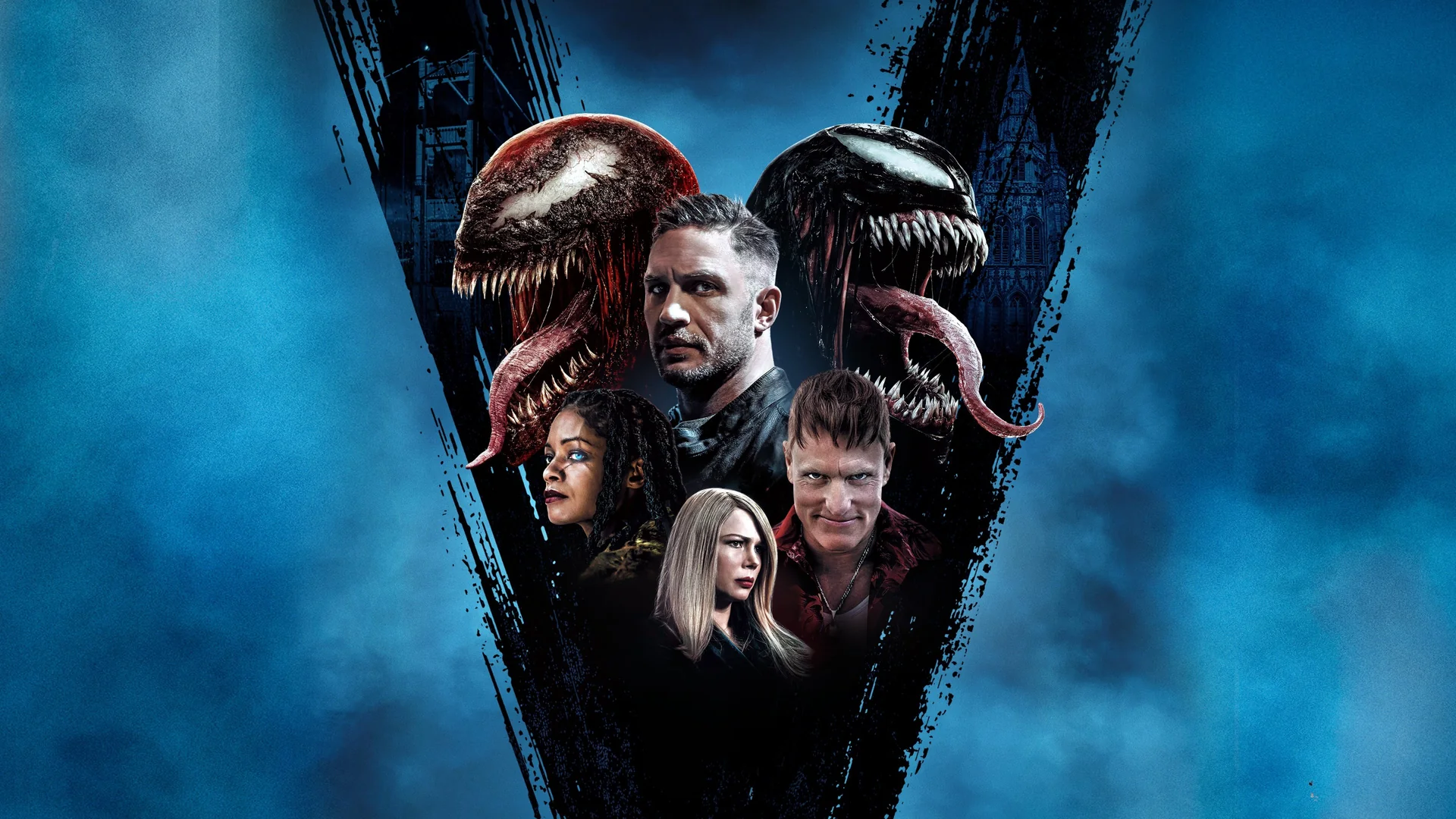
“We carry within us the wonders we seek without us.” — Rumi
Venom: Let There Be Carnage arrived in 2021, a sequel that, much like its titular symbiotes, felt like a chaotic eruption of impulses. It’s a film that critics largely panned, currently holding a rather anemic 32% on Rotten Tomatoes, with many citing its breakneck pace, thin plot, and often jarring tonal shifts as major stumbling blocks. Yet, for all its perceived flaws and the frenetic energy that often bordered on nonsensical, there’s an undeniable, almost primal, philosophical undercurrent to Andy Serkis’s direction of this comic book romp. It asks us to look, however fleetingly, at the messy, co-dependent relationships we form, both internally and externally, and the sheer, glorious absurdity of embracing our own inner monsters.
The Symbiotic Self: Identity in Co-Dependence
The core of the Venom franchise, and indeed Let There Be Carnage, isn’t really about superheroes or villains in the traditional sense; it’s about symbiosis. Specifically, it’s about the utterly bizarre, often toxic, yet undeniably intimate relationship between investigative reporter Eddie Brock (Tom Hardy) and his alien counterpart, Venom. Their dynamic is a literal manifestation of the divided self – the internal struggle between our conscious desires and our more primal, instinctual urges. Eddie wants a quiet life, a career, maybe even reconciliation with Anne Weying (Michelle Williams). Venom just wants brains and chaos. This film amplifies that push-pull to a comedic, sometimes unsettling, degree.
Critics often noted the film’s short runtime (a mere 97 minutes) and rushed pacing, which meant character development, particularly for Cletus Kasady and Shriek, felt underdeveloped. And they’re not wrong. The narrative often sprints past opportunities for deeper exploration. However, even within this whirlwind, the film effectively highlights the sheer difficulty of self-integration. Eddie and Venom are a bickering, co-dependent couple. They are two distinct entities sharing one body, their voices constantly overlapping, their desires often at odds. It’s a loud, messy, unapologetic depiction of what it means to house conflicting aspects of one’s own psyche. How many of us feel like we’re constantly negotiating with an inner “Venom” – a part of ourselves that craves indulgence, chaos, or simply wants to be heard, even if it’s shouting obscenities?
Key themes explored:
- The Divided Self — a literal manifestation of internal conflict.
- Co-dependence — is it a partnership, a prison, or both?
- Identity Formation — who are you when another entity shares your consciousness?
 Eddie Brock and Venom in a heated, internal argument, a visual metaphor for the divided self.
Chaos and Catharsis: What Works (and What Doesn’t)
Venom: Let There Be Carnage is a divisive film precisely because its strengths are often born from its weaknesses. Many audience members, myself included, found an odd charm in its sheer commitment to embracing the grotesque and the goofy. The film doesn’t take itself too seriously, often leaning into the absurd humor of Eddie and Venom’s domestic squabbles. This campy tone, however, was also a major point of contention for critics who expected a darker, more cohesive narrative, especially with a villain like Cletus Kasady, a serial killer played with unsettling glee by Woody Harrelson.
The film’s chaotic energy, while often criticized for its lack of narrative coherence, might just be its most honest philosophical statement: that life, and indeed the human psyche, is often an uncontrolled, messy, and deeply absurd ride.
The contrast between Eddie/Venom and Cletus/Carnage is where the film finds its most compelling, if underdeveloped, philosophical ground. Eddie struggles for control, for a semblance of good, however flawed. Cletus, on the other hand, embraces the chaos, the destruction, the pure id of Carnage. He finds liberation in his monstrosity, a terrifying freedom from moral constraint. This stark difference highlights the choice we all face: do we try to tame our darker impulses, or do we unleash them? The film, for its part, doesn’t offer easy answers, merely presenting the spectrum of chaotic human (and alien) experience. While the action sequences were often deemed a CGI mess by some, their very freneticism mirrors the internal turmoil of the characters. It’s a visual representation of their battles, both internal and external.
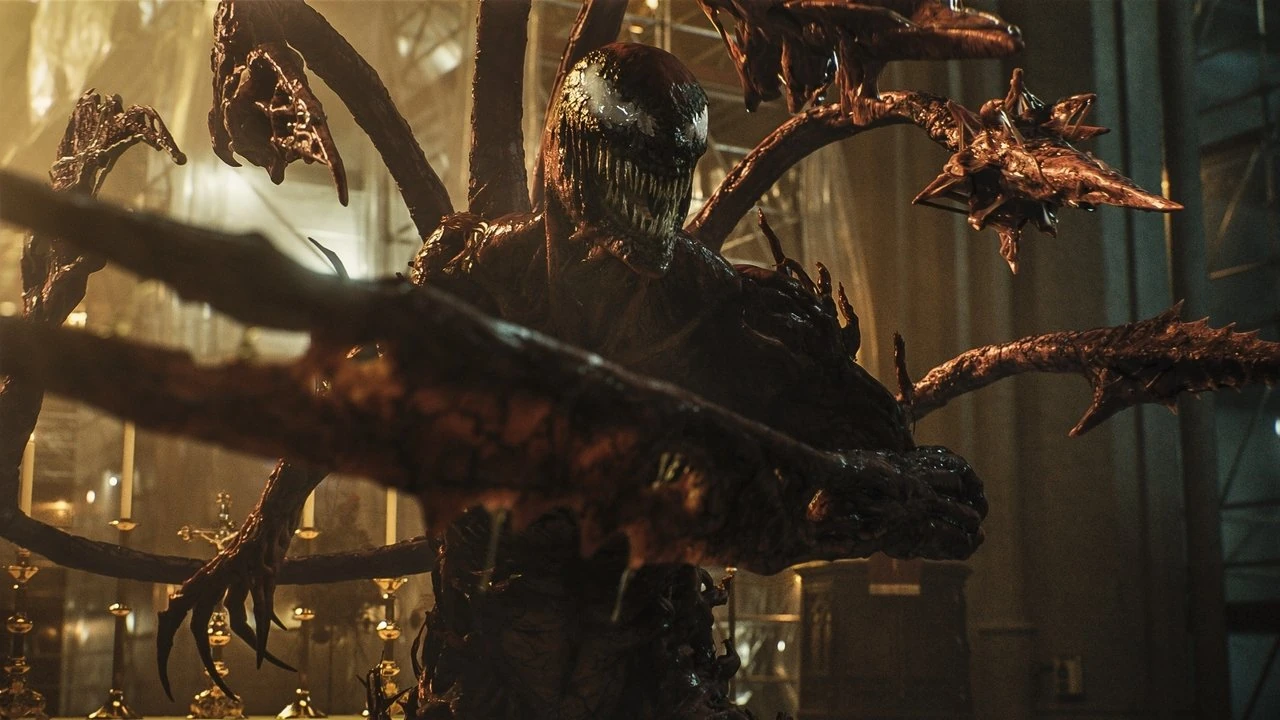 Carnage unleashed, a terrifying embodiment of unbridled id and destructive freedom.
Beyond the Surface: The Existential Embrace of the Abject
Despite its narrative shortcomings and critical battering, Venom: Let There Be Carnage dares to ask some uncomfortable questions, even if it does so with a wink and a shrug. It plunges into the abject, those things that disturb our sense of identity and order, that exist on the margins of the human. Venom and Carnage are not just monsters; they are the ultimate “other,” entities that literally consume and redefine their hosts.
The film, in its own chaotic way, forces us to confront:
- The Nature of Evil: Is Carnage pure evil, or simply an entity operating without human morality? Cletus Kasady’s joy in destruction suggests a nihilistic embrace of meaninglessness.
- Existential Freedom: For Cletus, bonding with Carnage is the ultimate liberation from societal norms and self-control. It’s a terrifying vision of absolute freedom, unchecked by ethics.
- The Search for Belonging: Even monstrous entities, in their own twisted ways, seek connection. Venom wants Eddie, Carnage wants Cletus and Shriek. It’s a primal urge, even for beings whose primary mode of interaction is consumption. This, perhaps, is the most human aspect of these alien monsters.
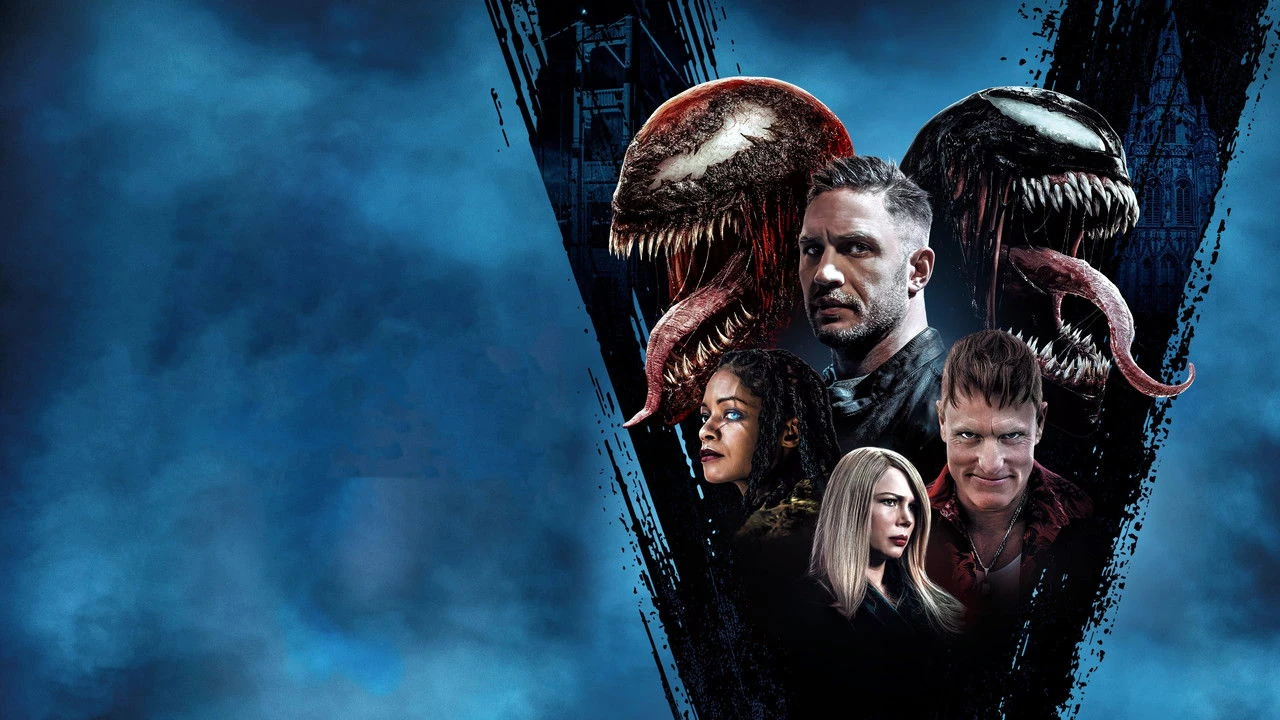 Cletus Kasady and Shriek, bound by their monstrous desires, finding solace in shared chaos.
“Sometimes, the darkest mirror reflects the most uncomfortable truths about ourselves. And sometimes, that mirror is just a loud, messy blockbuster.”
Venom: Let There Be Carnage is certainly not a perfect film. Its flaws are undeniable, and its reception speaks volumes about its uneven execution. Yet, it resonates on a subconscious level because it taps into something deeply human: the struggle with our inner demons, the quest for belonging, and the terrifying allure of pure, unadulterated chaos. It might be a blockbuster that prioritizes fun over finesse, but in its own anarchic way, it presents a compelling, if unpolished, meditation on what it means to be a host to forces both within and beyond our control. Can we truly be whole when we are constantly at war with ourselves, or do we find a strange kind of peace in the chaotic embrace of our inner monsters?
Where to Watch
- Disney Plus
- fuboTV
- Starz Apple TV Channel
- YouTube TV
What’s Up? explores the philosophical depths of cinema.