Echoes of Being: The Labyrinth of Self, Destiny, and Legacy
A profound journey through 38 cinematic worlds, exploring the intricate dance between destiny and free will, the forging of identity, and the enduring echoes of our choices.
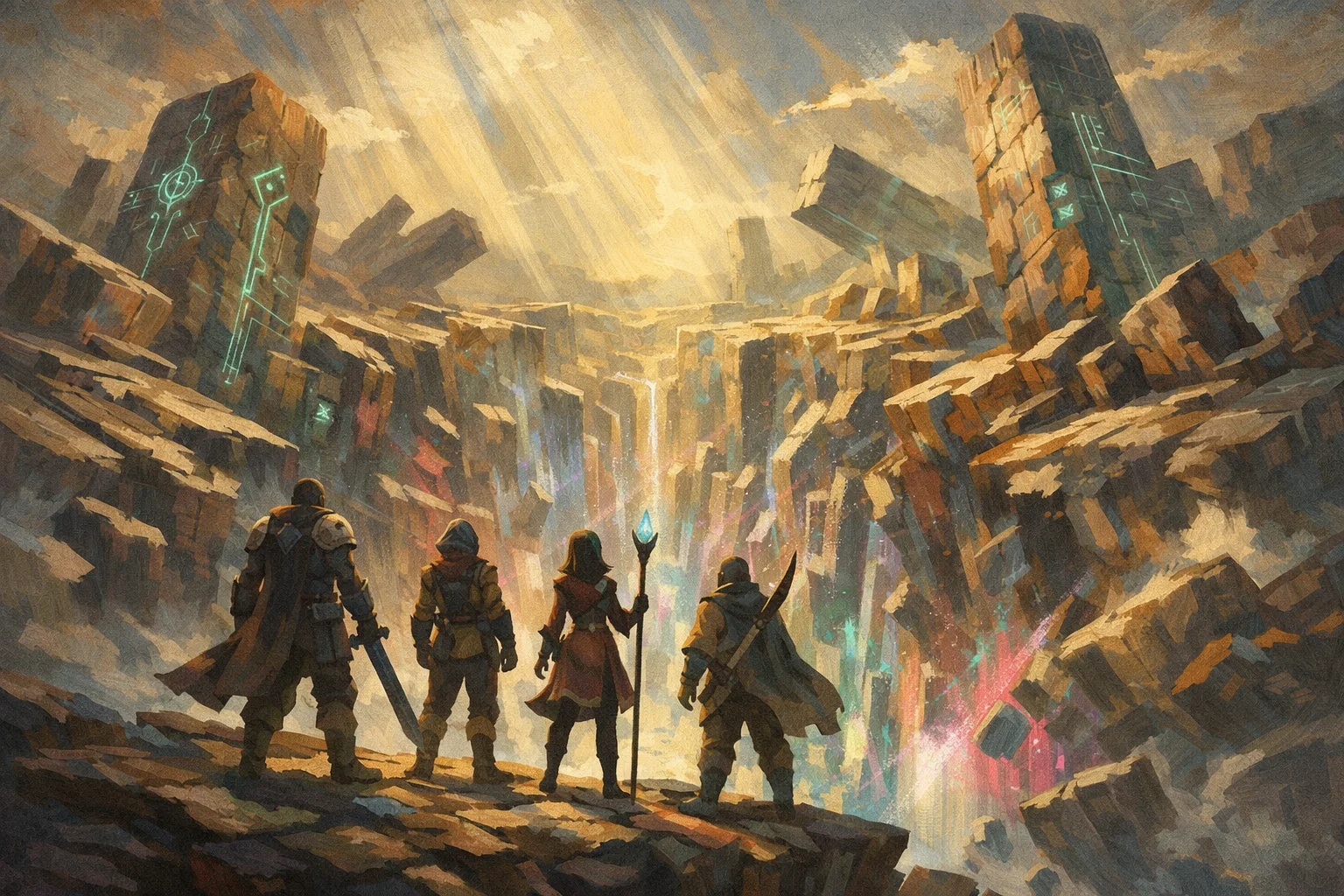
“Man is condemned to be free; because once thrown into the world, he is responsible for everything he does.” — Jean-Paul Sartre
This week, “What’s Up?” plunged into the very crucible of existence, navigating a staggering 38 philosophical analyses that collectively illuminate the intricate architecture of being. Across a vast tapestry of genres and narratives, from sweeping cosmic sagas to intimate psychological thrillers, we discovered a resonant, persistent chord: the profound tension between destiny and agency, the ceaseless forging of self, and the indelible legacy left in the wake of our choices.
Our cinematic journey this week was less a viewing experience and more an intensive seminar on the human condition. Each narrative, whether a galactic epic or a grounded drama, served as a philosophical lens, inviting us to peer into the fundamental questions that haunt and define us. What defines our path? Are we merely players in a grand, predetermined narrative, or are we the architects, however fragile, of our own unfolding stories?
The philosophical undercurrent binding these diverse works is an exploration of ontological becoming. It is the question of how we, as conscious entities, construct meaning and identity within a world that often feels both indifferent and overwhelmingly influential. This week’s curated selection didn’t just entertain; it provoked, questioned, and ultimately deepened our understanding of the forces that shape our existence and the reverberations of every decision.
The Philosophical Thread: Architects of Our Own Labyrinths
The unifying theme that emerged from this week’s extraordinary collection is the interplay between predetermination and self-authorship. Our analyses revealed characters grappling with inherited destinies, societal expectations, genetic predispositions, and the sheer randomness of circumstance, all while striving to assert their unique will and define who they are. This is the essence of existential navigation: the constant negotiation between the ‘given’ and the ‘chosen’.
“We are condemned to meaning. There is no escape from meaning, for we are meaning itself.” — Maurice Merleau-Ponty
In the vast cosmic canvas of the Star Wars saga, from the tragic prophecies of the prequels (Star Wars: Episode I - The Phantom Menace, Star Wars: Episode II - Attack of the Clones, Star Wars: Episode III - Revenge of the Sith) to the defiant heroism of the originals (Star Wars: Episode IV - A New Hope, Star Wars: Episode V - The Empire Strikes Back, Star Wars: Episode VI - Return of the Jedi) and the sacrificial courage of Rogue One: A Star Wars Story, we witness the relentless dance between prophecy and personal choice. Anakin Skywalker’s fall, Luke’s rise, and Jyn Erso’s ultimate sacrifice are not merely plot points but profound explorations of moral agency within a seemingly fated universe. Are they fulfilling a script, or writing their own through sheer will?
Similarly, the grand dynastic struggles of Game of Thrones and House of the Dragon plunge us into worlds where bloodlines dictate power and destiny seems inescapable. Yet, it is the individual choices—the betrayals, alliances, and acts of defiance—that ultimately bend the arc of history, proving that even within the most rigid structures, the human will finds a way to assert itself. These narratives illuminate the burden of lineage and the existential weight of leadership, where personal identity often dissolves into the demands of a house or a crown.
This dynamic of fate and choice, of a pre-existing labyrinth and the individual trying to navigate or even redesign its walls, provides a powerful lens through which to examine every work this week. It is a recurring meditation on whether we are defined by what happens to us, or by how we choose to respond.
The Journey Through Cinema: A Kaleidoscope of Being
Our week began with the galactic echoes of Star Wars, a saga deeply entrenched in the conflict between destiny and choice. Rogue One: A Star Wars Story explored the power of individual sacrifice to alter the course of a seemingly inevitable war, while the original trilogy, Star Wars: Episode IV - A New Hope, Star Wars: Episode V - The Empire Strikes Back, and Star Wars: Episode VI - Return of the Jedi, showcased Luke Skywalker’s journey from a farm boy to a hero who defies predetermination. The prequel trilogy, Star Wars: Episode I - The Phantom Menace, Star Wars: Episode II - Attack of the Clones, and Star Wars: Episode III - Revenge of the Sith, offered a tragic counterpoint, detailing Anakin Skywalker’s fall, a powerful exploration of how choice, fear, and manipulation can twist even a prophesied “Chosen One” into an agent of destruction.
Interspersed with these epic narratives, we encountered the intricate dance of identity. The Crowded Room delves into the fractured self, exploring how trauma can splinter identity into a complex internal architecture of survival. Game of Thrones and House of the Dragon painted sprawling canvases of ambition, lineage, and the brutal weight of fate versus individual agency in shaping kingdoms and personal destinies.
As the week progressed, our focus shifted to the multifaceted nature of self in various contexts. Halo examined humanity’s future and the definition of heroism in a technologically advanced, existential conflict. Hawkeye explored the legacy of a hero and the struggle for identity beyond the mask, while She-Hulk: Attorney at Law tackled the complexities of dual identity, public perception, and the authentic self in a world quick to judge.
Thursday brought a rich confluence of perspectives. Stranger Things delved into the vulnerability of youth against encroaching cosmic horrors, highlighting collective resilience and the forging of identity through shared trauma. Baahubali: The Beginning and Kantara offered profound insights into duty, myth, destiny, and the spiritual connection to land and lineage, echoing ancient narratives of heroism and justice. Dumb Money became a modern parable of collective agency challenging established power structures, while Locke & Key explored the inheritance of trauma and magic, where identity is intertwined with ancestral secrets.
The week also brought us face-to-face with the darker facets of human nature and the systems we inhabit. Agent Mona 0.1 and The Little Drummer Girl plunged us into the deceptive worlds of espionage, where identity is a fluid weapon and truth a dangerous commodity. The Gentlemen examined the construction of a new identity amidst the moral ambiguities of power and illicit empire-building. The chilling insights of The Silence of the Lambs explored the deep psychological architecture of evil and the profound impact of trauma on identity. The Day of the Jackal presented a masterclass in calculated anonymity and meticulous planning, a testament to individual will against overwhelming odds. Even the playful I Am Groot offered a delightful, albeit simple, meditation on pure being and growth, unburdened by complex self-doubt.
“Cinema is a perpetually evolving mirror, reflecting not just our stories, but the very fabric of our being, challenging us to see the unseen within ourselves.” — Andrei Tarkovsky
Friday’s analyses continued this exploration. Death on the Nile wove a web of deceit and passion, where hidden identities and desires lead to fatal consequences. Chernobyl stood as a stark testament to the catastrophic consequences of human hubris, systemic failure, and the sacrifices made in the pursuit of truth and containment—a legacy etched in the very landscape. Rise of the Planet of the Apes questioned human superiority, charting the evolution of a new species and the forging of a collective identity in defiance of oppression, building a profound legacy. Black Mirror, as always, held up a darkly reflective lens to technology’s insidious influence on identity, choice, and the very nature of reality, constantly challenging our perception of what it means to be human in a digital age.
The weekend brought further layers to our understanding. Once Upon a Time… in Hollywood blurred the lines between history, memory, and narrative, exploring the construction of identity within a shifting cultural landscape. The Family Man delved into the dual lives of an intelligence agent, highlighting the sacrifices and hidden selves required for duty. Chennai Express offered a vibrant journey of self-discovery and cultural integration, where identity is reshaped by love and circumstance. From trapped its characters in a nightmarish loop, forcing them to confront their deepest fears and forge a collective identity in the face of an inexplicable horror. Mersal explored themes of justice, revenge, and societal critique through the lens of multiple identities, while The Night Manager immersed us in the morally ambiguous world of an undercover agent, where the line between the true self and the assumed persona blurs.
Finally, Sunday completed our odyssey. The Autopsy of Jane Doe unraveled a terrifying identity from the past, demonstrating how ancient legacies can haunt the present. The Witcher: Blood Origin explored the genesis of a world and the shaping of its destiny, examining how foundational choices create enduring legacies. The Bourne Identity served as a quintessential exploration of amnesia and the desperate quest to reconstruct a lost self, a visceral representation of the fundamental human need for narrative and identity. And The Little Drummer Girl concluded our week, once again diving into the treacherous terrain of espionage, where identity is a carefully constructed illusion, and the individual is a pawn in a larger, complex game.
Each work added its voice to a growing chorus, building toward a profound realization about the continuous, often perilous, act of constructing meaning and self within the vast, indifferent, and sometimes fated expanse of existence.
Deeper Waters: The Human Condition as a Constant Becoming
This week’s cinematic journey was, at its core, a profound meditation on the human condition as a state of perpetual becoming. We witnessed characters, worlds, and entire societies caught in the liminal space between what they are, what they could be, and what they are compelled to be. The tension between autonomy and heteronomy emerged as a central paradox: how much of our lives are truly our own creation, and how much is merely a reaction to external forces, whether cosmic prophecies, genetic predispositions, societal pressures, or the trauma of the past?
“Man is a rope, tied between beast and overman — a rope over an abyss… What is great in man is that he is a bridge and not an end.” — Friedrich Nietzsche
The films highlighted the fragility of identity – how easily it can be fragmented by trauma (as in The Crowded Room), blurred by duty (The Family Man, The Night Manager), or reshaped by technology (Black Mirror). This multiplicity of self is not merely a psychological phenomenon but an existential truth: we are rarely a singular, monolithic entity, but rather a constellation of roles, memories, and aspirations, often in conflict. The quest for an “authentic self” becomes a lifelong endeavor, a narrative we continuously write and rewrite, often without a clear ending.
Furthermore, the concept of legacy permeated many narratives. From the dynastic struggles of Game of Thrones and House of the Dragon to the historical weight of Chernobyl and the ancestral spirits of Kantara, characters wrestled with the echoes of the past and the responsibility of shaping the future. Our choices, however small, ripple outwards, impacting generations and etching themselves into the collective memory. This is the ethical imperative of being: every act contributes to the unfolding narrative of humanity, for better or worse. The hubris in Chernobyl and its devastating aftermath, or the careful, deliberate choices in Rogue One, underscore that our individual architectures of being contribute to the larger, collective architecture of our shared world.
The week’s analyses also confronted us with the paradox of freedom. Sartre famously posited that we are “condemned to be free,” a terrifying notion that places the full weight of responsibility squarely on our shoulders. Films like The Bourne Identity, where Jason Bourne desperately seeks to reclaim his identity and agency, or the collective rebellion in Dumb Money, illustrate this burden. Freedom is not merely the absence of constraint but the active, often agonizing, process of choosing, defining, and taking responsibility for those definitions. The narratives explored how this freedom can manifest as heroic self-determination or as a descent into nihilism or ‘bad faith’, where one denies their own agency.
The Synthesis: The Enduring Narrative of Self
This week’s comprehensive journey through 38 cinematic works reveals a profound truth: existence is an ongoing act of architectural construction, a ceaseless process of building, dismantling, and rebuilding the self within the parameters of an often-unforgiving world. We are not merely passive recipients of fate, nor are we entirely unconstrained architects. Instead, we exist in a dynamic tension, constantly negotiating the blueprints handed to us by circumstance, history, and biology with the unique designs of our own will and consciousness.
“The self is not something ready-made, but something in continuous formation through choice of action.” — John Dewey
The ultimate wisdom gleaned from this extraordinary week is that our lives are defined not by the destination, but by the myriad choices we make along the journey—the paths we take, the identities we assume and shed, the legacies we unintentionally or intentionally forge. Each film, whether exploring vast cosmic destinies or intimate psychological landscapes, underscored the enduring power of human agency and the existential weight of every decision. We are, truly, the narrators of our own unfolding being, even when the plot twists are unexpected and the stage seems set by forces beyond our control.
What patterns do you notice emerging in your own life’s narrative? How do these 38 stories mirror your journey through destiny and choice, through the forging of your own unique identity, and the legacy you are building, moment by moment? Which film resonated most deeply with your current existential state, urging you to reflect on the architecture of your own being?
“To be, or not to be: that is the question.” — William Shakespeare