The Appalachian Abyss: Wrong Turn and the Philosophy of Primal Fear
Exploring the 2003 horror film Wrong Turn's unsettling dive into primal fear, the collapse of civilization, and the monstrous 'other' despite its critical reception.
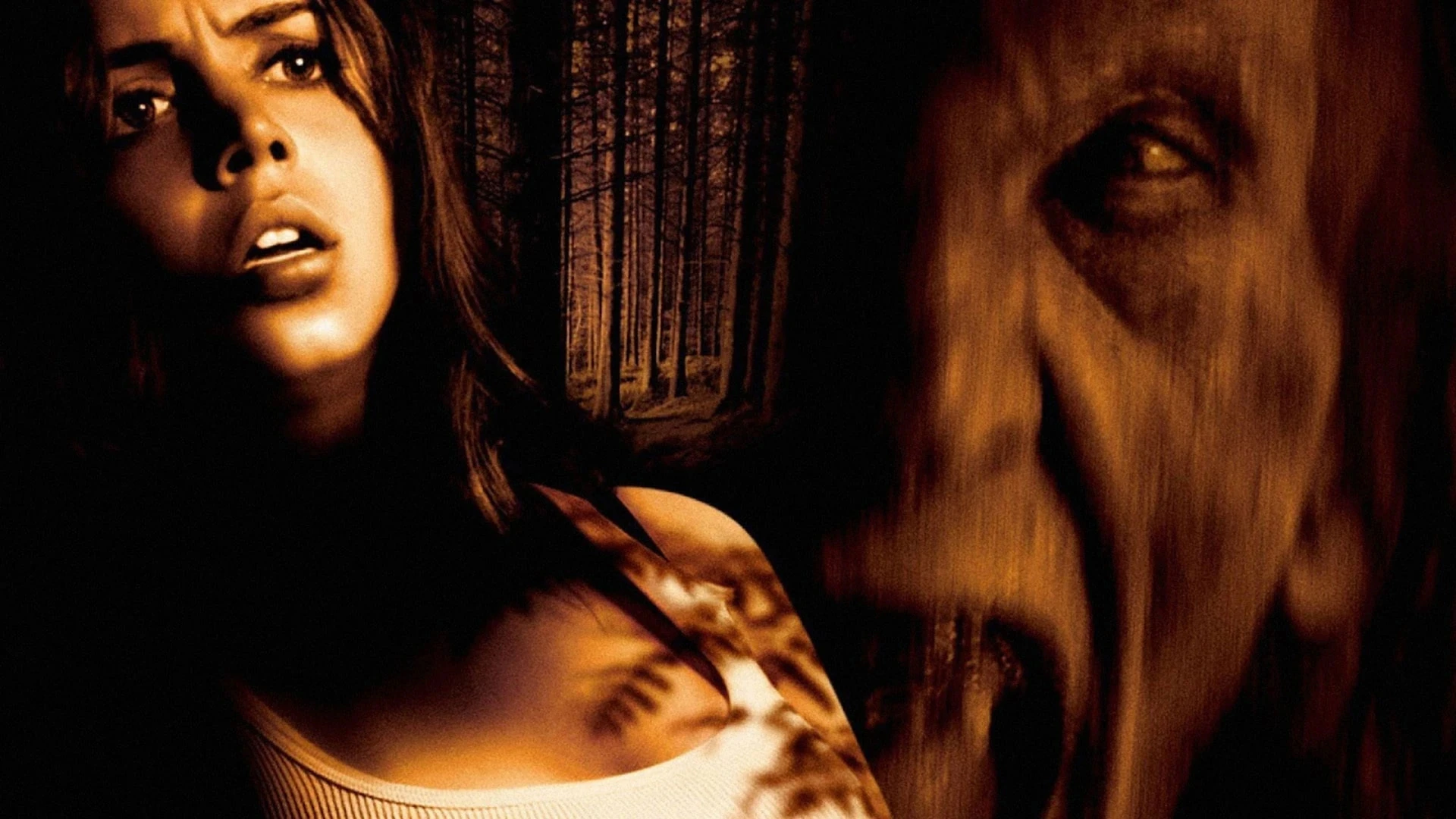
“The woods are lovely, dark and deep. But I have promises to keep, and miles to go before I sleep.” — Robert Frost (misapplied, perhaps, but fitting for the unsettling beauty of danger)
When Wrong Turn crashed onto screens in 2003, it arrived with all the subtlety of a mangled car careening down a West Virginia ravine. Critically, it was largely dismissed—a mere 40% on Rotten Tomatoes, and a dismal 32 on Metacritic. Reviewers often lambasted it as a generic slasher, derivative of its predecessors, and populated by thin characters making even thinner choices. And honestly? They weren’t entirely wrong. But to stop there would be a colossal oversight, because beneath the predictable jumpscares and the ample practical gore, Rob Schmidt’s film unwittingly taps into something far more ancient and chilling: our primal, existential dread of the wilderness, and the terrifying fragility of the civilized self.
The Wilderness Within: Civilization’s Thin Veneer
Wrong Turn follows Chris (Desmond Harrington), a medical student, who, you guessed it, takes a wrong turn and ends up stranded deep in the West Virginia mountains after a collision with a group of friends. What begins as a simple roadside inconvenience quickly devolves into a brutal fight for survival against three cannibalistic, inbred mountain men. Critics were quick to point out the film’s familiar tropes: the isolated setting, the hapless city dwellers, the monstrous rural antagonists. Yet, this very familiarity is precisely where its philosophical teeth lie.
The film strips away every comfort of modern life, pushing its characters to the absolute edge. Their phones are useless, their cars destroyed, and their GPS a cruel joke. This isn’t just about being lost; it’s about being utterly unmoored from the societal structures that define and protect us. The mountains aren’t just a backdrop; they are an active, indifferent character, embodying a raw, untamed nature that predates and will outlast humanity’s fleeting constructs. The cannibals, then, are not just villains; they are the physical manifestation of this primal indifference, a terrifying glimpse into what humanity might become when isolated from the progress and morality of civilization. They represent a kind of naturalistic nihilism, where survival is the only creed, and humanity is merely sustenance.
- Isolation as existential terror — the loss of connection to society.
- Nature’s indifference — the overwhelming power of the untamed world.
- Regression to savagery — the terrifying possibility of shedding our humanity.
 Desperate attempts at communication in a landscape that offers no solace.
Survival’s Ugly Face: What Works and What Doesn’t
Let’s be candid: Wrong Turn isn’t a perfect film. As many critics noted, character development is largely superficial. Most of the young victims are archetypes rather than fully fleshed-out individuals, making it hard to mourn their gruesome fates beyond a visceral reaction to the violence. The pacing, too, can feel uneven in stretches, oscillating between tense pursuit and moments that drag before the next inevitable attack. Even Eliza Dushku, a formidable presence as the film’s lead, Jessie, can only do so much with dialogue that often prioritizes plot mechanics over genuine character insight.
However, the film undeniably succeeds in its raw, unfiltered brutality. The practical effects are genuinely gruesome and effective, giving weight to every axe swing and arrow shot. There’s a tangible, grimy realism to the violence that many CGI-heavy horror films lack. This commitment to portraying the physical horror forces us to confront the sheer pain and terror of the situation. It’s not just a slasher; it’s a survival horror that asks: how far would you go?
The film’s true effectiveness lies not in its originality, but in its relentless depiction of the human body as fragile, vulnerable, and ultimately, just another piece of meat in a world devoid of mercy.
The philosophical kernel here lies in the characters’ desperate scramble for survival. Moral lines blur. Chris, initially an everyman, is pushed to commit acts of violence he couldn’t have imagined. Jessie shows incredible resourcefulness and grit. The film, despite its flaws, becomes a brutal thought experiment: what happens when the veneer of civility is stripped away, and the only “law” is the will to live, or to kill? It’s a stark reminder that our most fundamental programming is survival, and it can be a truly ugly process.
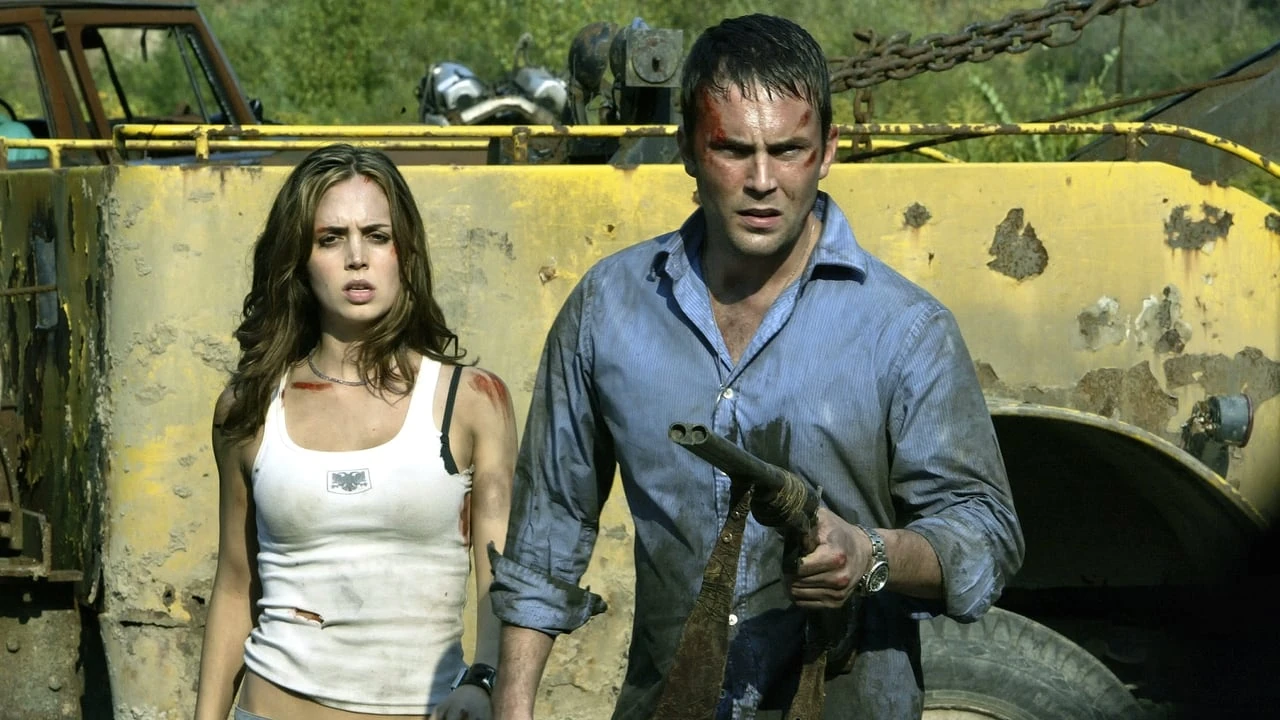 The chilling confrontation between the hunted and their grotesque pursuers.
The Mirror in the Mountains: Deformity, Identity, and Otherness
Perhaps the most enduring, albeit uncomfortable, aspect of Wrong Turn is its depiction of the cannibalistic family. Grossly disfigured by generations of inbreeding, they are presented as a literal genetic dead-end, a horrifying offshoot of humanity. They are the “other” in its most extreme form, embodying our deep-seated fear of difference, disease, and the breakdown of genetic purity. This portrayal, while arguably problematic in its simplistic linking of deformity with evil, forces us to confront uncomfortable questions about identity and monstrosity.
Are these creatures truly evil, or are they simply a product of extreme isolation and a brutal struggle for existence? The film doesn’t offer easy answers, nor does it attempt to humanize them beyond their basic, primal drives. They are presented as a force of nature, a dark mirror reflecting what humanity could become if it strayed too far from its own evolutionary and social path. Their existence challenges our notion of human exceptionalism and reminds us that we are, at our core, biological beings subject to the same pressures as any other species. The film’s underlying terror isn’t just that they will kill you, but that their very existence suggests a horrifying alternative trajectory for human development. It’s a vision of humanity devolved, stripped of culture, language, and empathy, leaving only instinct.
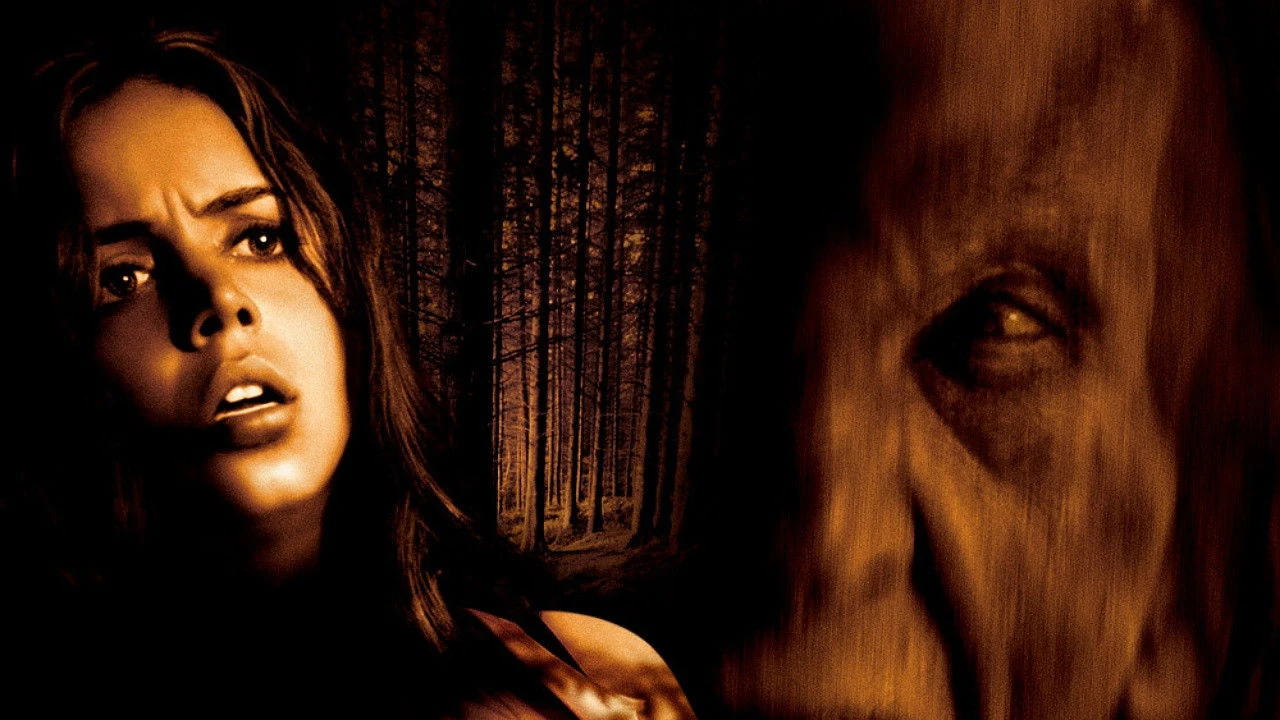 The unsettling gaze of the ‘other,’ reflecting humanity’s deepest fears.
While Wrong Turn may never be lauded as a masterpiece of cinema, its visceral impact and uncomfortable themes continue to gnaw at the edges of our collective consciousness, asking us to confront the darkness that lurks not just in the mountains, but within the very fabric of our being.
Wrong Turn is far from a perfect film. Its critical reception reflects its genre conventions and often simplistic approach. Yet, to dismiss it entirely is to miss the disturbing philosophical undercurrents it inadvertently stirs. It’s a grim, bloody fable about the fragility of civilization, the brutal calculus of survival, and the unsettling nature of the monstrous ‘other.’ It reminds us that our comfortable, ordered lives are but a thin layer over a wild, indifferent world, and that sometimes, the most terrifying monsters are simply reflections of humanity pushed to its most extreme, primal edge. What does it say about us that such a flawed, yet viscerally effective, film continues to haunt the nightmares of a generation?
What’s Up? explores the philosophical depths of cinema.