The All-Consuming Gaze: Unpacking Love, Obsession, and Our Complicity in You
Exploring the philosophical depths of You, examining its portrayal of surveillance, obsession, and the unsettling complicity of the viewer in its narrative.

“We are condemned to be free.” — Jean-Paul Sartre
When You premiered in 2018, it quickly became a cultural phenomenon, drawing audiences into the disturbingly charming world of Joe Goldberg. This isn’t just another thriller; it’s a psychological deep dive into the darkest corners of desire, narrated by the very monster we’re meant to fear. While critics largely lauded its initial season for its addictive quality, sharp writing, and Penn Badgley’s chilling performance—boasting a 93% on Rotten Tomatoes—audience reactions were often more complicated. Many found themselves uncomfortably drawn to Joe, while others wrestled with its narrative choices, questioning whether it inadvertently romanticized stalking or demanded too much suspension of disbelief. Regardless of where you stand on its execution, You undeniably holds a mirror up to our modern anxieties about privacy, connection, and the terrifying line between love and obsession.
The Illusion of Intimacy and the Panopticon of Desire
At its core, You is a chilling exploration of surveillance culture and the performative nature of identity in the digital age. Joe Goldberg isn’t just a stalker; he’s a master manipulator of information, crafting an idealized version of his victims based on their public personas and social media footprints. He doesn’t fall in love with a person; he falls in love with the idea of a person, meticulously constructed from their online breadcrumbs. This speaks volumes about how we present ourselves online – a curated, often idealized self, ripe for misinterpretation and projection.
The series makes us complicit by narrating everything from Joe’s perspective. His internal monologue, dripping with self-justification and warped romanticism, forces us to experience his skewed reality. We see the world through his eyes, understand his twisted logic, and, at times, might even find ourselves nodding along before catching ourselves. This narrative choice, while brilliantly unsettling, is also a source of some criticism; some viewers and critics argue it risks glorifying Joe’s actions or making him too sympathetic. However, this discomfort is precisely where its philosophical power lies. It forces us to confront how easily we can be swayed by a charismatic narrative, even when the underlying actions are monstrous.
Key themes to explore here:
- The Gaze — how Joe’s obsessive gaze objectifies and consumes.
- Digital Footprints — the vulnerability of our curated online lives.
- Narrative Control — how Joe dictates the story, both for his victims and for us.
 Joe Goldberg’s intense gaze, a visual metaphor for the pervasive surveillance and psychological intrusion at the heart of the series.
The Peril of Projection: When Love Becomes Possession
One of You’s most fascinating, and often frustrating, aspects is its deconstruction of classic romantic tropes. Joe genuinely believes he’s a hero, saving his love interests from themselves or from perceived threats. He embodies a dark parody of the “knight in shining armor,” twisting protection into imprisonment, and affection into absolute control. This highlights a dangerous philosophical distinction: the difference between love as empathy and mutual growth, and love as possessive desire and self-serving projection.
The true horror isn’t just Joe’s actions, but the insidious way his internal monologue mirrors and distorts common romantic ideals, exposing how easily devotion can curdle into destruction.
The series repeatedly showcases how Joe projects his desires and ideals onto his targets, refusing to see them as autonomous individuals. Any deviation from his carefully constructed fantasy is met with escalating control, manipulation, and ultimately, violence. Critics sometimes pointed to the repetitive nature of this cycle across seasons, or the increasingly outlandish plot contrivances needed to keep Joe one step ahead. While these are valid criticisms of the show’s narrative mechanics, they also paradoxically emphasize the inescapable, cyclical nature of obsession. Joe never learns, never truly changes, because his delusion is too ingrained. His “love” is a closed loop, feeding only itself. This raises profound questions about free will and moral agency when confronted with deep-seated psychological pathologies. Are we all capable of such projections, albeit less violently? Where does protective instinct end and controlling obsession begin?
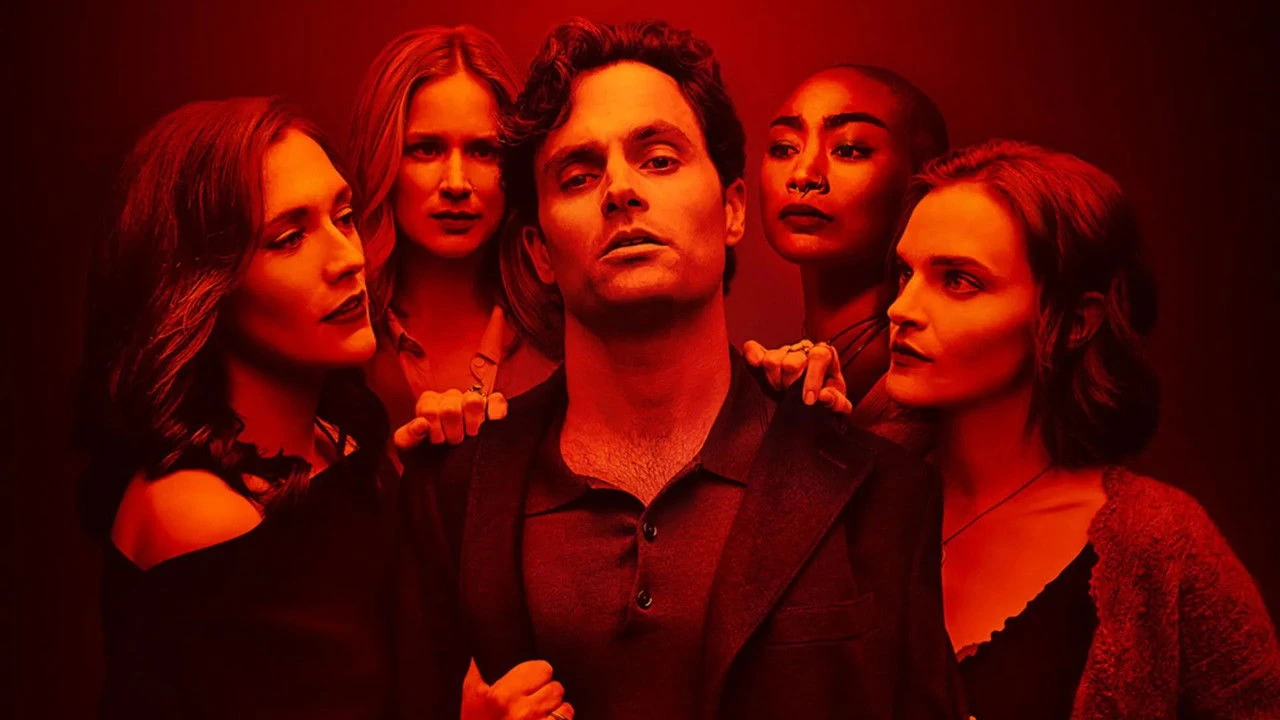 A fragmented scene showing Joe’s victims, symbolizing how his obsessive love shatters their lives and identities.
Unmasking the Monster: Our Own Complicity
Beyond the thrills and chills, You asks us to confront uncomfortable truths about human nature and societal complicity. Why do we, the audience, keep watching? Why is Joe, despite his horrific actions, often perceived as charming or even attractive by some? The show plays on our fascination with transgression, our voyeuristic tendencies, and perhaps, our subconscious recognition of how easily lines can be blurred.
The series is a provocative commentary on the “nice guy” facade, the ways toxic masculinity can manifest as perceived romantic gestures, and how society often overlooks red flags until it’s too late. It forces us to examine our own biases and the romantic narratives we consume, which often glorify persistence and possessiveness in the name of love. Despite its occasional plot holes or criticisms regarding its sensationalism, You’s ability to provoke such introspection is its enduring philosophical strength. It’s a dark fable for the digital age, warning us about the monsters lurking in plain sight, and perhaps, the potential for monster within us all.
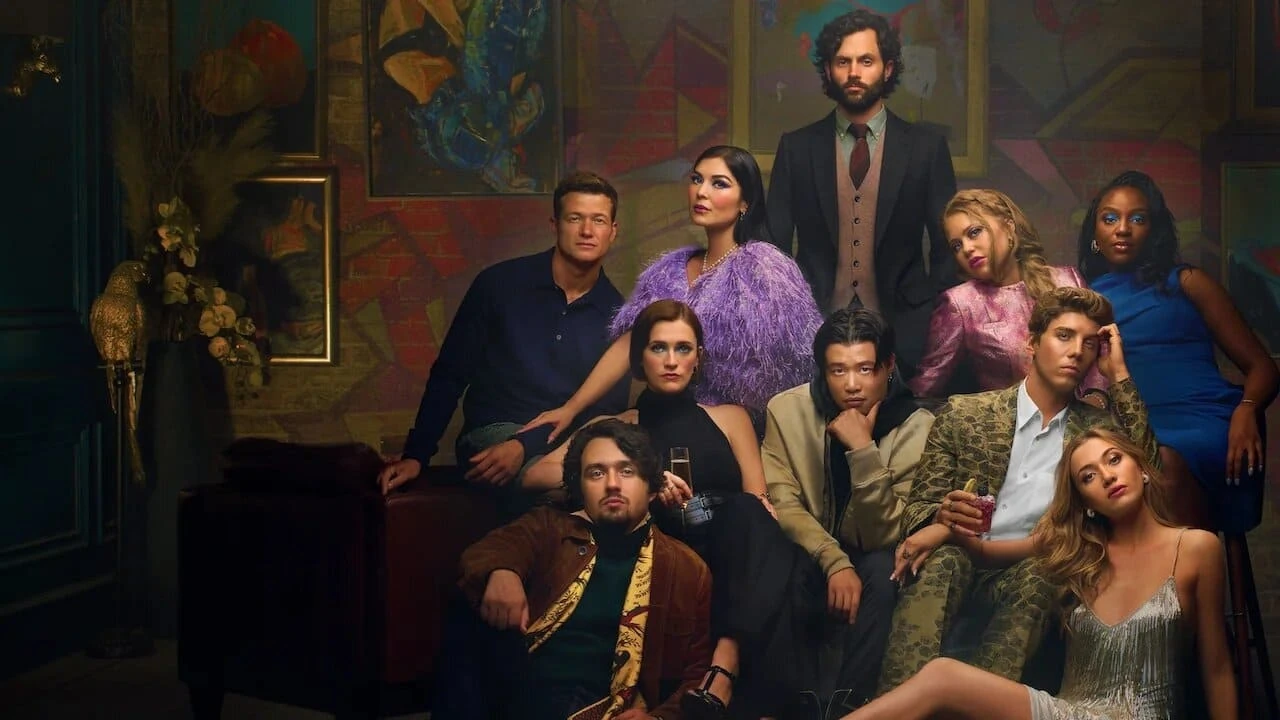 An unsettling split image, showing Joe’s serene exterior contrasting with a hidden, dangerous action, representing the duality of perception and reality.
The unsettling legacy of You isn’t just about a fictional stalker; it’s about the shadows of our own desires, the fragility of identity, and the chilling ease with which we can become complicit in the narratives of control.
Ultimately, You may not be a perfect show, and its narrative can be a wild, sometimes unbelievable ride. But its flaws are almost part of its charm, serving to highlight the absurdity of Joe’s delusion while simultaneously amplifying the horror. It’s a compelling, if uncomfortable, exploration of what it truly means to see and be seen, and the terrifying consequences when one person decides they know what’s best for another, regardless of their will. It asks us, unblinkingly: how much of our desire for connection is actually a desire for control?
Where to Watch
- Netflix
- Netflix Standard with Ads
What’s Up? explores the philosophical depths of cinema.